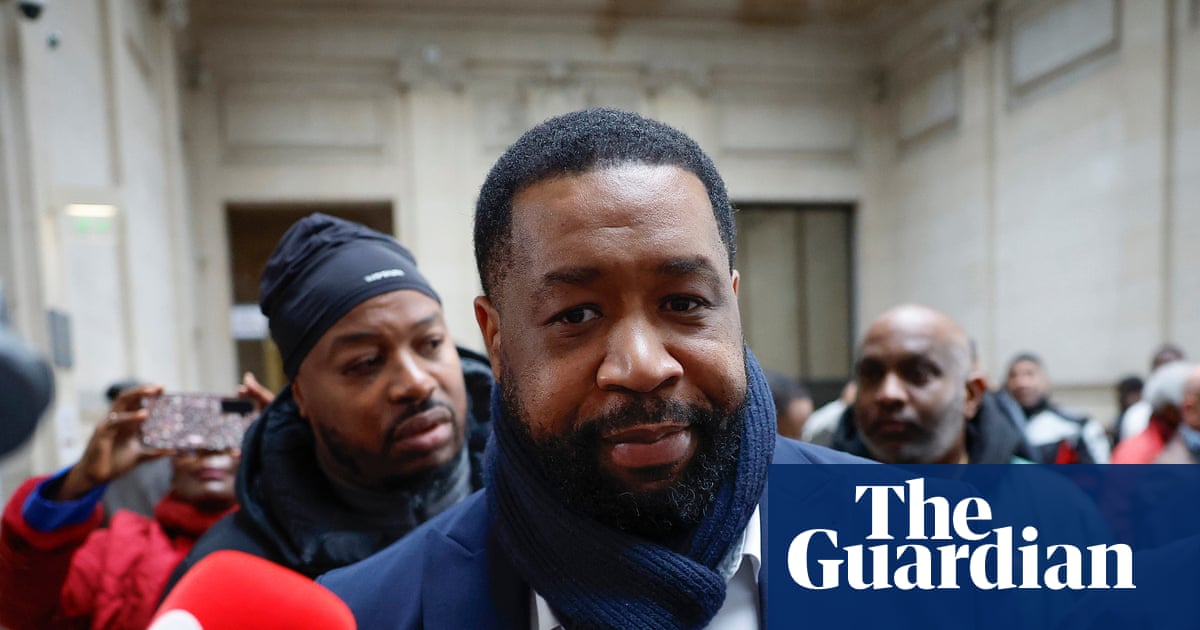
Three French police officers have been found guilty of intentional racist violence against music producer Michel Zecler, whom they beat outside his Paris studio in 2020. The assault, captured on security cameras, provoked outrage over police brutality in France.
The officers were sentenced to between one and two years in prison, with additional years suspended, and banned for life from serving in the police. The judges ruled that racism was an aggravating factor.
The officers stopped Zecler on 21 November 2020, accusing him of not wearing a mandatory face mask. They pushed him into his office entrance and beat him. According to the investigation, he was struck about 30 times with punches and truncheon blows to his face and body over five minutes.
Zecler suffered craniofacial trauma, wounds to his lip and scalp, and a complete rupture of his biceps tendon. He was unable to work for 45 days. He told the court the officers used a racist slur several times during the beating and that the attack had “completely devastated him”, leaving a lasting physical and psychological impact.
Aurelien Lapersonne, 29, Pierre Plantier, 37, and Philippe Tondeux, 50, were found guilty of breaking into Zecler’s studio and committing intentional violence as a group. They were also convicted of forgery for falsifying an official police report that claimed Zecler had been violent towards them.
The report accused Zecler of attacking the officers and trying to grab one of their weapons, but video footage did not support those claims and showed he was not violent. The state prosecutor said that without the CCTV, the false report could have led to Zecler being convicted of attacking a police officer in a serious miscarriage of justice.
The state prosecutor, who asked not to be named in the media, told the court the case had caused “immense harm to Michel Zecler but also to society as a whole”. She said the officers had “betrayed” their uniform and told the judges: “I ask you to believe Michel Zecler, to recognise him as a victim of these racist insults.”
The officers apologised in court for beating Zecler but denied racism. They had not realised the assault was being recorded.
Zecler’s lawyers and supporters said the trial had drawn attention to police violence in France. Victims and researchers say it is systemic, while authorities and law enforcement unions say it is limited to isolated cases. Members of the public who attended the trial said it was an important moment in confronting institutionalised racism.
Zecler’s lawyer Serge Money said: “A verdict can force a society to really look at an injustice that up until now had been tolerated, minimised, and I dare to use the word: institutionalised.” He also said: “The Zecler trial is the trial of impunity, for all those who before him and after him will experience the same thing.”
Money told the court: “I want you to give voice to all those who didn’t have security cameras, and to all those who were not believed.”
Nine young performers rehearsing in the basement of Zecler’s studio were also violently arrested when they came to help him. Their lawyer, Seydi Ba, told the court that France needed to know how “police violence, lies and racism” would be considered by a court.