The Trump administration is invoking the same federal civil rights statute that former special counsel Jack Smith used in his 2023 indictment of Donald Trump, warning Democratic lawmakers that their oversight could prompt criminal investigations.
White House and Justice Department officials have recently cited Section 241, the “conspiracy against rights” law, in warnings to Democrats. Smith’s charge against Trump was based on the allegation that his effort to subvert the 2020 election would have disenfranchised millions of voters and violated their constitutional right to have their votes counted.
The administration’s use of the law reflects aides’ complaints that it was stretched to target Trump. Some of his vocal outside supporters had urged its use against his political opponents for months.
“Jack Smith's unprecedented indictment of a former president brought Section 241 to the American consciousness. And what's good for the goose is good for the gander,” said Mike Davis, a former GOP Senate aide who is now a lawyer and crisis communications adviser in private practice.
Aaron Reitz, the U.S. attorney for the Southern District of Texas, recently cited Section 241 in letters to seven Democratic lawmakers, warning that promises to investigate Trump’s allies aggressively could lead to criminal probes and charges. In one recent letter to Sen. Adam Schiff (D-Calif.), Reitz demanded that Schiff preserve records related to what he called “your intent to weaponize Congressional investigations and deprive citizens of their core constitutional rights.”
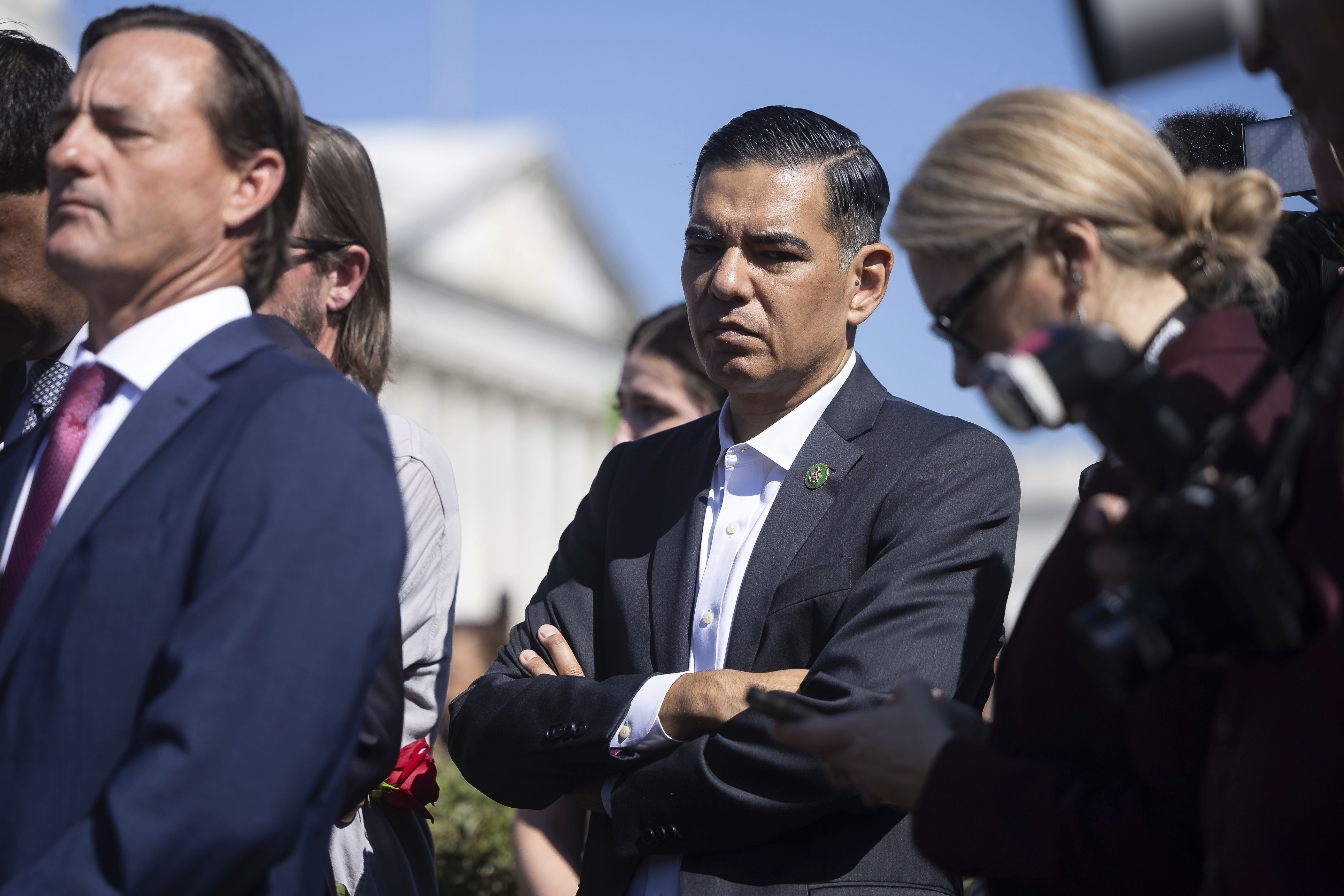
White House counsel Will Scharf also invoked the statute’s language in a letter to Rep. Robert Garcia, a California Democrat poised to lead the House Oversight Committee. Garcia had suggested that pettiness might fuel the investigations. “Issuing unlawful subpoenas with the intention of depriving citizens of their constitutional rights and privileges may warrant further investigation,” Scharf wrote.
Critics describe the warnings as retaliation. “This is the Roy Cohn school of litigation: Do unto others as they've done unto you, twice as much. So, it's just a naked tit for tat,” said Norm Eisen of the Democracy Defenders Fund, which is pressing lawsuits over alleged abuses of power and corruption in the Trump administration.
The Civil War-era law makes it a federal crime to intimidate or threaten someone in an attempt to interfere with “the free exercise or enjoyment of any right or privilege secured to him by the Constitution or laws of the United States.” Violations carry a penalty of up to 10 years in prison, with longer terms or the death penalty in more serious cases.
Many legal experts say applying the law to congressional oversight disputes departs sharply from its original purpose. “It's been pushed way outside, doubly doubly so, outside the banks of what it was intended to do,” said Mark Brown, a law professor at Capital University in Columbus. “That's not what the statute was meant to target. … Given it's such a stretch, I'd look at it more as just political payback.”
The Justice Department said the longstanding civil rights statute can be used to pursue oversight efforts that cross the line into intimidation. “Oversight is not a license to threaten private citizens for exercising their First Amendment rights. Congress gave DOJ the authority to investigate those who willfully deprive people of their constitutional rights,” the department said.
Administration defenders argue that the law’s scope was broadened during the Biden administration, when Florida-based conservative political influencer Douglass Mackey was prosecuted over memes he posted online in 2016 falsely claiming Hillary Clinton supporters could vote by text. A jury convicted Mackey, and a judge sentenced him to seven months in prison.
Mackey’s case became a cause celebre among right-wing internet personalities. Jones Day, a law firm closely tied to the Trump administration, provided lawyers for his appeal. Some First Amendment advocates also questioned the conviction. One warned it threatened to turn the civil rights law “into a boundless, indeterminate criminal prohibition on any speech that the government (later) deems injurious to constitutional rights.”
Last year, a federal appeals court panel unanimously overturned Mackey’s conviction. The judges did not address the free-speech issues, finding instead that there was insufficient proof he conspired with anyone to make the posts.
Some observers also considered Smith’s use of Section 241 in his 2023 indictment of Trump over actions related to the 2020 election and the Capitol riot novel, though many experts supported it. “Bringing civil rights charges against the former president is not overreach by the Justice Department,” former Obama White House attorney Ian Bassin and former DOJ civil rights prosecutor Kristy Parker wrote in a New York Times op-ed. Lawyers noted that more than a century ago, the Supreme Court approved using the law to prosecute ballot-box stuffing.
Before Smith dropped the election-related case after Trump’s election, Trump’s attorneys sought dismissal of the Section 241 charge. “President Trump did not have fair notice that lawfully contesting the election could be prosecuted as a civil rights violation. In fact, prosecuting him on the grounds specified in the indictment stretches the statutory language beyond any recognizable bounds,” they wrote.
Eisen rejected comparisons between Trump’s effort to reverse Joe Biden’s victory and lawmakers’ threats to issue a flurry of subpoenas to Trump allies. “This is not Alice in Wonderland,” he said. “18 USC 241 does not mean what they say it means. It is an actual statute that requires an actual factual predicate, an actual evidentiary predicate of the kind that you had with Donald Trump's assault on the rightful outcome of the 2020 election.”
The administration has also used the law in other high-profile investigations: an ongoing criminal probe into alleged Democratic efforts to persuade an Alaska man with the same name as Sen. Dan Sullivan to enter the Senate race there, and a federal investigation in Florida into a so-called “grand conspiracy” among government officials and others to saddle Trump with allegations of ties to Russia during his first term. Neither investigation has yet resulted in criminal charges.
“The mere existence of a statute on the books does not authorize you to charge it, no matter how fanciful and retaliatory the motives,” Eisen said. “You need to have evidence.”