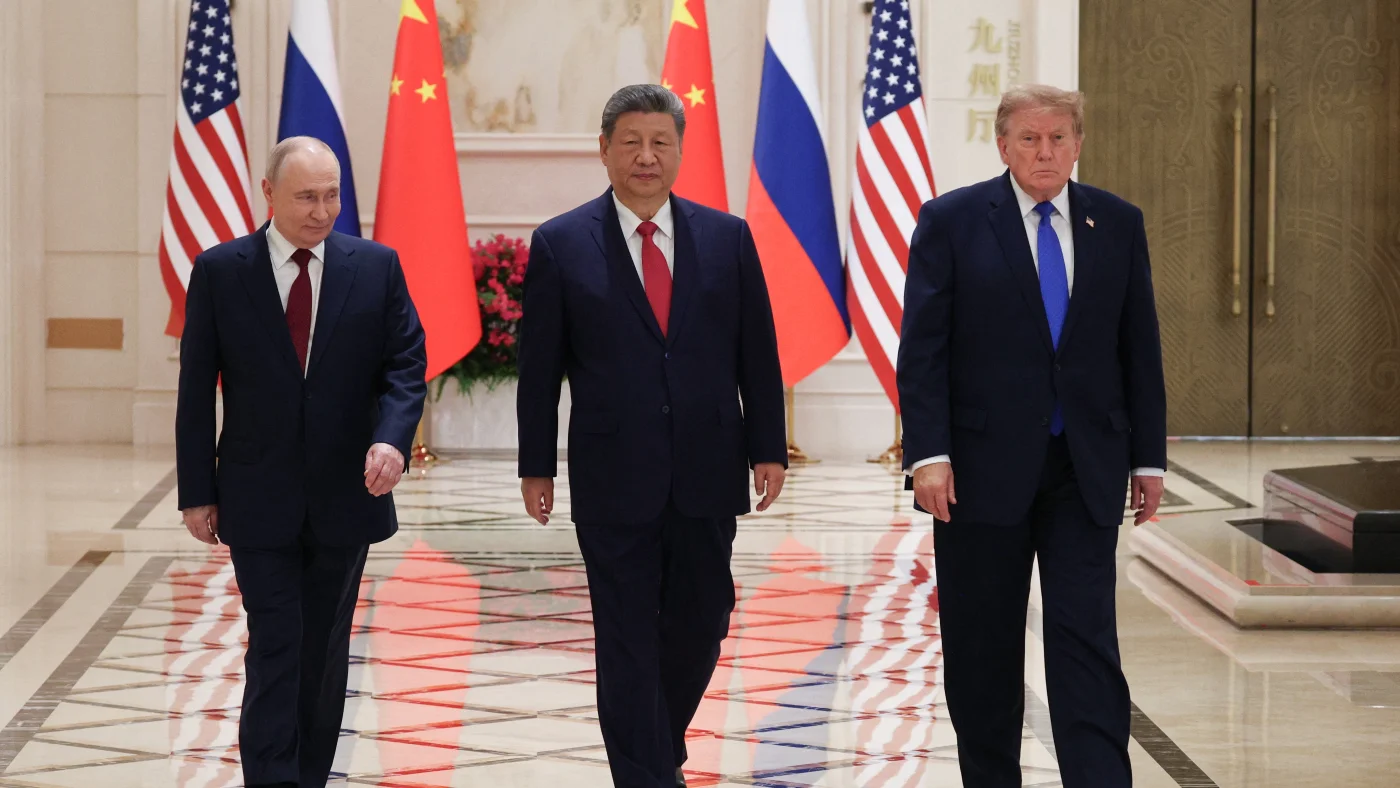
President Trump is scheduled to hold a White House press conference at noon today after returning to Washington from a four-day trip to Asia that included a rare meeting with Chinese President Xi Jinping and Russian President Vladimir Putin.
Trump did not formally take questions in China at the end of the trip, though that is typically expected on presidential foreign trips. Putin held a press conference before leaving the country.
Trump said he would discuss the meetings in China and trade agreements reached earlier in the trip in the Philippines. He arrived there for the tail end of a summit with south Asian leaders.
Trump, Xi and Putin met at a lakeside resort in Shenzhen, China, and discussed nuclear proliferation, Iran and global relations. The three leaders command the world’s largest nuclear arsenals.
The talks offered few signs that Xi or Putin were prepared to make significant concessions to Trump. Suzanne Maloney, vice president and director of the foreign policy program at the Brookings Institution, said the trip gave Trump the chance to present an image of close ties with other major powers after a difficult election outcome at home.
“The trip enabled the president to bask in the glow of great power amity after a really bruising election outcome here at home,” Maloney said. “He wanted the optics of this direct engagement with Presidents Xi and Putin as a sort of validation of his own standing as a historical figure. And I think the photo op provided that.”
The article said the visit featured ceremonial events but did not appear to focus on securing agreements and commitments. Xi could present China as a global leader by bringing together major nuclear powers, while the meeting offered Putin a chance to reestablish Russia as a geopolitical power on par with China and the U.S.
In opening remarks with Xi and Putin, Trump said the leaders were making history and had a responsibility to maintain open and respectful dialogue. “Too often, past leaders avoided talking to nations with whom they had disagreements. And we feel the opposite,” Trump said. “No problems were ever solved under the old school, refusing to talk about it. No peace was ever forged by declining opportunities for engagement and speech.”
The lack of concrete outcomes raised questions about Trump’s foreign policy approach, the article said. Maloney noted that Xi and Putin have their own strategic objectives and must consider whether agreements with Trump could withstand domestic scrutiny or a change of administration.
“I think both Putin and Xi recognized that President Trump's time is beginning to wane,” Maloney said, “that his command of U.S. politics is also beginning to wane, and they're going to be looking to who and what may be coming next.”