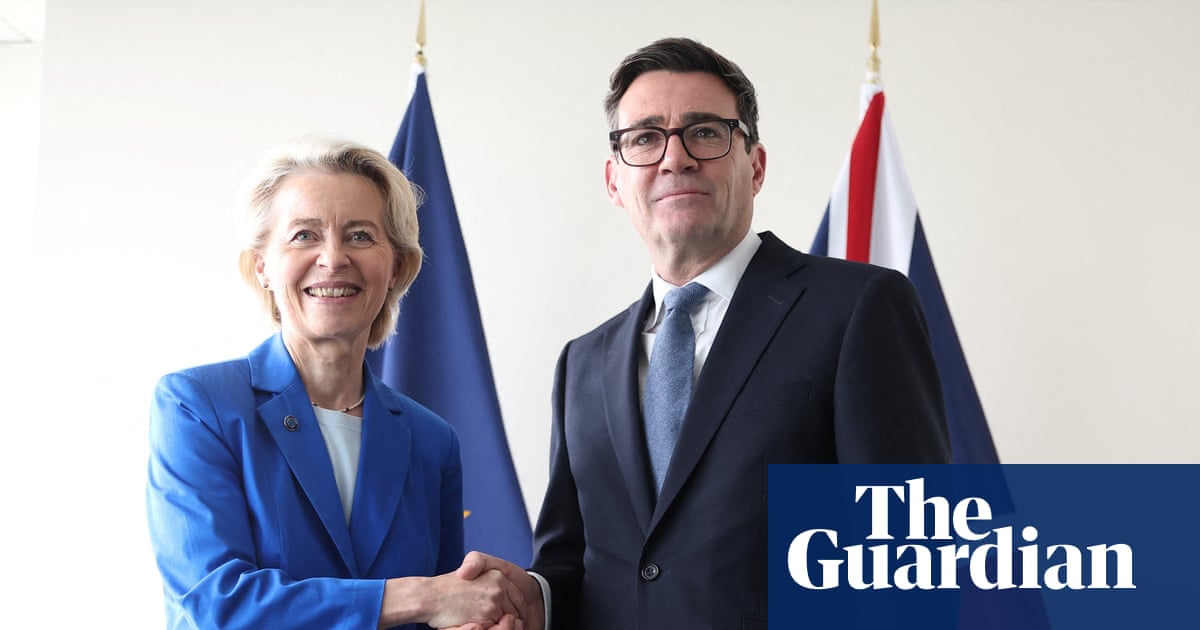
UK-EU reset talks are expected to go “down to the wire” ahead of Friday’s summit in Brussels, with disagreements remaining over food rules and tuition fees. Andy Burnham is due to meet EU leaders as negotiators seek agreement.
“It will go down to the wire,” an EU diplomat said, speaking generally about the disputes, including tuition fees. “Our feeling is that the Brits have to move if they want a deal.” A spokesperson for the British prime minister said the talks were close and that, if an agreement was reached, the government would bring forward the cutting costs bill to parliament next week.
The EU and UK hope to sign three agreements at the summit, including a food and drink deal that was a Labour manifesto commitment and is expected to add 0.4% to British GDP. The deal is expected to come into force on 1 March 2028 and would require the UK to align with EU sanitary and phytosanitary (SPS) standards.
The UK is seeking a formal role in EU committees involved in implementing existing and setting new SPS rules. The issue remained unresolved after EU ambassadors met late on Wednesday. One diplomat said: “They want to be able to shape decisions, not only implementation, but future decisions. That has always been a red line.”
Under the proposal, the UK would dynamically align with EU laws and have a “voice” but “not be in the room” when laws are drafted. A diplomat from a country sympathetic to the UK said the European Commission had proposed an “extremely restrictive consultation mechanism”. Another EU diplomat said it was reasonable for a British representative to take part in implementing SPS legislation affecting the UK: “Of course the UK cannot vote in the council as a non-member state, but we feel that we need to be pragmatic about coordination and implementation,” they said.
The sides are also deadlocked over whether EU students in Britain should pay British or international tuition fees, and how many students could take part in a proposed youth mobility scheme. The draft proposal offers the UK two options: significantly reduced undergraduate fees or equal treatment with nationals. Sources said the UK was resisting EU pressure to agree to work on tuition fees for EU students coming to the UK under the scheme.
The UK has prioritised commitments on its position relating to the EU’s Made in Europe legislation, a trade defence policy that will include tariffs on Chinese electric vehicles and affect British manufacturing. The sides are believed to be close to agreeing wording at the summit pointing towards UK inclusion, but nothing can be formalised until the EU passes its own legislation.
Burnham’s spokesperson said the UK was “engaging constructively with the EU” on the legislation and had made clear the challenges it could pose for British industries. He added that the UK and Europe had deeply integrated supply chains and shared economic challenges.
Burnham’s spokesperson also said there would be no further incremental reset summits after Friday’s meeting until a full negotiation begins on a longer-term relationship. “After the summit, we will begin those discussions with our European partners about the realistic options for our longer-term relationship,” he said.