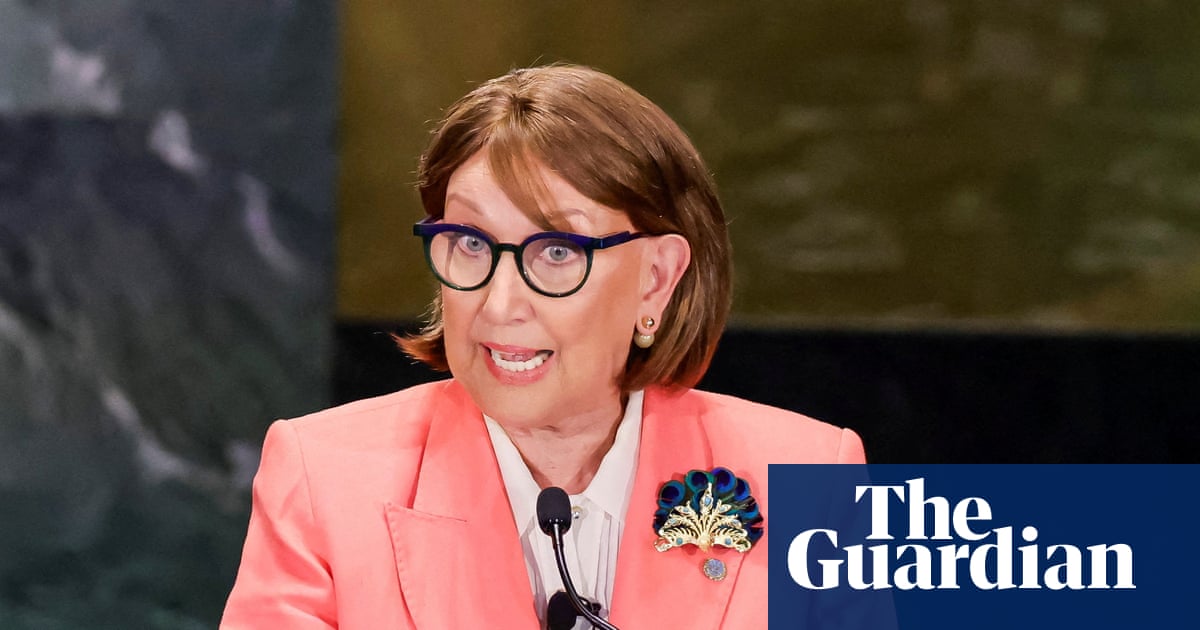
A UN Security Council vote expected on Friday could show whether major powers are prepared to block Costa Rican candidate Rebeca Grynspan in the contest to become the next secretary general. A veto would renew debate about the influence of the council’s five permanent members.
Grynspan, an economist and UN insider, has led all but one of eight secret straw polls among the 15 Security Council members since the first ballot on 30 July. In the polls, members mark each candidate “encourage”, “discourage” or “no opinion”.
Countries are not required to disclose their votes, but Russia and the US are thought to have resisted Grynspan’s candidacy. Both are among the five permanent members, which can veto a candidate. Delegations’ understanding of the voting relies on private intelligence, leaks and elimination.
Friday’s ballot is expected to distinguish the votes of the five permanent members from those of the 10 elected members. A candidate needs nine votes and no vetoes to be recommended to the UN General Assembly. The permanent members will cast red ballots and the elected members white ones.
One diplomat said: “The electoral system means it is important how many votes you win, but equally how many of certain votes you don’t lose.”
The article describes the contest as a 140-day deadlock and says it reflects the polarisation that has hampered outgoing secretary general António Guterres, while also challenging claims that the role has become irrelevant.
The vote could also test the United Arab Emirates’ campaign for its diplomat, Lana Nusseibeh. In the two straw polls she has contested, she received seven “encourage” votes, six “discourage” votes and two “no opinions”, despite backing from the US and Russia and what the article describes as acknowledged personal diplomatic skills.
Opposition to Nusseibeh includes concerns about the UAE’s diplomacy and its role in several countries. Latin American countries, including Panama and Colombia, are expected to oppose her, believing an informal rotation system means it is their region’s turn to lead the UN. China has supported the rotation principle.
Other critics object to what they regard as UAE “dollar diplomacy”. Somalia’s president, Hassan Sheikh Mohamud, accused the UAE on television this week of buying ports, establishing military bases and supporting armed forces outside Somalia’s national security framework without federal approval.
Finland and Latvia may also be concerned about the UAE’s reception for Vladimir Putin in Abu Dhabi in December 2023, nine months after the International Criminal Court issued an arrest warrant for child trafficking, the article says. Greece may be more flexible on the issue.
In the last ballot, on 5 November, Grynspan received 12 votes in favour and three against. In the only colour-coded ballot so far, on 16 October, she received two “discourage” votes from permanent members. Nusseibeh had not entered the contest at that time.
Grynspan is considered a more viable Latin American candidate than Argentine rival Rafael Grossi, head of the UN weapons inspectorate. Russia has opposed Grossi over his interventions concerning the Zaporizhzhia nuclear plant in Ukraine. The article says the deadlock must be broken soon.