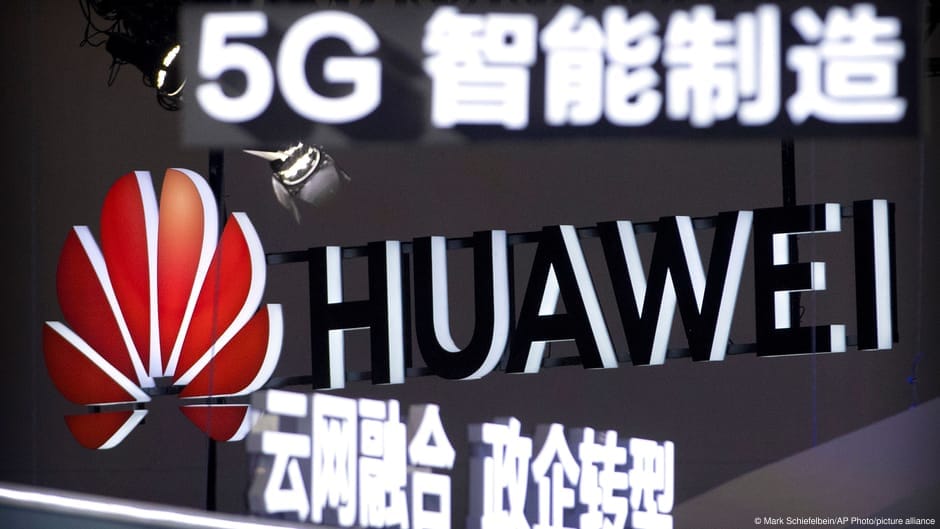
A US jury found Huawei guilty on 10 of 12 criminal counts, including stealing trade secrets and violating sanctions, in a verdict delivered Tuesday in federal court in Brooklyn. The charges also included bank fraud and wire fraud.
The jury acquitted the Chinese tech giant on two counts of racketeering and conspiring to obstruct justice.
“For decades, Huawei and three of its subsidiaries conducted their business in the United States on the basis of lies and theft,” US Attorney General Todd Blanche said after the verdict.
Prosecutors described several instances of alleged trade-secret theft aimed at undercutting competitors. In one case, a Huawei employee entered a competitor’s booth at a Chicago trade fair and photographed circuitboards inside a networking device. Huawei was also found to have sold routers containing a rival company’s source code. Prosecutors said another employee removed a robotic arm from a competitor’s lab so it could be photographed and measured.
Court records identify the companies affected as Cisco Systems, Motorola Solutions, T-Mobile, Quintel USA and Fujitsu. “The misappropriated intellectual property included trade secret information and copyrighted works, such as source code and user manuals for internet routers, antenna technology, and robot testing technology,” the Department of Justice said.
Prosecutors also alleged Huawei did business in countries subject to US sanctions, including Iran and North Korea, and made false statements to US government officials and banks to conceal that activity.
“Few crimes are as serious as Huawei's decades-long pattern of endangering US national security, violating the sanctity of US commerce, and impeding the enforcement of US laws,” US Attorney Joseph Nocella said.
Huawei continued to reject the allegations after Tuesday’s verdict. “We believe the government's remaining charges are equally without legal or factual merit,” the company said in a statement.
“The five trade secret-related disputes cited by the government were all civil matters that were resolved over the past two decades. No court ever found Huawei liable for willful intellectual property misappropriation, and the company was never ordered to pay damages for trade secret misappropriation.”
The company’s lawyer, Brian Heberlig, said: “We fully expect to appeal.”
Huawei, which has for years been barred from selling networking devices to telecom carries in the US and other Western countries, is due to be sentenced next September and could face billions of dollars in penalties. Its consumer electronics business has continued to grow, as has its networking business in other countries.