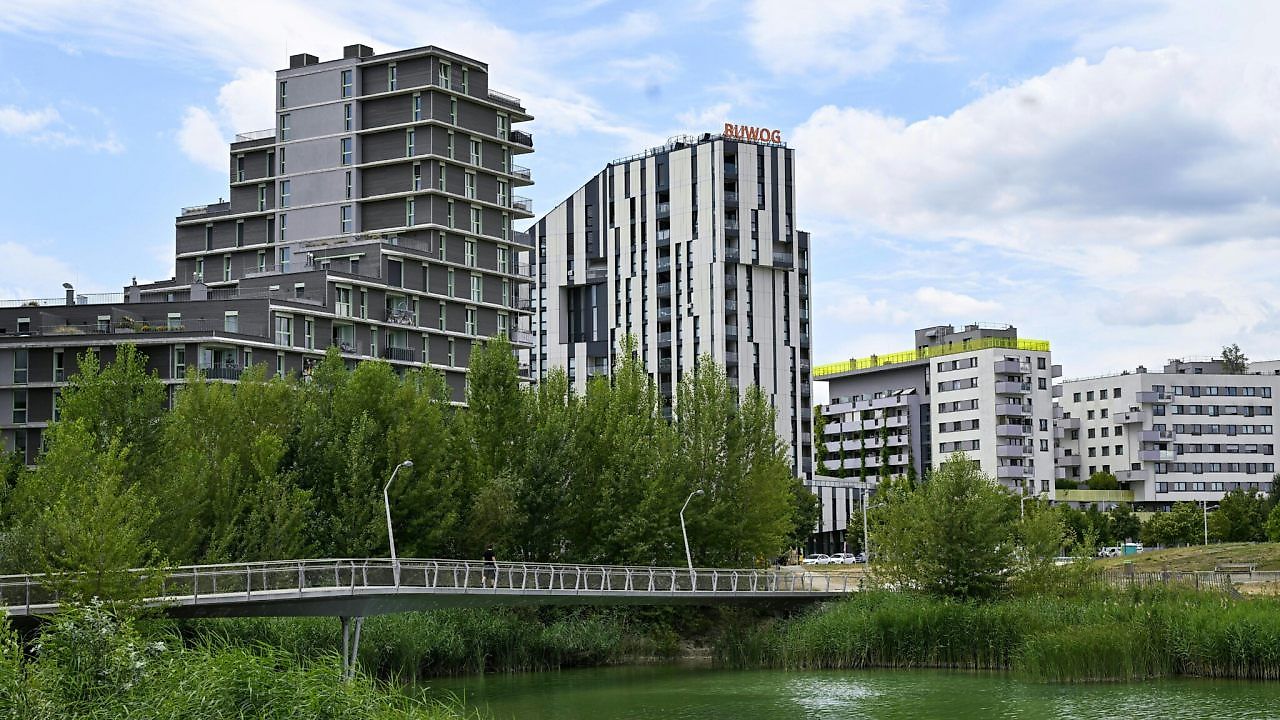
Vienna’s population is forecast to rise by 8.6 percent, from around 2.04 million in 2026 to approximately 2.22 million in 2051, according to a new projection by the Austrian Conference on Spatial Planning (ÖROK). Growth is expected to vary sharply across the city’s districts.
Donaustadt is projected to record the largest increase: the 22nd district’s population is forecast to grow by 29 percent, or around 68,266 residents, by 2051. Liesing is expected to grow by 15.9 percent, followed by Leopoldstadt at 11.1 percent.
The outer districts are expected to grow particularly strongly, while some inner-city districts are forecast to stagnate or lose residents. The ÖROK projects a six percent decline in the Innere Stadt, a 1.7 percent fall in Josefstadt and a 1.4 percent decline in Rudolfsheim-Fünfhaus.
Several other districts are forecast to see little change: Alsergrund (-0.1 percent), Margareten (+0.1 percent), Mariahilf (+0.2 percent), Ottakring (+0.4 percent) and Neubau (+1.0 percent). The ÖROK describes this as largely stagnation.
The uneven pattern depends in part on when larger residential developments are completed. Urban expansion is expected to be largely complete by the early 2040s. A large share of projected growth is concentrated in districts where major housing and urban development projects are also planned in the coming years.
The ÖROK says population totals are only one factor for urban planning. Across Austria, it expects the number of children and young people to decline by 2051, while the number of older people rises sharply. The population aged 85 and over is projected to more than double nationwide, and the working-age population to fall by around 370,000.
Ageing is expected even in areas where the population grows. More residents do not automatically mean more children or more people of working age, the ÖROK says. In Vienna, the projections point to a need for schools, kindergartens, healthcare and public transport to keep pace with the population structure. The forecast provides a planning framework, not a commitment to specific projects.
Vienna’s own 2025–2055 forecast, produced by the Vienna State Statistics Office, projects growth of around 332,000 people, or 16.4 percent, bringing the population to around 2.36 million by 2055.
The figures are not directly comparable: the ÖROK forecast covers 2026 to 2051 and uses its own model and assumptions, developed jointly with the federal government and the provinces, while the city’s forecast runs to 2055 and uses its own assumptions and model.
Both forecasts point to continued growth, distributed unevenly across Vienna. The ÖROK identifies population forecasts as a basis for long-term planning, including assessments of demand for kindergartens, schools, childcare facilities and technical infrastructure.
This article has been automatically translated, read the original article here.