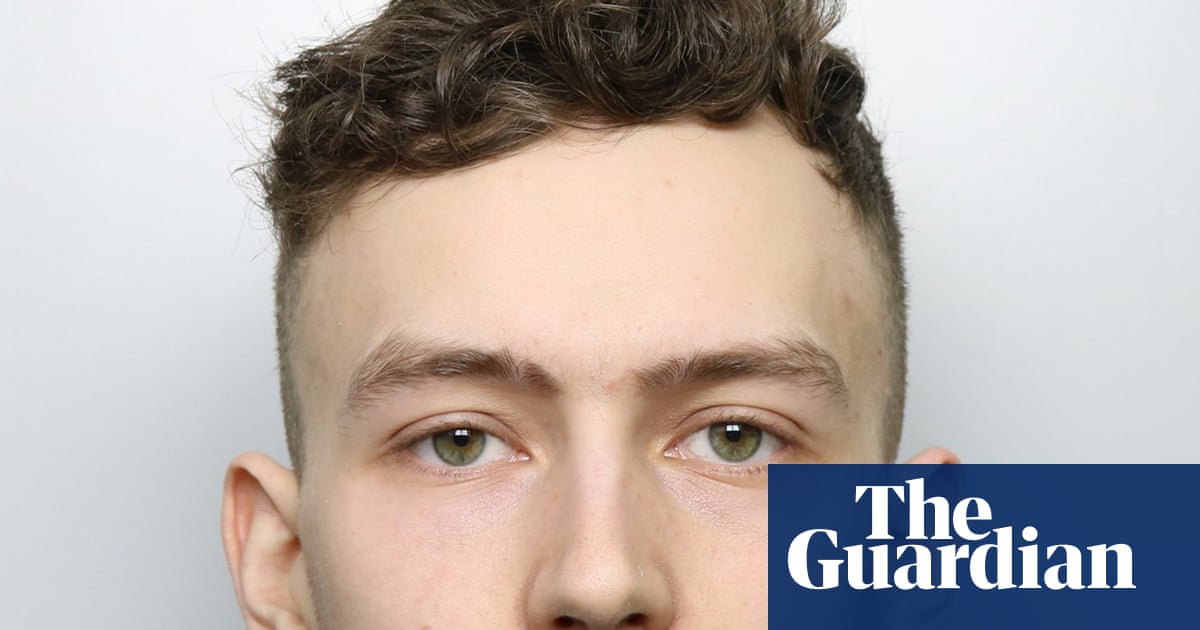
A white supremacist has been found guilty of planning a firebomb attack on asylum seekers at Hull’s Royal Hotel, with prosecutors saying he intended to kill as many people inside as possible.
Mikka Anderson, 24, of Hull, stockpiled weapons including napalm, knives and a crossbow, Newcastle crown court heard. He tried to recruit an accomplice for the attack, but the plan unravelled when the man went to police.
Anderson denied preparing an act of terrorism but was found guilty on Friday. The judge, Mrs Justice Lambert, told him to expect a “very significant” prison term when he is sentenced next year.
Anderson first contacted the would-be accomplice on social media, knowing the man – who cannot be identified by the media – had been involved in anti-migrant disorder in Hull. On a secure messaging platform, Anderson said he belonged to a group of “white Christian nationalists” whose “main objective is fighting back against Islam, paedophile elites and Jews”.
The men met in the city centre, where Anderson described his plan to attack the Royal Hotel “and to kill as many of the migrants who were housed inside it as possible”, said Adam Birkby, prosecuting. The would-be accomplice told jurors Anderson said the hotel was “full of nonces, rapists, people that shouldn’t be in our country.”
After the man reported the plot to police, Anderson was arrested. A search of his home found knives, a crossbow and petrol bombs. The court heard he had made or attempted to create napalm, gunpowder and fuses, and had carried out reconnaissance on the hotel, which housed asylum seekers until September this year.
The trial heard Anderson grew up in France and Spain before moving to the North York Moors and had previously tried to join the Royal Marines. He had also tried to buy land in Devon with fellow rightwingers, who planned to use it as a shooting ground and a site to practise tactics.
Jurors were told Anderson had looked into Islam before turning away from it and had previously been a Mormon. He later developed an interest in the extreme-right following the Southport riots, finding a sense of “brotherhood” with others after experiencing an isolated childhood.