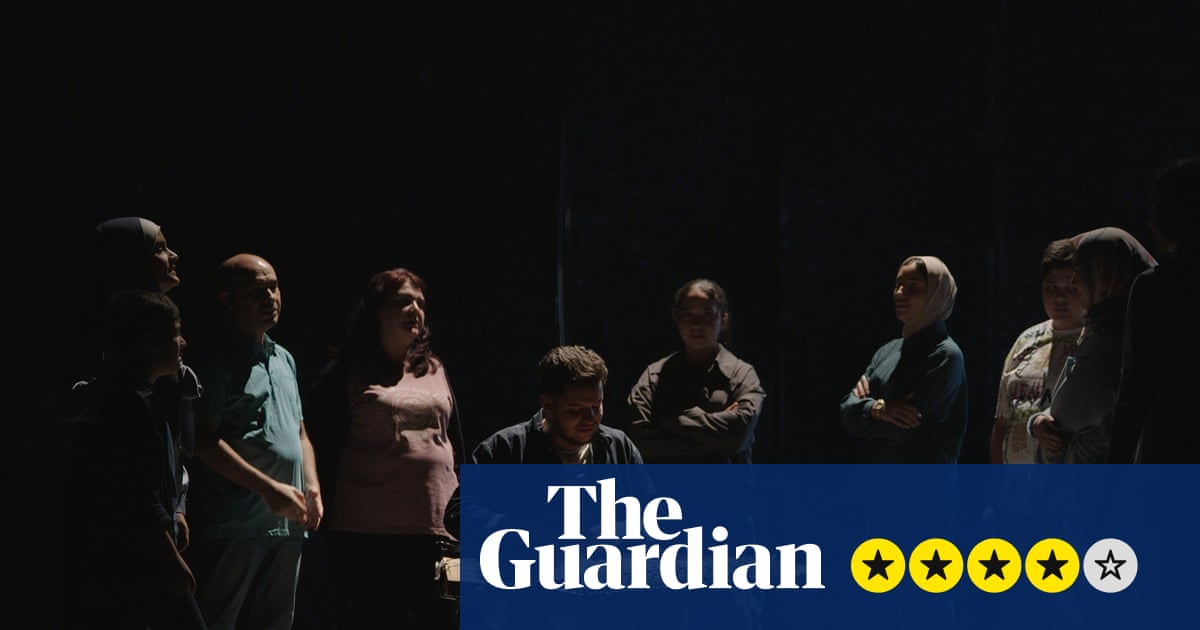
In Who Is Still Alive, Swiss musician and film-maker Nicolas Wadimoff asks refugees who fled Gaza for Egypt during the bombing to draw the neighbourhoods they left behind. Their maps become a starting point for recalling the people and places they have lost.
The group first draws on paper, then lays out a floor plan on the studio floor. Their memories bring grief that may usually remain just below the surface into stark view. The interviewees carry videos of lost loved ones on their phones; those who have died are described as having been “martyred”.
One interviewee recalls attending the Edward Said conservatory, now rubble. Another speaks about her work in film-making and animation. A man plays a qanun, a type of zither, then identifies the moment in the music when an explosion in Gaza showered him with glass as he played.
Among the film’s most painful accounts is that of Gaza writer and journalist Mahmoud Jouda. He recalls being eight years old when a soldier brutally slapped him for throwing a stone at a military Jeep, and says the incident radicalised him.
Wadimoff’s sombre documentary centres on lived experience and immediate pain rather than politically retributive anger, giving space to fierce and heartbreaking stories.