German companies continue to invest in Ukraine despite attacks on industrial sites, severe economic pressures and the risks of operating during the war. At the 9th German-Ukrainian Business Forum in Berlin on November 20, business leaders and officials discussed the damage, investment prospects and support companies need.
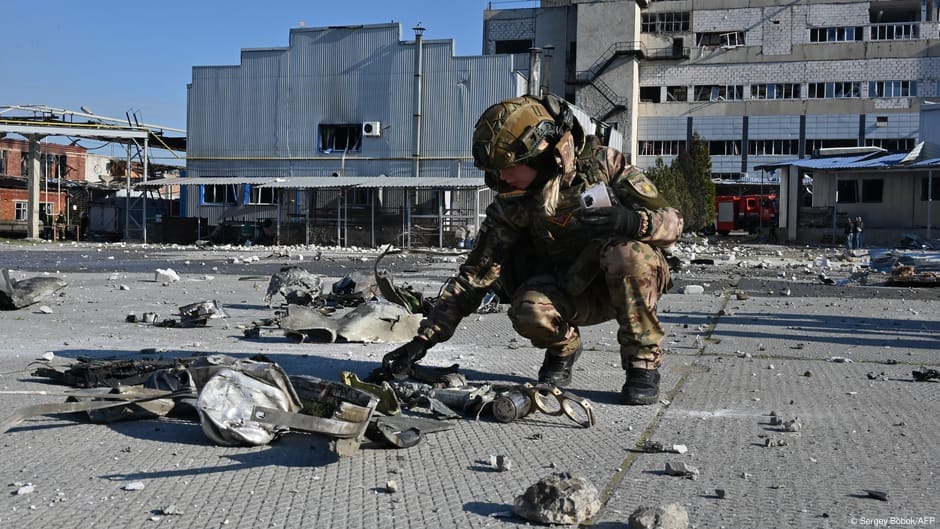
Russian attacks on civilian targets, including power plants, train stations, shopping centers, warehouses and residential buildings, have continued. Industrial facilities have also been hit. Oliver Gierlichs, who heads Bayer's operations in Ukraine and is president of the German-Ukrainian Chamber of Industry and Commerce (AHK Ukraine), said: “Over the past few months, goods and facilities worth several hundred million euros have gone up in smoke.” The damage is estimated at €500 million ($544 million).
The AHK and two other German business associations invited around 500 people from politics and industry to the forum, including German Chancellor Friedrich Merz and Ukrainian Prime Minister Serhii Koretskyi. Just over 2,000 German companies are active in Ukraine, according to the AHK, and German direct investment there totals around €1 billion ($1.1 billion).
The outlook remains difficult. “We are preparing for a difficult winter,” Gierlichs said. After comparatively strong growth in recent years, Ukraine's economy has slowed sharply since the summer. The latest analysis by the Kyiv School of Economics (KSE) said intensified Russian attacks on critical infrastructure and production capacity had “significantly worsened the economic outlook” and warned of “substantial risks.”
Energy supplies are strained and electricity is in short supply. Companies also face worker shortages as many people have been mobilized for military service or fled abroad to escape the attacks. German business leaders cite burdensome approval processes and unclear regulations as further challenges.
Merz said at the forum: “Not a single German company has left Ukraine since the start of this war.” He added that “in 2025, trade between Germany and Ukraine exceeded €12 billion, an increase of 4.4% compared with the previous year.”
Military cooperation is currently at the top of the agenda in German-Ukrainian relations. Germany continues to supply large quantities of defense equipment, while new capabilities are increasingly being developed through joint ventures. The long-range combat drone “Anubis,” made by German-Ukrainian joint venture Auterion Airlogix, was displayed at the House of German Business Associations in Berlin. It was developed in Ukraine, with its software developed in Germany.
A total of 5,000 drones are to be produced near Munich, marking the first time Germany has established industrial-scale production of heavy attack drones on its own soil. Merz said: “Through this cooperation, Germany's technological capacity for innovation is expanding in ways that would have been unimaginable just a few years ago.”
Merz said he believes cooperation will also benefit Germany's civilian industries. “What we invest in Ukraine today will be repaid many times over through stability, export opportunities, joint projects, and economic growth,” he said.
Foreign companies face a balancing act between persistent risks and the prospect of entering a market described as virtually unmatched in size elsewhere in Europe. In February 2025, the European Commission and the Ukrainian government estimated that reconstruction and recovery would require $524 billion over the following ten years. The article says that figure has likely grown larger since then.
Ukraine is increasingly viewed not only as a recipient of aid but as a potential future business destination. It aims to modernize its economy, align it with EU standards and deepen its integration into the European single market over the long term. “We see significant opportunities in the defense industry, the energy sector, infrastructure, information technology, and many other industries,” Koretskyi said in Berlin. Gierlichs said: “German expertise and Ukrainian drive, combined with unity and determination, make for a powerful partnership.”
Gierlichs said companies need more support, including reliable financing, investment guarantees and effective protection against war-related risks. Reliable logistics, predictable business conditions and faster administrative procedures are also essential, he said.
Merz pledged support at the forum and called on Ukraine to continue reforms, particularly to strengthen the rule of law and combat corruption. “These reforms are a prerequisite for additional financial assistance and investment,” he said.
The partners also have differing priorities: German companies want to expand into new markets, while Ukrainian businesses seek technology transfers and local production to retain as much value creation as possible in the country. “Export fees or legal restrictions on the transfer of intellectual property rights stand in the way of joint innovation efforts,” Merz cautioned.
Representatives of Ukrainian business associations estimate that the private sector could eventually cover up to 40% of Ukraine's reconstruction costs. For now, many projects depend on international development banks, government guarantees or public funding programs; without that support, many investments would be difficult to undertake.
In a conventional business investment, a company commits its own capital and bears losses if a venture fails commercially. If bank loans are involved, the company and lender initially share the risk. Government-backed projects differ: investment guarantees can compensate companies for losses caused by political actions such as expropriation, or by war damage that destroys assets and disrupts operations. They do not cover losses stemming from a company's own business decisions. In such cases, taxpayers ultimately bear the risk. By the end of 2025, the German government had provided investment guarantees covering a total investment volume of €558 million ($611 million) in Ukraine.
Companies seeking to benefit from reconstruction need to build partnerships and establish a long-term presence in Ukraine, while competition for contracts is already growing. Forum participants said German business leaders have often been more risk-averse than counterparts from Turkey, India and China. International interest in reconstruction is considerable, and German companies are not the only ones competing for work.