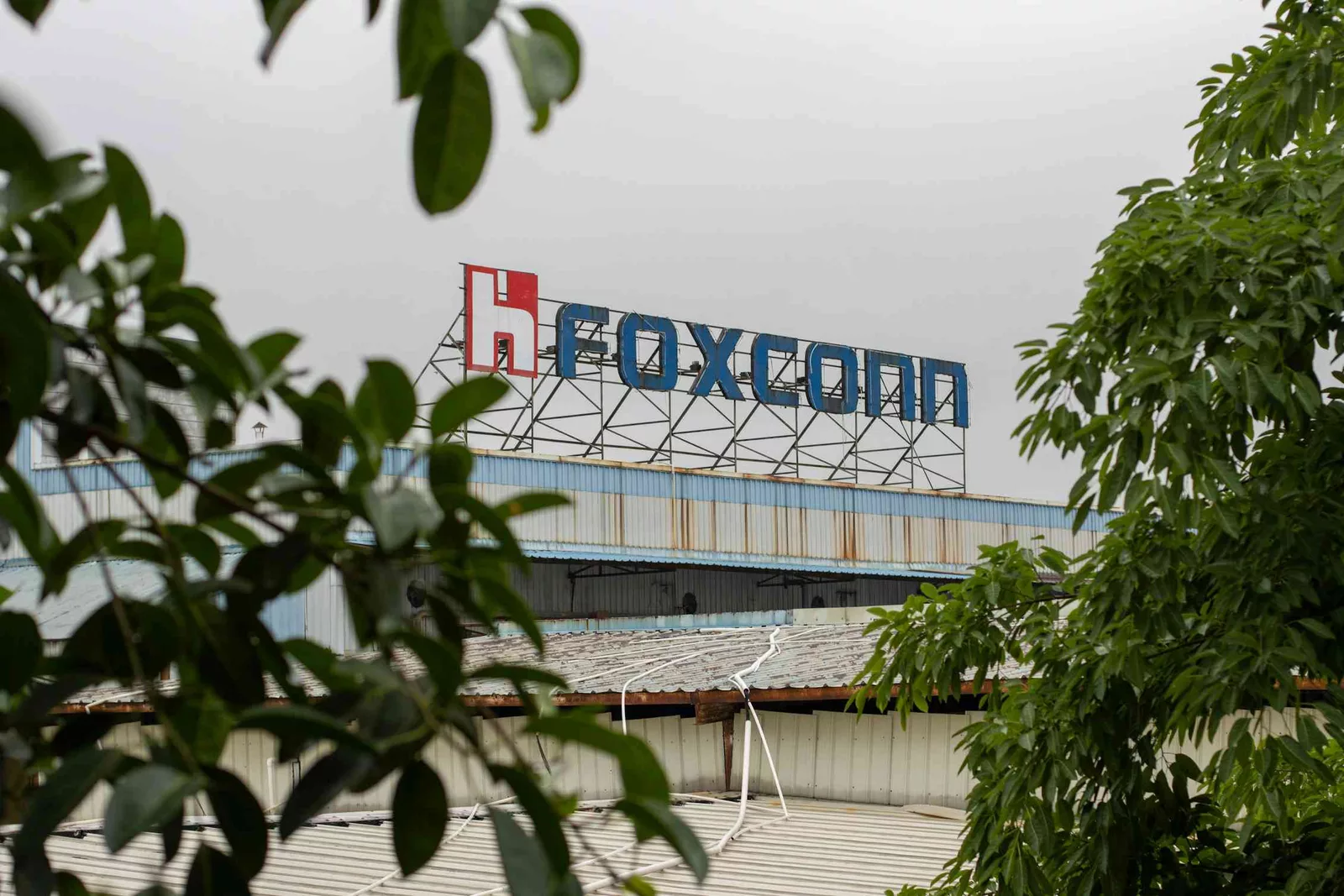
Taiwanese companies are continuing to invest in China even as political tensions rise, while some expand elsewhere to reduce their exposure. For many business owners, leaving could mean losing customers and long-built supplier relationships.
Taiwanese electronics makers Acer and Asus were reportedly shifting some production from Thailand and Vietnam back to China, where manufacturers could offer lower prices amid rising global memory-chip costs. The news came as Acer founder Stan Shih represented Taiwan at an Asia-Pacific Economic Cooperation summit in Shenzhen.
At the summit, Chinese president Xi Jinping raised Taiwan in talks with US counterpart Donald Trump, urging him to “do the right thing” and warning that a major disruption over the island could damage relations between Beijing and Washington. Beijing claims the democratically governed island as its own and has not ruled out using military force, while saying it prefers peaceful “reunification”. China regularly conducts military and naval drills around Taiwan.
Many Taiwanese entrepreneurs operating in China, known as Taishang, remain as long as their businesses are viable. Some are also building operations in other countries. Their decisions are not only about costs and customers: entrepreneurs interviewed by the author said they value maintaining contact between people across the Taiwan Strait when relations between their governments are strained.
Taiwanese companies helped drive China’s economic growth in the 1990s and 2000s, making products for overseas markets. Some later sought Chinese customers when US tariffs made exports from China to the US more difficult.
China’s share of Taiwan’s approved outward investment has fallen from nearly 84% in 2010 to 3.8% in 2025. That measures new investment, however, not whether companies are closing factories or abandoning Chinese customers. At the end of March 2026, about two-thirds of Taiwan’s publicly traded companies still had investments in mainland China. They earned a combined NT$145 billion (£3.35 billion) from those investments in the first three months of the year.
Some firms are following a “China+1” strategy, expanding abroad while continuing to invest in China. In October, Taiwanese circuit board materials maker Ventec opened its first factory in Thailand and committed about US$50 million (£38 million) to expand in Kunshan. The Thailand site serves industries including aerospace and medical technology; the Kunshan expansion adds capacity for materials used in AI hardware. Having sites in both places also gives the company options if conditions change.
Chinese officials have also sought to attract Taiwanese businesses. Beijing designated Fujian a pilot zone for closer economic ties with Taiwan in 2023. At a 2024 business forum in Anhui, participants signed agreements for 47 Taiwanese-funded manufacturing projects, including in electric vehicles. An AI forum in Kunshan in August 2026 brought together hundreds of entrepreneurs from both sides.
Business activity does not necessarily mean Taiwanese companies support Beijing’s goal of unification. The author says entrepreneurs he interviewed often described a rule: “Never leave the Chinese market.” Once a company departs, customers may switch to competitors and established supplier relationships can break down, making a return difficult.
Many Taishang interviewed by the author returned to Taiwan to vote but rarely discussed their political views publicly on the mainland, in part to protect their businesses. The author says this silence does not mean they support Beijing or are indifferent to Taiwan’s future. Some believe business ties can ease tensions by fostering relationships between people on both sides.
As one experienced Taishang told the author: “Chinese and Taiwanese people have no problems with one another. It’s politics that drives us apart. As long as people meet, speak and work together, they can deepen their mutual understanding, and this helps maintain peace across the Taiwan Strait.”
Political pressure can still affect business. In 2021, after Chinese authorities penalised Taiwan’s Far Eastern Group conglomerate over alleged regulatory violations, Beijing warned Taiwanese firms to distance themselves from supporters of formal independence.
US policy can also constrain companies. Reuters reported during the Shenzhen summit that Taiwanese chipmaker TSMC had paused some orders for advanced chips from Chinese customers after the US tightened export rules. The article notes that turning down some orders is not the same as abandoning the market: TSMC still runs factories in China.
The author argues that Taishang bring both risks and opportunities for Taiwan. Their continued operations contribute to Taiwan’s economic and political exposure to China, but also keep people working together and in contact. This cannot guarantee peace, the author writes, but it helps maintain channels that summits alone cannot create.
Gunter Schubert receives funding from the Deutsche Forschungsgemeinschaft (DFG). He is Chair Professor of Greater China Studies and Director of the European Research Center on Contemporary Taiwan at the University of Tübingen.