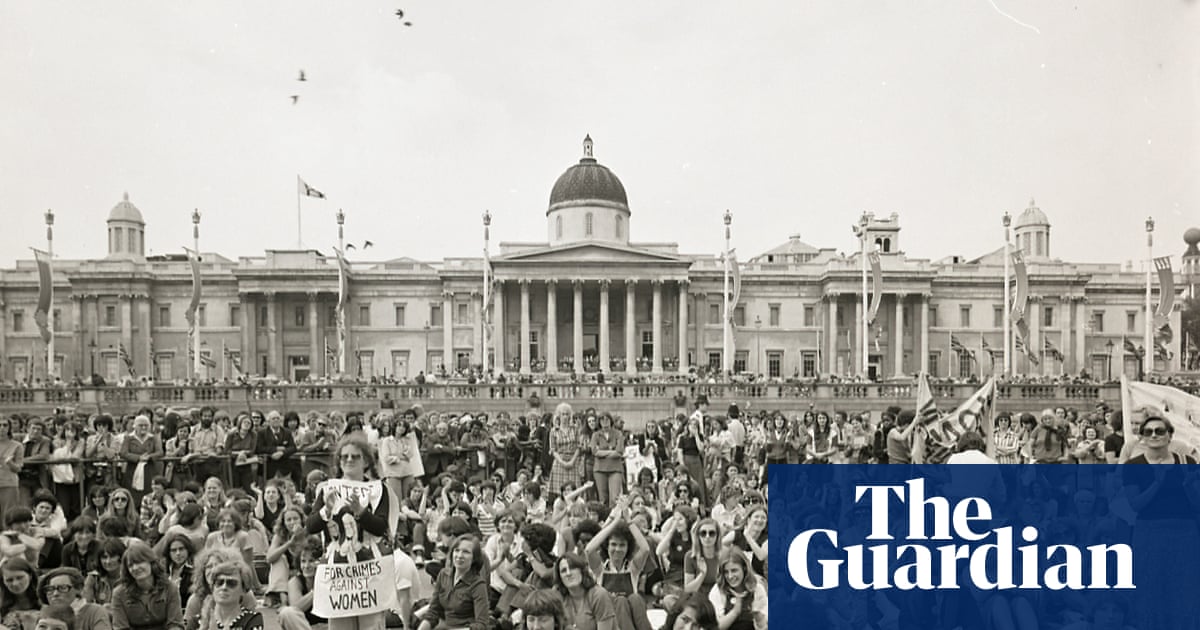
Women Against Rape is marking its 50th anniversary, reflecting on decades of campaigning against rape and a criminal justice system the group says has often been weighted against victims. The organisation is depositing its archive at the Bishopsgate Institute.
The group was founded by a small number of people whom co-founder Ruth Hall, now in her 70s, described as “ordinary women”. Its early aims included criminalising rape within marriage, keeping women’s sexual histories out of rape trials and improving street lighting to help protect women at night.
Hall recalls one of the group’s early chants: “Yes means yes and no means no, however we dress and wherever we go.” Longtime campaigner Lisa Longstaff says: “Grassroots women got together because we were so absolutely outraged about how rape was treated.”
The group campaigned for years to make rape within marriage a crime. It was finally criminalised in 1991. In 1977, campaigners staged a mock trial of rape and violence against women in Trafalgar Square, London, and protested at the Athenaeum after three appeal court judges freed convicted rapist Tom Holdsworth, citing his “promising army career”.
Other campaigns included a 1995 private prosecution for rape in England and Wales, after a man attacked two sex workers. He was convicted on evidence the Crown Prosecution Service had dismissed as “insufficient”. WAR also campaigned for refugee women seeking asylum from rape, domestic violence and other torture to be entitled to protection.
“We set a precedent in 1997 that due to the impact of trauma, a woman had been ‘unable, not unwilling’ to report rape,” Longstaff says. She adds: “We are still up against institutional misogyny but things are really changing. We have always said men in positions of power and authority should not be above the law, including celebrities. Finally, some of them are being treated as the criminals they are.”
The article contrasts current sentencing with cases from 1977. When Mr Justice Bennathan sentenced Russell Brand to 10 and a half years in prison, he said: “Whatever women wear, wherever they go, whatever they drink, they retain the right to say no, and to demand justice from the criminal courts when sexual predators like you, Russell Brand, act without their consent,” the judge said.
In 1977, Judge Zigmond gave a suspended sentence to a man who raped a three-year-old girl, telling her mother: “You will forget it and so will your little girl.” Judge Peter Mason sentenced Royal Navy rapist Maurice Markham to six months, saying “it would be a shame if the country loses your services”.
Rape remains prevalent, the article says. Rape Crisis England and Wales reports that one in four women over 16 have been raped; two in five rapes are carried out by a partner, and six in seven are perpetrated by someone the women knew. Police recorded 71,227 rapes in 2024, but 2.7% of cases led to an alleged rapist being charged that year.
In the UK, Rape Crisis offers support on 0808 500 2222 in England and Wales, 0808 801 0302 in Scotland, and 0800 0246 991 in Northern Ireland. In the US, Rainn can be reached on 800-656-4673. In Australia, support is available at 1800Respect (1800 737 732). Other international helplines can be found at ibiblio.org/rcip/internl.html.