The Briefing
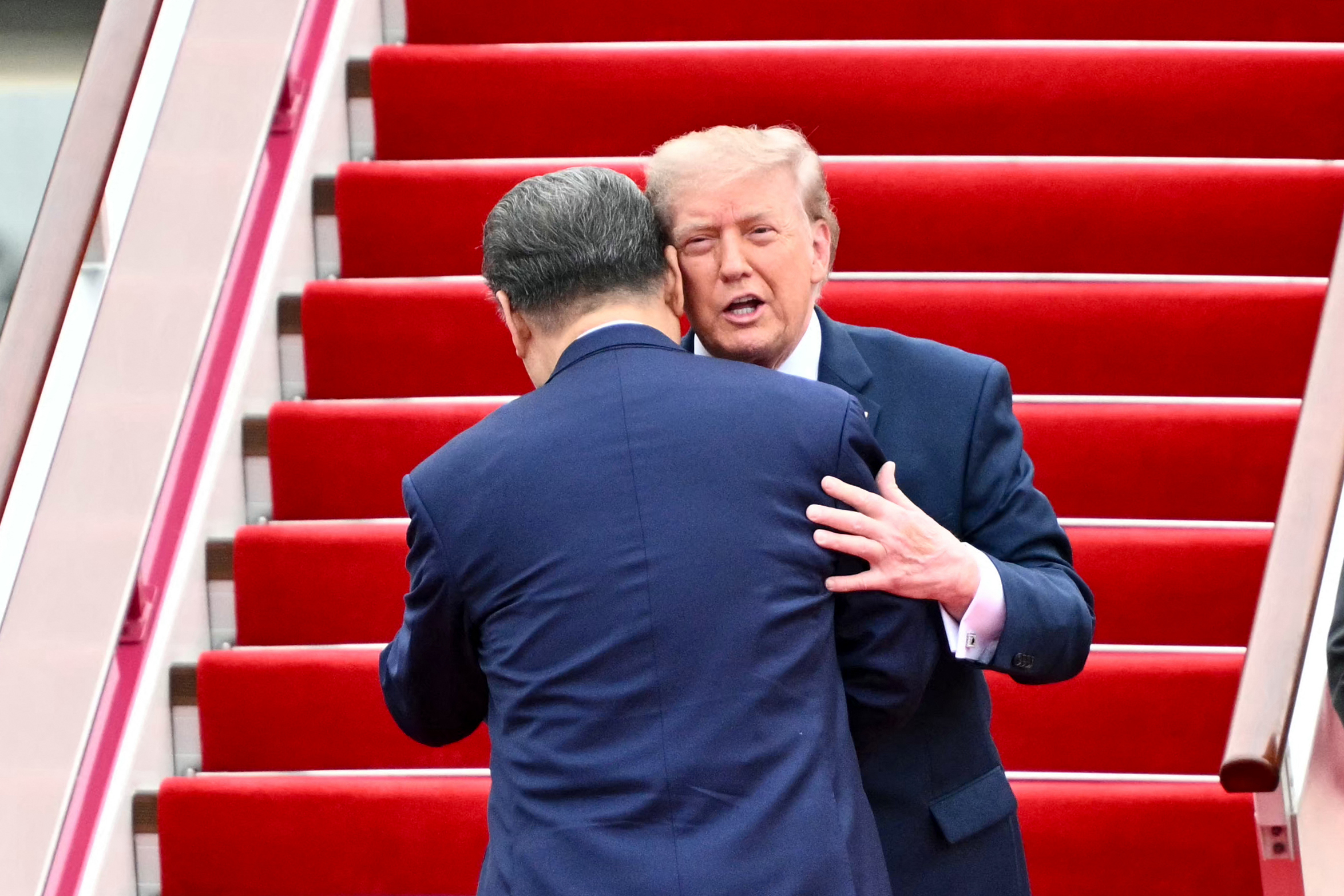
- Chinese President Xi Jinping personally greeted Donald Trump on the tarmac at Shenzhen Bao'an International Airport on November 18, breaking with decades of Chinese diplomatic tradition in a carefully choreographed ceremony complete with military honors, organized chants and formation flyovers.
- Xi's gesture mirrored Trump's own tarmac welcome for the Chinese president at Joint Base Andrews in September 2026 — a move Beijing framed as a symmetrical act between co-equal superpowers, while analysts read it as a calculated effort to build goodwill before high-stakes negotiations over chips, trade and Taiwan.
- The contrast with Putin's reception — greeted by a senior aide rather than by Xi himself — signals a clear new diplomatic hierarchy: Washington is now China's primary peer on the world stage, with Moscow visibly repositioned in the queue.
When Air Force One touched down at Shenzhen Bao'an International Airport for the 33rd APEC Economic Leaders' Meeting, Chinese President Xi Jinping did something that broke with the foundational logic of Beijing's statecraft: he walked to the runway himself to receive Donald Trump. Young voices filled the air with organized chants, an elite military honor guard stood at attention, a red carpet stretched across the tarmac, and military aircraft cut formations overhead. For anyone versed in the calibrated language of Chinese diplomacy, every detail was deliberate.
A Break With Decades of Diplomatic Custom
Chinese protocol, rooted in an imperial tradition that places the host at the center and expects guests to come to him, holds that the president receives foreign dignitaries at his official residence — not at an airport. According to ABC News, that Xi had never before received a foreign head of state at an airport, making Trump's welcome a verifiable first in the current era of Chinese leadership. Of the more than fifteen heads of state who converged on China's southern technology hub for APEC, Trump was the only one to receive this distinction directly from Xi. Every other delegation followed standard protocol. That selectivity appeared deliberate.
Reciprocity With a Strategic Dimension
China's state news agency Xinhua framed the gesture in terms of reciprocity. In September 2026, Trump had broken with Washington's own tradition by personally meeting Xi on the tarmac at Joint Base Andrews in Maryland — a rare planeside welcome that no American president had extended at that military base in more than sixty years. By mirroring that moment on Chinese soil, observers note that Beijing may also be trying to set a smoother tone
Analysts see a deeper calculation behind the gesture. Having closely observed Trump across multiple summits throughout 2026, the Chinese leadership appears to have concluded that the American president places exceptional value on personal validation of his political stature. Xi's tarmac appearance was therefore also a form of psychological calibration — a move designed to disarm potential tensions and generate a constructive atmosphere before the two leaders sat down at the negotiating table.
Semiconductors, Trade Truce and the Nvidia Affair
The warm optics came against a backdrop of sharp unresolved friction. Looming over the Shenzhen talks are friction points over advanced semiconductor export restrictions — sharpened by the ongoing Nvidia affair, which has strained the fragile US-China technology truce — alongside a commercial arrangement whose expiration date is approaching fast. By staging an extraordinary welcome, Beijing momentarily displaced those flashpoints with imagery of mutual respect and emerging partnership.
When Xi Reserves Physical Warmth
The significance of the tarmac greeting becomes sharper when weighed against Xi's habitual restraint. Visible warmth—such as an embrace—stands out against Xi's usually measured, formal public demeanor.
Historically, that register of personal warmth had been extended to almost no other foreign leader as consistently as it had been to Vladimir Putin. At Zhongnanhai in May 2024, the two presidents exchanged a double embrace that was widely read as a demonstration of deep geopolitical solidarity — an extraordinary moment precisely because of how unusual it was. Extending that same register of warmth to Trump, on Chinese soil and before international cameras, projected an unmistakable signal: Beijing now positions Washington as its direct peer on the global stage.
Putin's Markedly Different Arrival in Shenzhen
The contrast with how Putin was received in Shenzhen makes the symbolism impossible to ignore. The Russian president also arrived in the city for the summit — but he was not met by Xi. A senior Chinese official performed the welcoming duties, a contrast that draws attention in a diplomatic system where protocol carries heavy weight.
That choice may carry a subtle subtext. The trilateral format of this summit was driven in significant part by the Kremlin, which sought to use the gathering to reassert Russia's relevance on the international stage. Xi's absence from Putin's arrival could be read as a quiet signal of discomfort with that framing — a soft diplomatic rebuke delivered not through words, but through the deliberate choreography of protocol.
A New Hierarchy, Staged in China's Tech Capital
The carefully layered staging of this APEC opening amounts to a composed statement about where China sees itself in the emerging world order. Xi greeted the American president as a co-equal superpower. He delegated the Russian welcome to a subordinate. And he did all of it in Shenzhen — a tech hub anchored by companies like Huawei, BYD, and Tencent that underscores China's technological ambitions.
Whether the warmth will translate into concrete progress on chips, trade or Taiwan remains to be seen. But the opening scene has already delivered its message, before a single formal negotiation began.
Related Articles
- Mexico to Host APEC 2028 for First Time in 26 Years as Sheinbaum Visits China
- China Confirms It's Negotiating a Never-Before-Seen Xi-Trump-Putin Summit
- Lit-Up Skyscrapers and World Leaders Incoming: Shenzhen Becomes the Planet's Center for APEC This Year
- Chile's Presidential Jet Flies to APEC Amid Unresolved Maintenance and Brake Questions