Young Black men in Philly are more likely to be pulled over if driving with friends, study shows
By Lance Hannon, Professor of Sociology and Criminology, Villanova University ·
This article was originally published by The Conversation. Author: Lance Hannon, Professor of Sociology and Criminology, Villanova University.
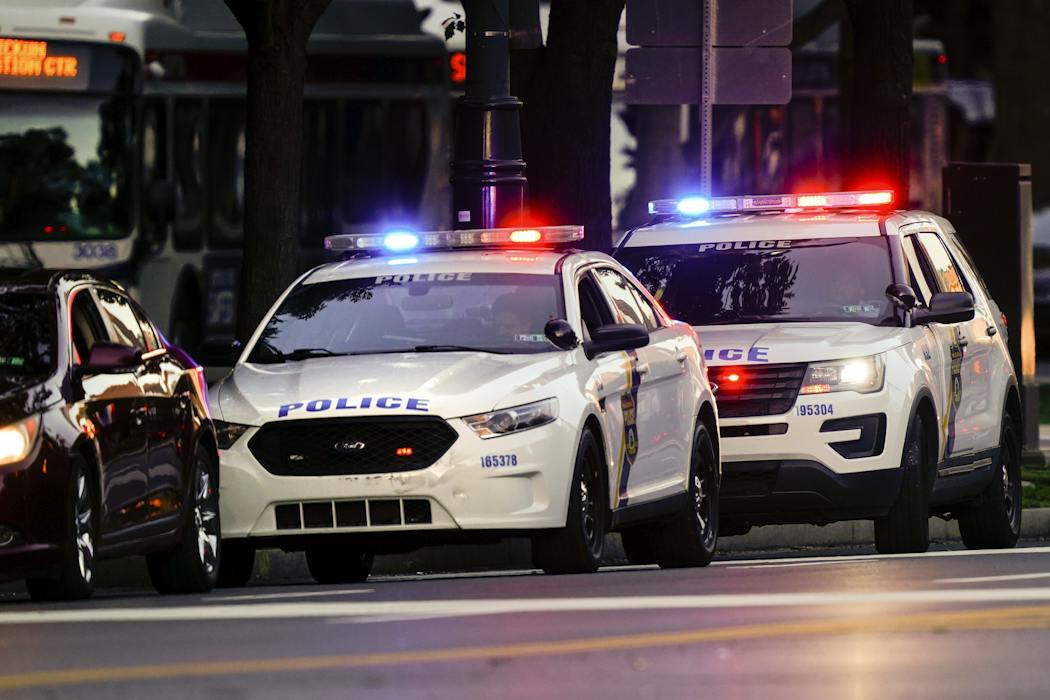
Deciding whether to drive somewhere alone or with friends is typically a matter of convenience or personal preference. But for young Black men in Philadelphia, that decision may carry an additional consideration: the likelihood of being pulled over by police.
My recent co-authored research suggests that young Black men traveling together attract significantly more police scrutiny than those driving alone.
In fact, the apparent effect of traveling with another young Black man was larger than the racial disparity detected when comparing young Black and white male drivers.
These findings challenge a common assumption about racial profiling: that its defining feature is simply whether a driver is Black or white.
What 41,633 traffic stops reveal
As a criminologist, I have published numerous peer-reviewed articles on police stops. I recently published a study on this topic in the journal Race and Social Problems with Molly Biddle, who at the time of writing was a data analyst for the Police Accountability Unit at the Defender Association of Philadelphia. In that study, we analyzed Philadelphia Police Department traffic stop records from 2021 through 2024.
We focused on men ages 18-29 stopped for motor vehicle code violations that did not involve an arrest. Among young Black males, approximately 1 in 4 were investigated alongside another young Black man in the car. Among young white males, less than 1 in 20 were investigated with another young white man.
This fivefold disparity is striking, but it does not necessarily establish discriminatory policing. Different groups might have different driving habits or preferences for traveling together.
To investigate whether police decisions contributed to this disparity, we employed a statistical technique known as the “veil-of-darkness” test.
What changes when the Sun goes down?
The veil-of-darkness test takes advantage of the fact that sunset occurs at different times throughout the year.
For example, an officer may be able to clearly see a vehicle’s occupants from a distance at 7 p.m. during summer but have a much more obscured view at the same hour during winter. Importantly, the idea is that daylight visibility can help an officer distinguish who is in the vehicle before the decision is made to pull the car over.
By comparing stops occurring at similar times under different lighting conditions, researchers can investigate whether the ability to distinguish vehicle occupants from afar influences traffic enforcement.
Our results revealed two important patterns.
First, the disparity between young Black men stopped and young white men stopped decreased when it was harder to see who is in the car. This is consistent with what other researchers have found using earlier data for Philadelphia.
Second, and this is what makes our analysis novel, we found that obscured visibility had an even greater impact on reducing the gap between young Black males stopped in groups versus driving alone.
Both patterns were statistically significant, even after accounting for time of day, neighborhood, police assignment, season and other factors.
These findings suggest that the visibility of a young Black male passenger in a vehicle may influence police decisions as much or even more than the visibility of a driver’s race alone.
Social psychological research offers a possible explanation for our results. People sometimes perceive groups as more threatening than individuals, and racial stereotypes can intensify those perceptions.
Two young Black men together may therefore be perceived as much more suspicious than either would be individually.
Indeed, in our sample, young Black male drivers investigated with young Black male passengers were far more likely to be pulled out of the vehicle and fruitlessly frisked for contraband than to receive a citation for the traffic offense used to justify the encounter in the first place. Only 7% were ticketed, which suggests that many stops were pretextual.
Racial profiling isn’t just about the driver’s race
Our recent findings build on our earlier study that examined more than 76,000 traffic stops involving Black drivers in predominantly Black Philadelphia neighborhoods.
That research found that the proportional representation of younger Black men among stopped drivers increased with daylight visibility, while the proportional representation of older Black women decreased.
The estimated magnitude of this within-race disparity was comparable to estimates commonly reported in studies comparing stops of Black versus white motorists.
Together, our two studies reveal that unfair differences in police scrutiny within the Black population can be as large as, or larger than, disparities detected through conventional Black-white comparisons.
Beyond investigating the extent to which the police pull over a greater quantity of Black drivers than white drivers, our research points to the need for police accountability advocates to ask additional questions about passengers and intraracial disparities.
For example, when policing in virtually all-Black communities, are some officers more blind to a driver’s age and gender than others? Likewise, are certain officers more likely to pull over young Black men when they are seen traveling in groups?
Such questions call attention to the idea that fairness within communities is just as important as fairness between them.
Read more of our stories about Philadelphia and Pennsylvania, or sign up for our Philadelphia newsletter on Substack.

Lance Hannon does not work for, consult, own shares in or receive funding from any company or organization that would benefit from this article, and has disclosed no relevant affiliations beyond their academic appointment.
Originally published by The Conversation Global