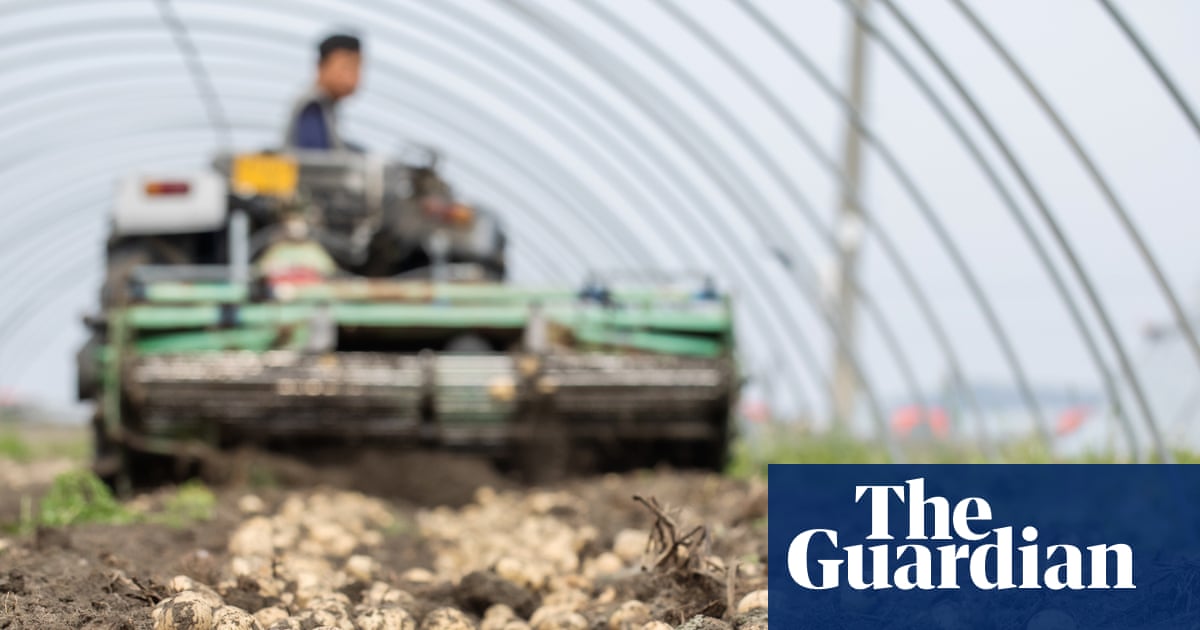
Japan is moving towards lifting its 76-year-old ban on imported American potatoes, following pressure from Donald Trump. The change would allow fresh US potatoes onto restaurant menus and supermarket shelves for the first time since 1950.
Japanese potato farmers, particularly in Hokkaido, oppose the move. They warn that imports could threaten their livelihoods and bring pests and diseases into growing areas. Hokkaido produces about 80% of Japan’s potatoes.
Japan partially eased the ban in 2006, allowing US potatoes to be imported exclusively for making crisps. Those potatoes must travel in sealed containers and be cooked at a high temperature to prevent the spread of pests and diseases.
Toshihide Numasawa, an employee of the Japan Agriculture group in Hokkaido, said: “We have repeatedly and unequivocally stated our opposition to imports.” He cited the “risk of pests and diseases entering the country and damage to Hokkaido’s production areas.”
The government has identified 21 pests and diseases that could pose an invasion risk. Farmers are particularly concerned about potato cyst nematode and pale potato cyst nematode, which can damage roots and remain in soil for more than 15 years, although they are not a threat to human health.
Japan grows more than 90 potato varieties. Consumers ate 3.5 million tons of potatoes in 2024, according to the agriculture ministry, including 1.2 million tons of fresh imports used to make crisps.
The issue has become part of Japan-US trade negotiations and a challenge for Japan’s new agriculture minister, Arata Takebe, whose constituency is in Hokkaido. He told Jiji Press that the plan “should progress after thorough scientific and technical discussion” and that a decision could take “considerable time”.
“I know the [US] side has strong expectations, but the ban on imports will not be lifted without sufficient discussions or an agreement acceptable to both sides,” Takebe said.
Earlier this year, congressional lawmakers urged Trump to keep raising the issue with Japanese prime minister Sanae Takaichi. In a letter, they wrote: “US potato growers produce the best potatoes in the world,” adding that Japan offered “significant export opportunities for American potato growers.”
Supporters of lifting the ban say it would reduce prices for Japanese consumers and bring American farmers an additional $150m a year in export earnings. Hokkaido farmers argue that the risks from pests and disease have not been adequately addressed.
Naohiro Makino, a potato farmer in Hokkaido, told the Asahi Shimbun: “Once pests get in, you can’t grow potatoes for more than a decade,” adding: “For the sake of the farmland our ancestors protected, I am firmly opposed [to lifting the ban].”