Moneywise and Yahoo Finance LLC may earn commission or revenue through links in the content below.
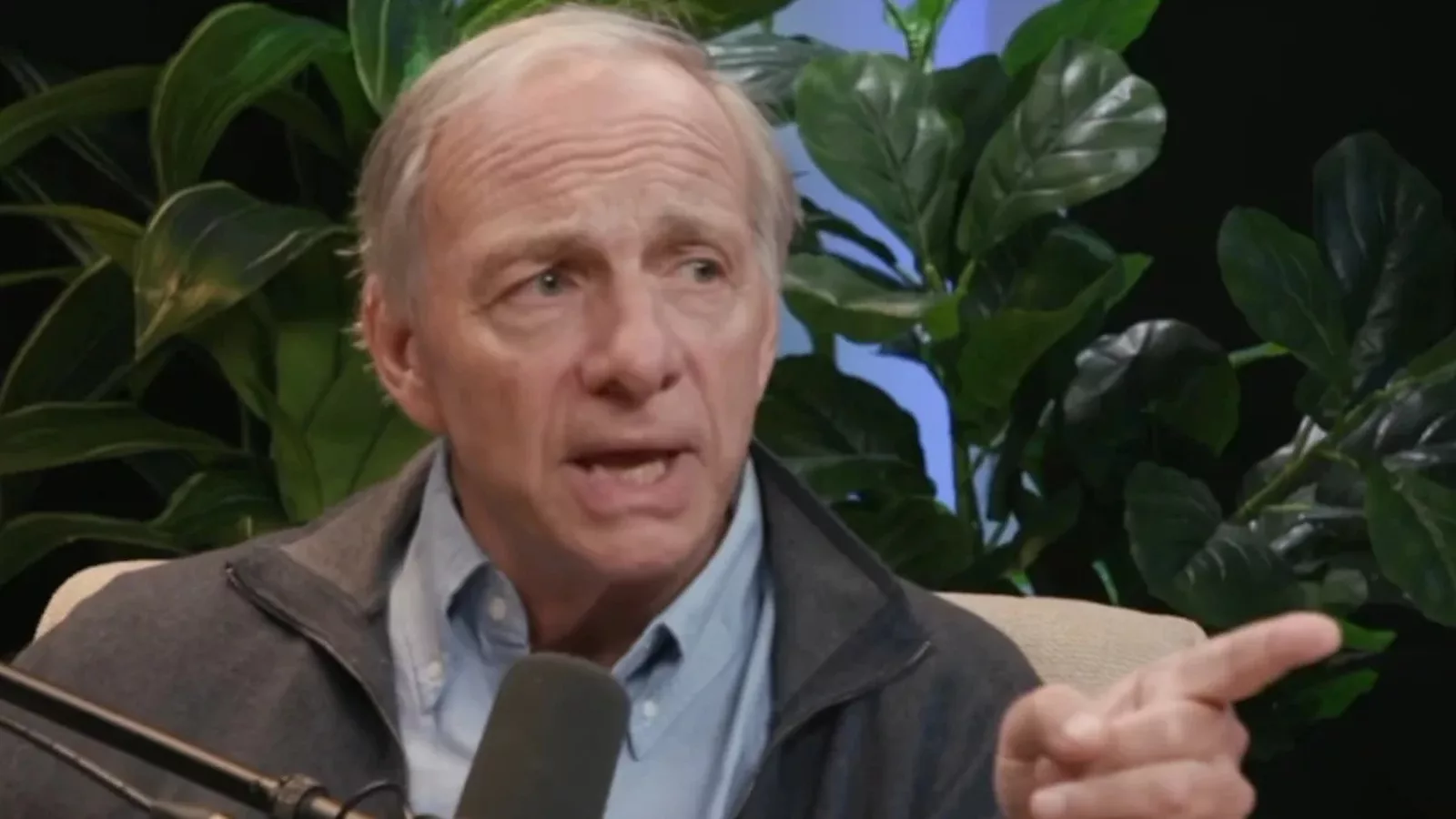
Ray Dalio sounded like a doctor delivering bad news. The damage had been building for years, and by the time he described what could happen next, he was using two words nobody wants to hear.
"We are very exposed to a heart attack," he said (1) in a recent interview with "Money Rehab."
Jeff Bezos backs a platform that lets anyone invest in rental homes for as little as $100 — 5 ways to build wealth like a landlord without actually being one
A single line on your car insurance policy could be inflating your premium by up to 30% — here's what to change
Gold has overtaken U.S. Treasuries as central banks' top reserve asset. Get Goldco's 2026 Precious Metals IRA Playbook for free
But the patient he had in mind wasn't just one person. It was the entirety of America.
The billionaire founder of Bridgewater Associates compared the financial system to the body's circulatory system. And he had a grim way of describing what happens when you let the debt pile up.
"It's like plaque," he said. Over time, the payments squeeze out money that could have gone toward everything else.
"I would say you've accumulated a lot of plaque and you are at risk," Dalio said.
Then he put a number on what it would take to avert a crisis.
"If we don't cut the budget deficit down to 3% of GDP — it's now probably going to be about six and a half percent of GDP — if we don't cut it there, we will have a heart attack," he said.
The government is running a shortfall more than twice Dalio's target. The federal deficit hit $2 trillion in the fiscal year that ended Sept. 30, up $217 billion from the year before. That was 6.2% of GDP, according to the Congressional Budget Office (2). By the end of that fiscal year, the total federal debt had reached $40.2 trillion. By Nov. 13, it had crept up to $40.5 trillion (3).
As Dalio pointed out, Washington is already spending more on interest than the Pentagon spends on its military activities. The CBO put net interest on the public debt at $1.14 trillion for the year, compared with $917 billion in military spending by the Department of Defense.
Those may sound like numbers for Washington to worry about. But Dalio warns that how the government deals with its debt could determine how much your savings can buy.
"Either interest rates have to go up and constrict the demand … or the Federal Reserve has to come in and print money and buy all this debt, which is inflationary. In either case, it has the effect of reducing buying power," he said.
Americans are already feeling the squeeze at the checkout and at home. The food index in the U.S. consumer price index has risen 35% (4) since the start of 2020, while the shelter index has climbed 34% (5).
Dalio warned that if Washington mishandles the debt, Americans could face another spike in inflation — worse than the last one.
"The inflationary problem that we experienced before was because of all of the debt and money that was handed out," he said. "And so you can see a big version of that, something that could be worse than that if this isn't handled well."
"You don't increase wealth by printing money. You just lessen the value of money."
That's how a crisis in Washington could eat into years of savings. The dollars you've put away could buy less right when you need them most.
The damage inflation does to your savings can be startling when you zoom out. According to the Federal Reserve Bank of Minneapolis (6), $100 in 2026 has the same purchasing power as just $11.65 did in 1970.
That's right. $100 became less than $12.
Dalio has pointed to one time-tested asset in particular — gold.
"When there's too much debt, and there are big problems, gold is an effective diversifier," he said, adding, "gold should be part of a portfolio as a diversifier."
Gold has long been considered a go-to safe haven. It can't be printed out of thin air like fiat money, and because it's not tied to any single currency or economy, investors often flock to it during periods of economic turmoil or geopolitical uncertainty, driving up its value.
Over the past five years, as inflation continued to chip away at the purchasing power of the dollar, gold has climbed 108%.
Dalio even put a number on how much room he'd make for it: "If you have a traditional portfolio and you have about 10 or 15% in gold and that kind of bad time happens, you'll be well diversified."
Other prominent voices see further upside in the precious metal. JPMorgan CEO Jamie Dimon has said that in this environment, gold can "easily" rise to $10,000 an ounce.
One way to invest in gold that also provides significant tax advantages is to open a gold IRA with the help of American Hartford Gold.
Gold IRAs allow investors to hold physical gold or gold-related assets within a retirement account — combining the tax advantages of an IRA with the protective benefits of investing in gold, making it an option for those looking to potentially hedge their retirement funds against economic uncertainties.
Even better, you can often roll over existing 401(k) or IRA accounts into a gold IRA without tax-related penalties. American Hartford Gold also helps keep startup costs down with free account setup, free insured shipping and up to five years of free storage. To learn more, get your free information guide on investing in precious metals.
If you change your mind, you can cancel within seven days for a…