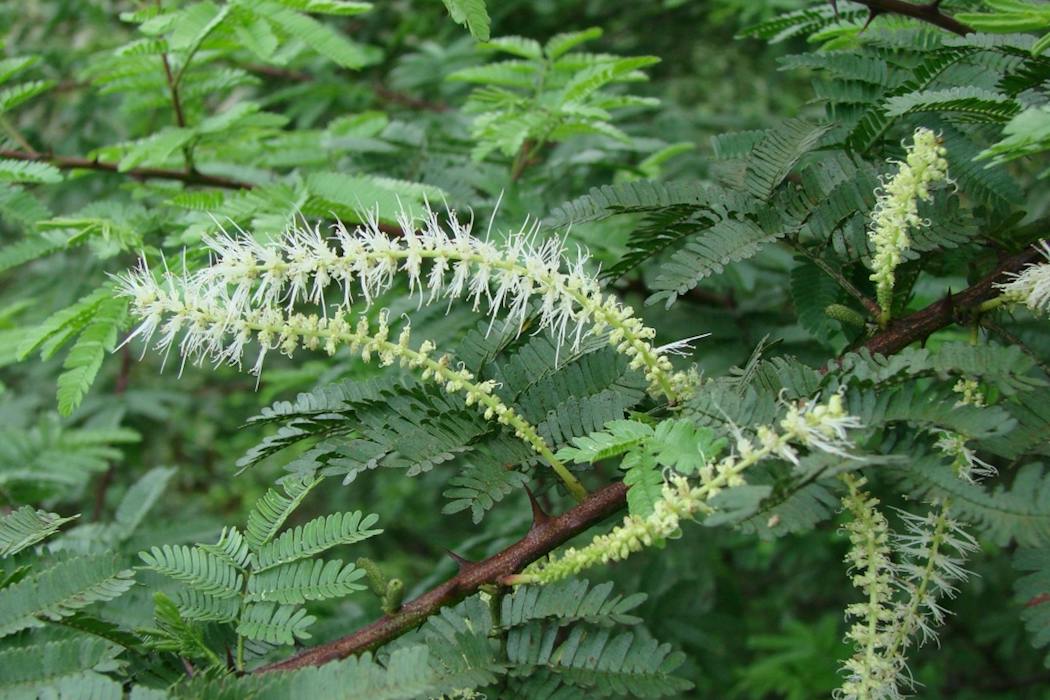
Jurema-preta, a plant and Indigenous spiritual tradition in northeastern Brazil, has significance beyond its potentially hallucinogenic brew, an anthropologist writes. In Natal, a centre of the jurema cult, its importance is also social: rituals bring together diverse people and identities, including people who may face rejection in other religious traditions.
The plant, Mimosa tenuiflora, is used to prepare a brew consumed in sacred rituals. The recipe, including its herbs and other ingredients, is known only to jurema mestre shamans and is kept secret. In 2024, anthropologist Aníbal G. Arregui visited Natal, in Rio Grande do Norte, and observed the tradition.
Researchers at the Brain Institute of the Universidade Federal do Rio Grande do Norte have studied jurema’s potential for healing. The plant contains N,N-dimethyltryptamine, or DMT, a powerful molecule that can produce intense visions and trance when it reaches the brain. Traditional jurema and ayahuasca preparations include chemical inhibitors that prevent enzymes in the stomach from degrading DMT.
Scientists at the institute have reported that vaporised DMT extracted from jurema has a rapid antidepressant effect that can last for weeks. Research into psychedelics including DMT is investigating possible treatments for mental health issues such as post-traumatic stress disorder, anxiety, addiction and depression.
Researchers and jurema mestres have begun meeting to discuss the plant and how to respect its sacred significance while studying DMT as a possible treatment. The dialogue has been difficult: some mestres oppose scientific uses of jurema. Researchers have shifted from extracting DMT from the plant to using synthetic DMT, a move that some shamans fear could encourage wider use without proper care or respect. Brazilian journalist Marcelo Leite has described these tensions in articles and a book.
Arregui also notes, drawing on his fieldwork and Leite’s book, that most brews used in current rituals are not prepared in a way that allows DMT to reach the brain. He writes that jurema’s power therefore cannot be understood only through its psychedelic effects.
Jurema rituals in Natal combine spiritual and theological references from Indigenous animism, Catholic Christianity, Afro-Brazilian candomblé, spiritism and Islam. Arregui observed practitioners dancing, singing, playing drums, taking oaths and appearing to be possessed by spirits. Many participants belonged to the LGBTQ+ community, and a 2023 book on Natal’s ancestral religion and culture includes a chapter about a trans woman who became a mestre juremeira.
Arregui argues that jurema’s most significant power is relational: the plant and the cult foster connections between Indigenous communities and neuroscientists, and among people with traditional and non-normative identities.
The article’s research was partially financed by the Spanish Ministry of Science, Innovation and Universities’ CREALM project, PID2021-127093NB-C21. The content is the responsibility of the author and does not necessarily reflect the position of funders. Source: The Conversation — Aníbal G. Arregui, Profesor de Antropología, Universitat de Barcelona.