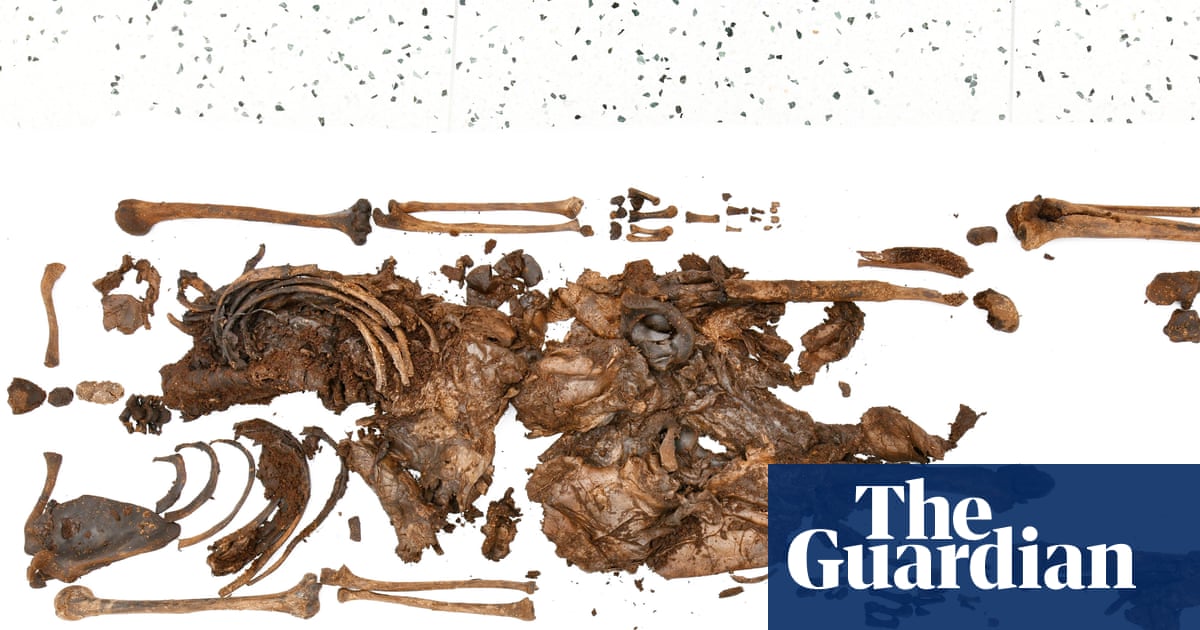
A coroner-led investigation has found that Ballymacombs More Woman, whose remains were discovered in a County Derry bog in 2023, was a female aged between 15 and 22 when she was decapitated more than 2,000 years ago.
The inquiry concluded that she was beheaded from behind with a bladed weapon. The precise circumstances of her death remain unknown, but evidence suggests it may have been part of a tradition of ritualised killing and sacrifice documented among other Iron Age remains found across north-western Europe.
The investigation took place at the Ulster Museum on Monday. It was not a formal inquest, but followed the structure and methods of a coroner’s investigation, drawing on archaeological, forensic and scientific evidence. Northern Ireland coroner Joe McCrisken chaired the inquiry.
“The purpose of the exercise is not to impose modern legal conclusions upon the distant past, but to provide a framework through which the available evidence could be assessed and the story of a previously unknown young woman could be told,” McCrisken said.
Peat workers found the remains in October 2023 in a bog in the townland of Ballymacombs More, outside Bellaghy. An archaeological excavation uncovered bones, but no skull, as well as a woven artefact.
The remains were initially believed to be male and named Bellaghy Boy. After they were identified as female, they were renamed Ballymacombs More Woman. Local residents have given her another name, Áine, after a mythical goddess.
The inquiry used micro-CT scanning, digital mapping and 3D imaging, and drew on specialists from Irish, UK and Danish universities. Witnesses included Police Service of Northern Ireland officers and employees of Bulrush Horticulture, whose work led to the discovery.
Hannah Crowdy, head of curatorial at National Museums NI, said: “What we have learned from this detailed research has allowed us to share her story with clarity and confidence. She has provided a significant insight into the iron age, and how we as a society have evolved over time.”