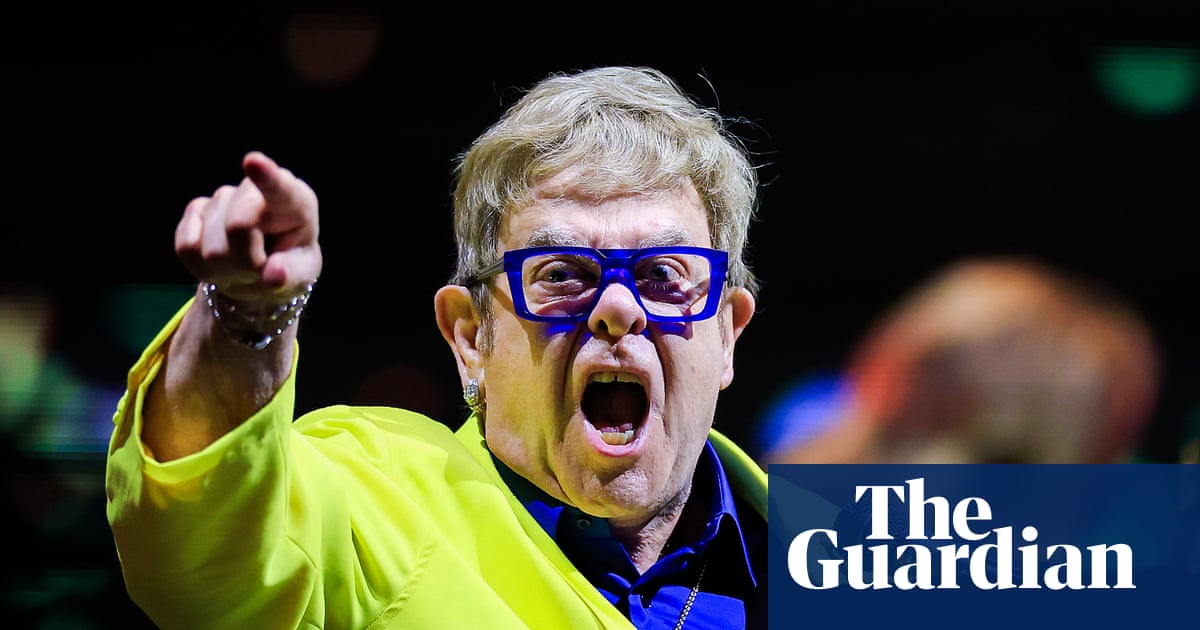
Elton John backed the Not AI’s To Take campaign in a pre-recorded message at the 2026 Aria awards, urging the Australian government to protect artists’ work from unauthorised use by AI companies.
“I have long admired the talent and creativity of Australian artists,” John said. “So I want to send an important message to the Australian government. You have a duty to protect Australian artists and their work. Don’t let AI use any Australian artist’s work without full permission. Please, protect the next generation of Australian artists. Thank you.” John hosted the first Aria awards ceremony in 1987.
The campaign is calling on the Albanese government to ensure Australian artists are reimbursed and consulted when AI companies want to use their work to train AI models. Australian musicians Jack River, Dobby, Josh Pyke and KLP addressed the audience at Sydney’s Hordern Pavilion on its behalf. Jimmy Barnes, Paul Kelly and Peter Garrett were among the artists who launched the campaign this week.
“It is not just lyrics and songs from Yothu Yindi, Missy Higgins, Gurrumul and Jimmy Barnes – you’ll be handing over Elton John, Beyoncé and the Beatles’ work too,” Dobby said. “Do not let Australia be the weak link that lets the world down.”
Dozens of groups representing the recording, writing, publishing, film, television and media industries support Not AI’s To Take. They include News Corp, Foxtel, Seven Media and Guardian Australia. The campaign says changes sought by AI companies could put the $70bn creative industry and its 600,000 workers at risk.
The Australian Recording Industry Association (Aria) also backs the campaign and displayed its slogan on a billboard at the Hordern Pavilion on Wednesday. Greens senator Sarah Hanson Young said in a statement: “When Peter Garrett, The Guardian and Newscorp are all singing from the same song sheet, the Parliament should take notice.”
Musician Ben Lee told Guardian Australia on the Aria red carpet: “I can’t just go and film a movie at the movies. I can’t do whatever I want with other people’s IP. Corporations should be subject to the same laws. So if AI companies want to train on Australian music, it’s simple: pay us.”
Rapper Miss Kannina told Guardian Australia: “The Australian government doesn’t care about anybody but the billionaires, and they don’t care about artists especially. Any kind of opportunity the Australian government can get to make money, they fucking will.
“If you’re using data centers and AI and shit like that, you’re not really an artist,” she added. “I think the Australian government would do a lot better putting a lot more money and time into communities and lower socioeconomic communities to do music programs and to really lift up the Australian music industry, because honestly, this thing is hanging by a fucking thread.”
Several music figures also spoke about AI in their Aria awards speeches. Bluey composer Joff Bush paid tribute to the “real life human beings” who contributed to the show’s soundtrack. Tim Minchin defended “shitty, fucked-up, striving, stumbling, needy, petty, hopeful, heartfelt, fucking humanness”.
“Art is the way we reach out to one another, and it is defined and made beautiful by the glorious messiness of its human creators. This will only remain true if we assert it as true and act accordingly. Which is to say, AI can suck my balls,” Minchin said to cheers.
Danny Rogers, co-founder of Laneway festival, called for urgent action after winning best music festival. “Original music and live music simply don’t exist without incredibly talented, dedicated and creative human beings,” he said, adding: “The misuse of AI poses a real threat to our industry and things could change much faster than anyone realises. We simply cannot take human creativity for granted. We need to protect the people who make music we all love.”
Prime minister Anthony Albanese has said it would be “theft” if creatives were not paid for their work and that artists “need to be compensated”. Some AI companies say individual licensing deals are too difficult under existing copyright law. They have also called for legal certainty before investing and training models in Australia. Anthropic has proposed an “opt-out” model that would allow it to scrape creative works unless rightsholders objected.
A spokesperson for attorney general Michelle Rowland told Guardian Australia on Tuesday that the government was “committed to supporting” creatives and said any copyright changes would “deliver meaningful control and fair compensation”. The government is expected to unveil a long-awaited legislative package on AI in late 2026 or early 2027, with proposals covering datacentres, online safety, productivity and copyright.