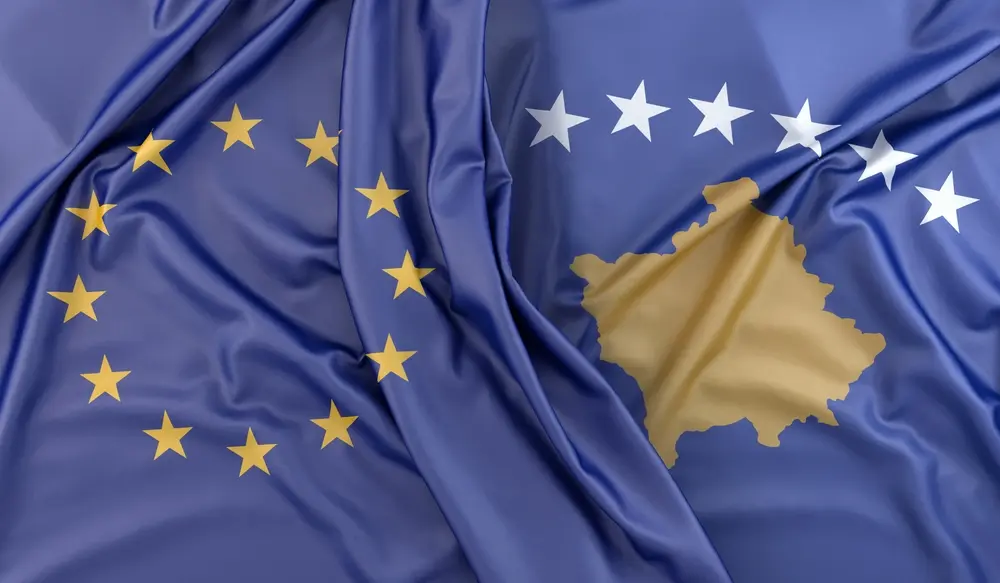
The European Commission has identified delays in Kosovo’s implementation of key reforms in the EU integration process. The 2026 Country Report highlights that no progress has been made in improving the performance of the judiciary and that the expected results in the fight against corruption have not been achieved
The European Commission has identified delays in Kosovo’s implementation of key reforms in the EU integration process. The 2026 Country Report highlights that no progress has been made in improving the performance of the judiciary and that the expected results in the fight against corruption have not been achieved
Kosovo continues to struggle on its path towards the European Union. The country has stalled in implementing key reforms required for membership in the 27-member bloc.
These assessments are part of the 2026 Kosovo Report, adopted and published by the European Commission as part of the European Union’s Enlargement Package. The report covers the period from 1 September 2025 to 1 September 2026, but also includes several subsequent developments.
According to the report, the judiciary has made no progress and the fight against corruption has yielded limited results, while political crises have weakened the functioning of institutions.
This year’s document marks the 10th anniversary of the entry into force of the Stabilisation and Association Agreement between the EU and Kosovo, and comes almost four years after Kosovo applied for EU membership.
Most of the reporting period was characterised by two rounds of early parliamentary elections, a non-functional Parliament and a government with limited powers, all of which affected the performance of institutions.
The report assesses the elections as generally competitive, peaceful and well-administered, but identifies attempts to politicise the Central Election Commission.
The document also includes voter turnout statistics, showing an average turnout of 45% in the December 2025 elections, which fell to 37% in the 2026 electoral process.
According to the report, this points to growing voter fatigue and a degree of public dissatisfaction with frequent electoral cycles.
Kosovo is between an early stage of preparation and a certain level of preparation and, overall, has made no progress in the functioning of the judiciary, the report states.
Furthermore, the document notes that undue influence from internal and external factors, such as political and economic interests, not only continues to pose a significant obstacle to judicial independence and impartiality, but has also intensified in some respects.
The report also addresses the adoption of amendments to the Law on the Specialist Chambers of Kosovo which raise serious concerns regarding Kosovo’s international commitments and their compatibility with the fundamental principles of the rule of law, particularly judicial independence and accountability for war crimes.
Regarding the fight against corruption, Kosovo has made limited progress, according to the European Commission. While the number of final court decisions and convictions in corruption cases not involving high-level officials has increased significantly, the number has declined in high-level corruption cases.
The number of whistleblower reports received by the Agency for the Prevention of Corruption has increased significantly, almost doubling compared to the previous year. According to the report, this indicates a growing willingness to report corrupt…