As Europe braces for the possibility of a wider conflict, governments are pouring money into defence, strengthening NATO's eastern flank and preparing their militaries for a more dangerous security environment.
But there is another frontline that risks being overlooked: Europe's health sector; its hospitals, healthcare workers and public health systems.
From missile and drone attacks to chemical, biological and radiological threats, a major conflict could put healthcare systems under unprecedented pressure.
And with artificial intelligence opening up new possibilities — and risks — in biotechnology, the threats facing Europe are becoming harder to predict.
A prepared healthcare system is not just a matter of public health. It is also a matter of national security, according to Brigadier General Petter Iversen, Norway's Surgeon General and chair of NATO's Committee of the Chiefs of Military Medical Services.
“Healthy society, it's a resilient society,” Iversen told Euronews. “If you are resilient, you can withstand the pressure from the adversaries.”
That means preparing for more than the immediate consequences of a military attack. It means ensuring hospitals can cope with mass casualties, that medical supplies remain available, that healthcare workers know how to operate in extraordinary circumstances and that countries can adapt when several emergencies strike simultaneously.
The new biological threat
One of the biggest uncertainties comes from the rapid development of artificial intelligence and its potential use in biological research.
While AI offers enormous opportunities to accelerate the development of medicines and treatments, it could also make it easier for malicious actors to develop dangerous biological agents.
“You don't know what you are facing, because it can be a virus engineered with AI or a state actor developing a new virus,” Laurent Muschel, Director and Deputy Head of the Health Emergency Preparedness and Response Authority (HERA), told Euronews, adding that “biosecurity is going to be very high on the agenda”.
“We need to have the appropriate regulatory framework, the appropriate surveillance system to control the use of AI,” Muschel said. “It's a fantastic technology to develop new medicines, but it can also help bad actors to develop very powerful tools.”
Iversen says a combination of new synthetic biology, new bioinformatics and new techniques for biological development combined with artificial intelligence is taken “really seriously,” with the prospect of weapons of mass destruction remaining among the gravest concerns.
“The horrific thought of the use of weapons of mass destruction and the health implications that will have, both on the chemical and nuclear and biological side, will be the biggest threat,” he said.
Such an attack could generate enormous numbers of patients requiring very different forms of treatment — a combination that would put extraordinary pressure on healthcare capacity.
HERA is working on ways to ensure that medical countermeasures can be deployed against a range of potential threats, including mass-casualty events, bioterrorism and chemical, biological, radiological and nuclear threats.
One approach is the development of broad-spectrum treatments that could offer protection before the precise nature of a biological threat is known.
“First, broad-spectrum antivirals, broad-spectrum antibodies, monoclonal antibodies. That protects you from the threat, and then targeted treatment,” Muschel said.
Europe is not equally prepared
Governments are increasingly aware that healthcare systems must be ready for these scenarios. But awareness does not necessarily translate into preparedness.
Iversen says countries still need to secure funding, invest in training and regularly exercise their ability to respond.
“We are around 200 metres in the 400-metre lap,” Iversen said. “We are preparing for the finish, and we need to look at how we can use the resources and capabilities, both civilian and military.”
Frontrunners are countries bordering Russia and those on NATO's eastern flank.
“It's natural that the countries bordering Russia and on the eastern flank of Europe have another situational awareness than people further west,” Iversen said.
He pointed to efforts in Germany, Norway and the Baltic and Nordic countries to increase hospital beds and expand healthcare provision.
But infrastructure alone will not be enough.
Iversen warned that preparedness also requires a change in how healthcare systems operate, including training medical professionals to work in unfamiliar conditions.
In peacetime, highly specialised services are essential. But during a war or major crisis, healthcare systems may need to adopt a more generalised approach, allowing staff and facilities to respond flexibly to a sudden influx of patients.
The second vulnerability, he sees, is the supply chain.
“We need a combination of both stockpiling and warehouses, but also an increased industrial base,” to withstand the first wave of a crisis while retaining the capacity to adapt to what comes next, Iversen said.
Ukraine's warning to Europe
For European health authorities, the war in Ukraine has turned many of these scenarios from theoretical exercises into practical lessons.
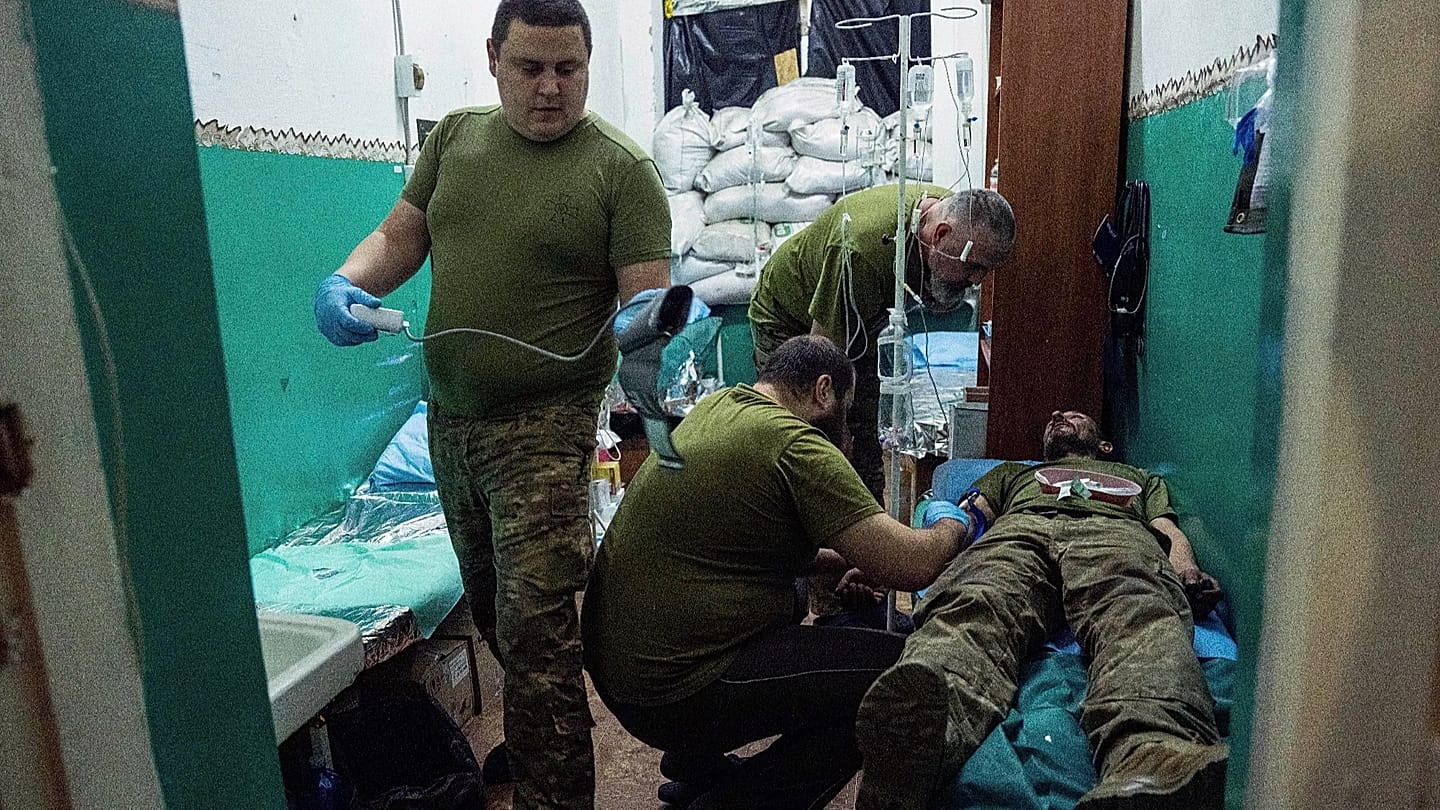
Hospitals and ambulances have come under attack. Medical workers have had to operate in increasingly dangerous conditions. And the conflict has generated healthcare needs that extend far beyond emergency treatment on the battlefield.
The experience has exposed the importance of trauma care, rehabilitation and mental health services.
“We saw that there is much more need for trauma care,” former Head of WHO Country Office in Ukraine, Jarno Habicht, told Euronews.
The scale of injuries has also created a growing need for rehabilitation, particularly for people who have undergone amputations.
“We have many thousands more amputations that we would not have without war,” Habicht said.
Mental health is another major challenge, both for the wider population and for healthcare workers operating under sustained pressure.
Habicht encouraged leaders to look beyond hospital buildings and equipment to the people who keep healthcare systems running: doctors, nurses, technicians and support staff.
“You need a good building, you need a safe space. But ultimately, you depend on whether the nurses are there, whether the doctors are there, whether the support staff are there,” he said.
Healthcare workers also need the right tools, training and financing to remain in the profession and respond when emergencies hit.
“That's very, very important to realise that healthcare is really part of that whole security and defence system,” Habicht said.