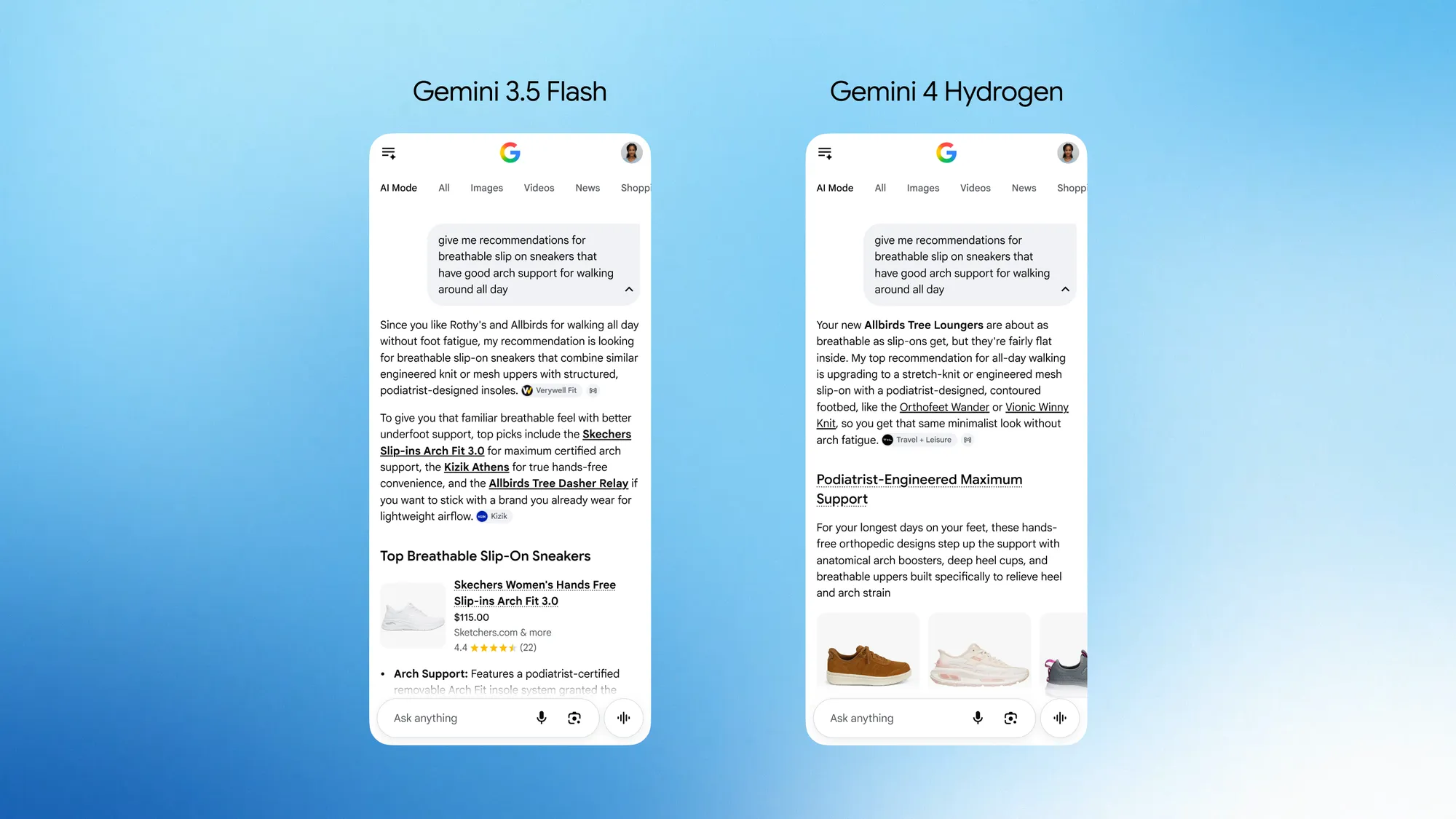
Google LLC today released Gemini 4 Hydrogen, a lower-cost model in its Gemini 4 artificial intelligence family that it says outscores its frontier Gemini 4 Argon model on an independent intelligence ranking.
Measured on the Artificial Analysis Intelligence Index at its default high thinking level, Hydrogen scored 51 to Argon’s 50, according to Google. A fourth thinking level called xhigh, new with Hydrogen, takes the score to 54.
The rollout is different, too. Argon spent nearly two weeks with members of Google’s Fairwind Program, a group of vetted cybersecurity defenders, before paying developers could get at it on Oct. 13. Hydrogen skipped that stage. Anyone can use it from today, including people on the free version of the Gemini app.
Koray Kavukcuoglu, who became head of Google DeepMind in August when Demis Hassabis moved into a chairman role, wrote in the announcement that Hydrogen is “built for rapid execution.”
Orchestrator, which Google added to its Antigravity coding tool today, picks between Hydrogen and Gemini 4 Carbon as a session goes along. Google’s runs of the Terminal-Bench 4.0 coding test found Orchestrator getting close to Carbon’s success rate on an average of 24% less quota.
Gemini 3.8 Flash, which came out in September, is the yardstick for most of the other numbers in the announcement. Against it, Hydrogen finished tasks 2.5 times faster at the default setting. On Terminal-Bench 4.1, which tests work done at a command line, Hydrogen more than tripled the older model’s 18.2% with a score of 57%.
Among the early testers Google quoted, Andrew Carr, a former OpenAI scientist who is now chief scientist at 3D animation startup Cartwheel Inc., said the model caught two problems with an approach his team had been stuck on for 10 days. Discovery Loop Inc., the startup former Google Chief Scientist Jeff Dean co-founded after leaving in August, was another.
Kavukcuoglu said in late September that Google wanted Gemini 4 out “much earlier” than the end of the year. Three Gemini 4 models have now shipped in just over six weeks. Hydrogen arrived two days after Carbon, which also started out with Fairwind members, opened up to paying developers and Google AI Ultra subscribers.
Hydrogen is available today in the Gemini API, Google AI Studio and Google Search, and paid Google AI Pro and Ultra subscribers can also use it in Antigravity. It costs $1.50 per million input tokens and $7.50 per million output tokens across the full 1 million-token context window. Argon costs $2 and $10 until its introductory pricing ends Nov. 30, then moves to $4 and $20.
Support our mission to keep content open and free by engaging with theCUBE community. Join theCUBE’s Alumni Trust Network, where technology leaders connect, share intelligence and create opportunities.
Founded by tech visionaries John Furrier and Dave Vellante, SiliconANGLE Media has built a dynamic ecosystem of industry-leading digital media brands that reach 15+ million elite tech professionals.
Our new proprietary theCUBE AI Video Cloud is breaking ground in audience interaction, leveraging theCUBEai.com neural network to help technology companies make data-driven decisions and stay at the forefront of industry conversations.
CNCF data shows cloud native is the on-ramp to AI, and maintainers are paying the price
As AI agents take control, Nvidia rethinks the security playbook
What to expect during SC26: Join theCUBE Nov. 17–19
3 ways AI is changing the healthcare revenue cycle
Shares of AI cloud operator Nebius drop 16%+ despite strong earnings results
Kubernetes gets a second act as AI agents turn one prompt into thousands of inference calls
CNCF data shows cloud native is the on-ramp to AI, and maintainers are paying the price
AI - BY SLOANE KALI FAYE . 18 MINUTES AGO
As AI agents take control, Nvidia rethinks the security playbook
What to expect during SC26: Join theCUBE Nov. 17–19
3 ways AI is changing the healthcare revenue cycle
Shares of AI cloud operator Nebius drop 16%+ despite strong earnings results
INFRA - BY MARIA DEUTSCHER . 2 HOURS AGO
Kubernetes gets a second act as AI agents turn one prompt into thousands of inference calls