Originally published by Ars Technica. By Yook Ji Hun.
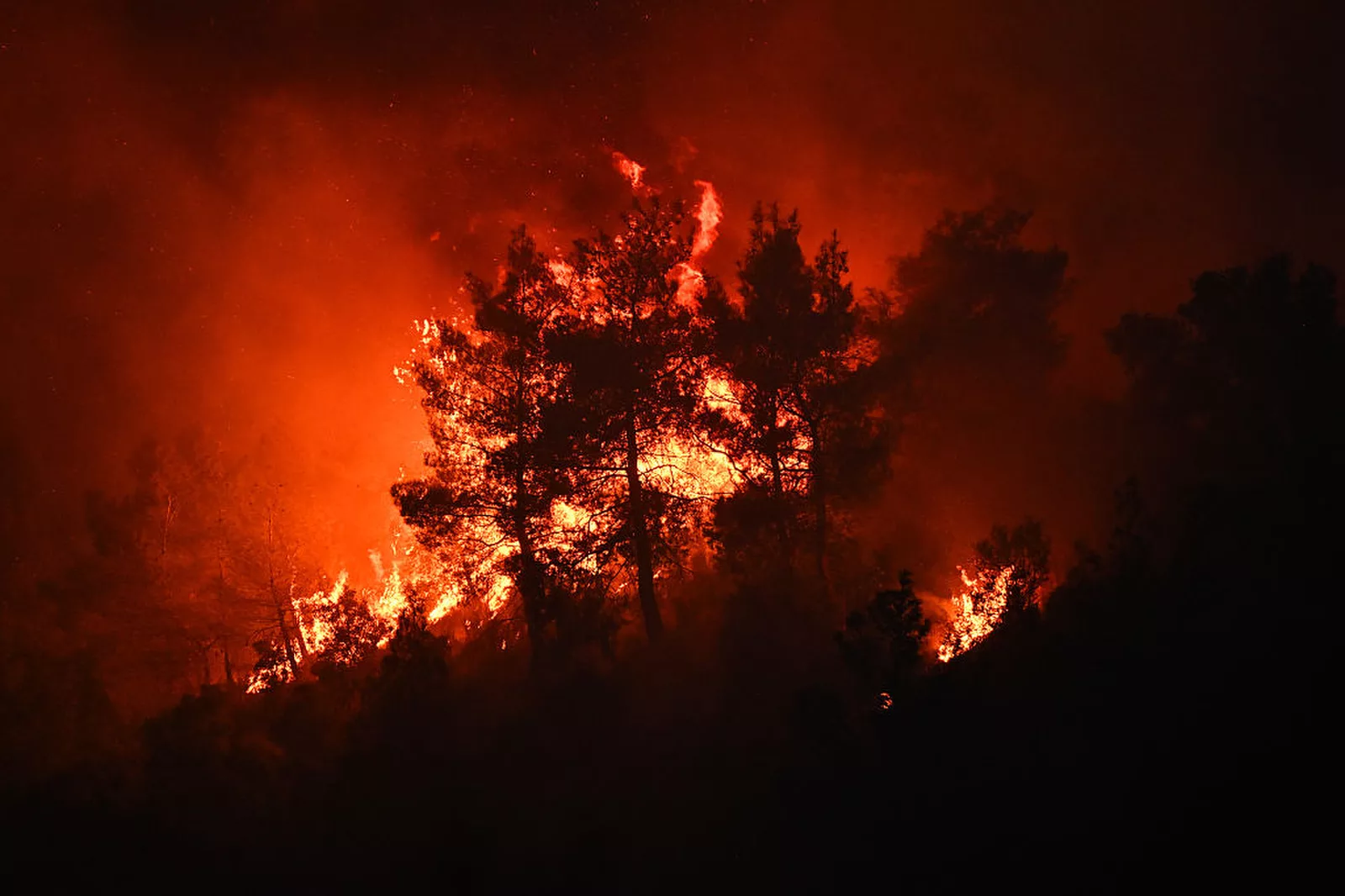
Wildfires occur worldwide, and they can sometimes become serious threats to people’s lives. A series of massive bushfires from 2019 to 2020 swept across southeastern Australia and destroyed thousands of homes. Recently, the 2025 Los Angeles wildfires spread widely across the city, resulting in massive damage to local communities.
Many things can cause wildfires, but humans are the only factor that can also make preventative efforts. Measuring people’s impact on fire is difficult because of the mix of human and natural influences.
A team led by Jianghao Wang, a professor at the Chinese Academy of Sciences, recently published a study in Cell Reports Sustainability comparing the COVID-19 era with other years. Data from the 2020 lockdowns suggest that lower human activity at this time had the net effect of lowering average fire activity.
Fire doesn’t just happen anywhere. Although plenty of flammable materials exist in natural settings, not every place experiences wildfires. Some prairies burn almost every year, while many forests go without big fires for hundreds of years. Researchers explain these differences in terms of fire regimes, which are patterns describing when, how often, and how widely and intensely fires occur.
Weather is a major factor affecting fire regimes. An abundance of rain helps grow grass and trees that can become fuel for fires. Whether they do or not, however, can depend on the moisture inside plants; plants with enough moisture do not burn easily. By contrast, dry conditions make them more likely to catch fire. When a drought lasts, vegetation becomes increasingly flammable. Strong winds also accelerate fire growth and spread enormously.
Human activity often combines with weather conditions to cause fires. Even routine outdoor recreation can accidentally start a fire. More people venture outdoors during sunny, drier times of the year, increasing the risk of accidental fires when dry vegetation is more likely to be present.
The double-sided role of humans in fire also adds to the difficulty. Humans do start fires, but they also put them out. Firefighters contain fires that could have gone worse if no action had been taken and can keep them from spreading. Humans can also take preventative actions, such as clearing flammable material.
Sometimes the line between starting fires and preventing them becomes blurred. One way to clear out flammable material is to intentionally set fires to make future fires more manageable. However, these fires are hard to distinguish from other fires through satellite monitoring.
An experiment is one way to find out how humans affect wildfires. If everyone stayed home under the same weather, their impact on fires would be revealed. This is why Wang’s research team focused on the COVID-19 era. It was what’s called a “natural experiment,” in which experimental conditions arose without any action by researchers.
Wang explained: “Human activity and climate normally vary together, because seasons, farming calendars, and weather all shape both fire and human behavior. The early-2020 lockdowns produced an abrupt, large-scale drop in human mobility, and the timing differed across countries while the weather did not change in the same way. This gave us a natural experiment.”
The researchers defined the period of restricted mobility by checking regional lockdown orders and mobile phone location data. Data from NASA and the National Oceanic and Atmospheric Administration’s Suomi NPP satellite helped the team track fires. Its VIIRS sensor detects heat signatures from fires at a spatial resolution of 375 meters. Each hot spot the satellite detects counts as an active-fire detection, meaning one large fire can appear as multiple spots. However, the satellite records both wildfires and prescribed burns without distinguishing between them. As a result, the intent behind each fire remains unknown.
In the study, detections during the 2020 restriction periods were compared with those from the same weeks in 2013–2019. Weather conditions weren’t exactly the same as in past years, which was accounted for.
The results show that areas under lockdown in the first half of 2020 had about 12.3 percent fewer active-fire detections than the recent-past average. The drop varied by vegetation type. In forests, fires decreased by about 27.7 percent, while grasslands decreased by 8.4 percent. Shrublands, savannas, and croplands didn’t show much difference. The researchers interpret this to mean that humans are a major cause of fires in forests and grasslands.
Controlling for weather factors was important in the study. Without adjustments, the drop was only 5.8 percent, which was not statistically significant. After controlling for weather, however, the estimated decline increased to 12.3 percent. If weather in 2020 were more favorable to fires than in previous years, it might have masked some of the human impact.
The 12.3 percent decrease in fire detections doesn’t mean that humans directly caused this share of fires. Restricting human activity shrank both humans’ impact on starting fires and likely limited their impact on extinguishing them. The 12.3 percent figure is the net effect after these two opposing forces partly cancel out.
Wang said, “The 12.3 percent is a net effect, not the share of fires caused by humans; opposing changes in ignition and suppression mean it does not capture the full magnitude of human influence.”
In regional data, some areas experienced a considerable increase in fire after human mobility was restricted. Most of South America, southern Africa, and northeast Asia saw an increase in fire during the COVID-19 lockdowns. Notable increases include 31.4 percent in Colombia, 25.4 percent in India, and 70.7 percent in Honduras.
There are no direct field data showing why this occurred. The researchers inferred that diminished fire suppression capacity resulted in more fires in these locations, but Wang acknowledged, “It is an inference, not a direct observation.” That inference was based in part on earlier studies that suggested that weaker fire management in Colombia and Madagascar contributed to increased fires.
One line of evidence is how fires reacted to different levels of mobility loss, based on fire counts in 0.5-degree grid cells. In countries with fewer fires, fire declined in almost a straight line as mobility decreased. But countries that experienced more fires showed a slow increase that leveled off at about 27 percent on average as mobility fell. The researchers interpreted this as a sign that different mechanisms were at work. The steady decline fits fewer human-driven ignitions, while the gradual rise points to weakened suppression. But Wang mentioned that there could be other reasons, such as changes in local land use.
Mobility restrictions may also have disrupted fire management activities, which could mean that fewer fires were set for management purposes. The researchers examined 12 countries with records of prescribed burning. The area burned by prescribed fires in 2020 decreased by about half compared to the 2013–2019 average. Of course, the locations and sizes of prescribed burns also shift from year to year with fire return intervals and land-management cycles, which complicates this analysis.
When areas subjected to prescribed burning were excluded in those 12 countries, the decline in fires there shrank from 45.3 percent to 27.8 percent.
This research has limits partly because it relied on mobile phone data to track human movement. This kind of data might not capture human activity in rural areas where coverage may be limited. Also, the analysis focused only on the first half of each year, so the impact on regions where fires happen more frequently in the latter half of the year, such as the western US, may not have been fully captured.
Wang explained that this quasi-experimental design provides strong associational evidence but is not a controlled experiment.
Wang emphasized that the study is not an evaluation of fire policies. The analysis does, however, suggest that there’s no single ideal policy response. Where fires decreased, human ignition seems to dominate. In those areas, reducing accidental ignitions through public education and maintaining beneficial prescribed burning can be important. On the other hand, areas where fires increased might need to address reduced monitoring and suppression. Maintaining firefighting and patrol capacity during disruptions can be important there.
Wang added, “Overall, a uniform policy is unlikely to work, and strategies should be tailored to local human-fire relationships.” Fire-risk projections might benefit from accounting for human behavior. That way, more accurate fire projections can be made even as weather and society change.
Cell Reports Sustainability, 2026. DOI: 10.1016/j.crsus.2026.100860