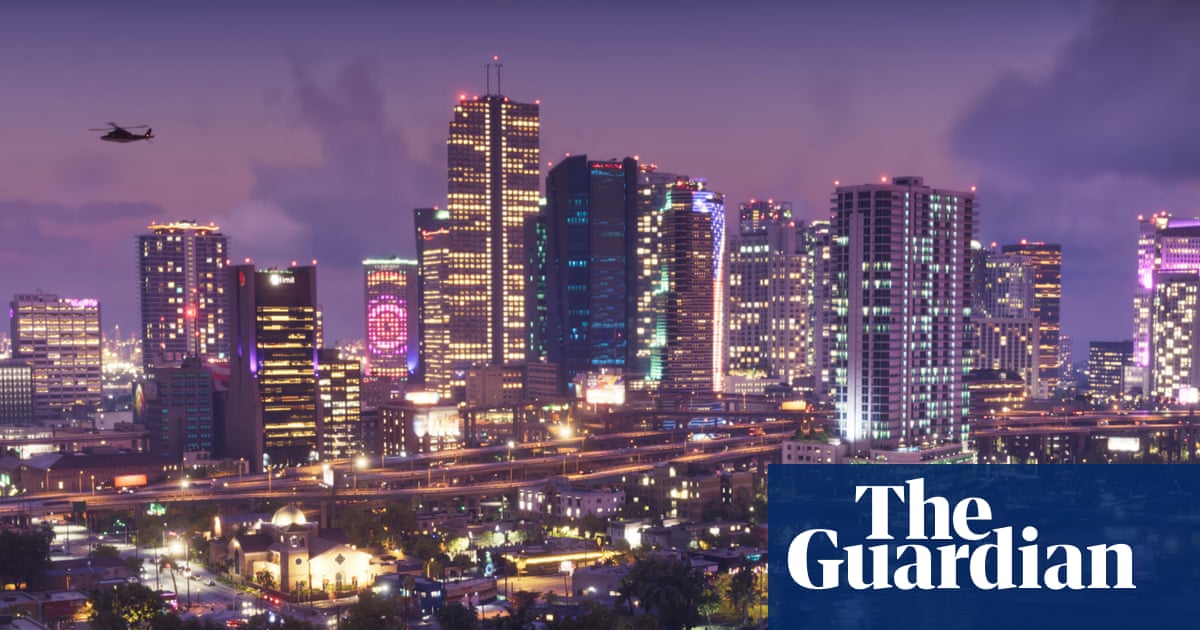
The developers behind its virtual Florida share how they built their most ambitious world so far
Donât get Pushing Buttons delivered to your inbox? Sign up here
In 2015, a group of Grand Theft Auto developers from Rockstar North took their first trips to Miami to do field research for the next game in the phenomenally popular crime series. âBefore youâre doing hyper-organised research trips, youâre immersing yourself in the place and its history, the vibe of it,â Rob Nelson, one of the lead developers on GTA VI, tells me. â[You see] the physical places you want to
move characters through, the experiences you want them to have, and the juxtaposition between the extremes of society that are in Miami.â
I wondered: did people ever recognise them on any of their research trips? Did locals know what they were doing? This is the biggest game in the world, after all; I imagine it would be difficult to go entirely undercover. âWeâre always semi-undercover,â he says. âBut if you have a bunch of dorks going through a terrifying neighbourhood, you do stick out a bit.â
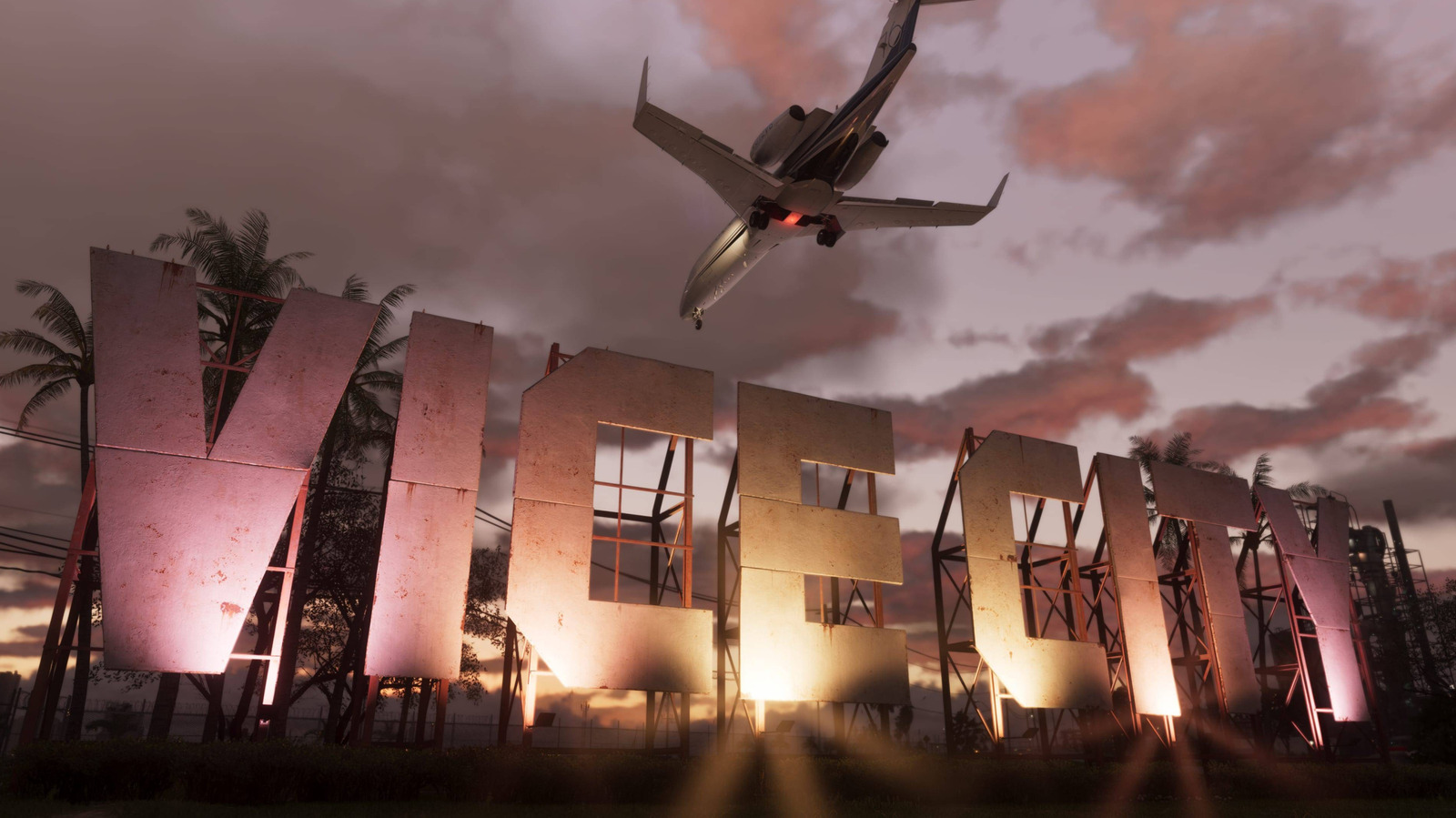
Grand Theft Auto VI is finally out next week, more than 10 years since those first exploratory trips. A few weeks ago, I spent the day at Rockstar Northâs headquarters in Edinburgh, watching as Nelson and fellow senior exec Jennifer Kolbe took me through Vice City, the fictional version of Miami that has emerged from all that work.
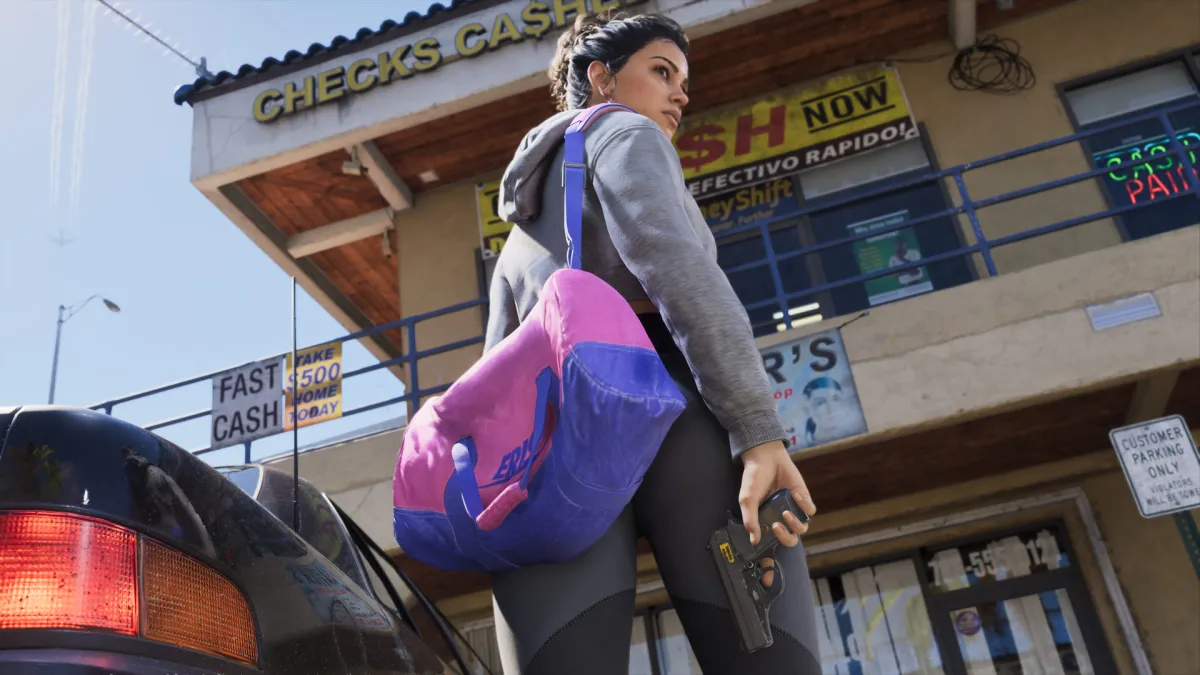
The setting always comes first for Rockstar games: the developers immerse themselves in the real-life version of the place they want to create, before they ask what they want to do within it and what they want to offer players. From there emerge the story that Rockstarâs writers want to tell and the characters players will later meet. This time that story is about a criminal couple on the run named Jason and Lucia.
Grand Theft Auto V (2013) and Red Dead Redemption 2 (2018) conjure fascinatingly detailed versions of the US: one a microcosm of California, the other of the old west.
GTA VI takes us to Leonida, virtual Florida, and as with Rockstarâs previous games it is gratuitously, absurdly detailed, from the macro level to the micro; from architecture and geography down to the smallest of details â such as the clothes that the pedestrians are wearing, the street art, the flyers on cafe walls and the insides of fridges.
As Nelson and I freely explored Vice City, we discussed the effort and motivations that went into the making of this ultra-maximalist game. You can read more about it in the Guardianâs Saturday magazine later this week.
Grand Theft Auto VI was made by an enormous team of almost 5,000 people, but there is a relatively small number of decision-makers at the top, most of whom have been at Rockstar for a very long time.
(Lead writer Rupert Humphries, for instance, has been at the company since 2008.) They each take responsibility for the elements of the game that they are most suited to and that they care about most. âThe game is so vast that no one person could hold enough of it in their heads,â Nelson tells me.
His purview is design, narrative and animation, with a little casting on the side: Nelsonâs background is in character art and animation, and his attention to detail is abundantly evident in his demonstration of the game. He takes huge delight in showing me tiny details, such as the way that Jason eats a hot dog or how, as he walks around a gas station, he can take bites of a donut with one…