Indonesian company seeks CITES approval to breed and sell rare Asian golden cats
By Fernanda Wenzel, Spoorthy Raman ·
By Fernanda Wenzel, Spoorthy Raman. Originally published by Mongabay.
- Protected Asian golden cats may soon be commercially bred in Indonesia and exported internationally if there’s no opposition raised by other countries before Nov. 10, according to regulations under CITES, the global wildlife trade treaty.
- If permitted, PT Alam Nusantara Jayatama, a breeding facility run by Indonesian businessman Danny Gunalen, would be the first in the world to produce these threatened cats in captivity for commercial sale, which includes selling them as pets.
- Only a handful of zoos in the world keep or breed the skittish Asian golden cats, which live secretive lives in the wild and, according to zookeepers, are hard to breed in captivity, as they can become aggressive and don’t make for great display animals.
- Conservationists have questioned the need for commercially breeding Asian golden cats for the pet trade and raised concerns that such a facility could be used to launder wild-caught individuals. Neither PT Alam Nusantara Jayatama nor Danny Gunalen responded to Mongabay’s questions about the concerns raised, or how the operation helps conservation.
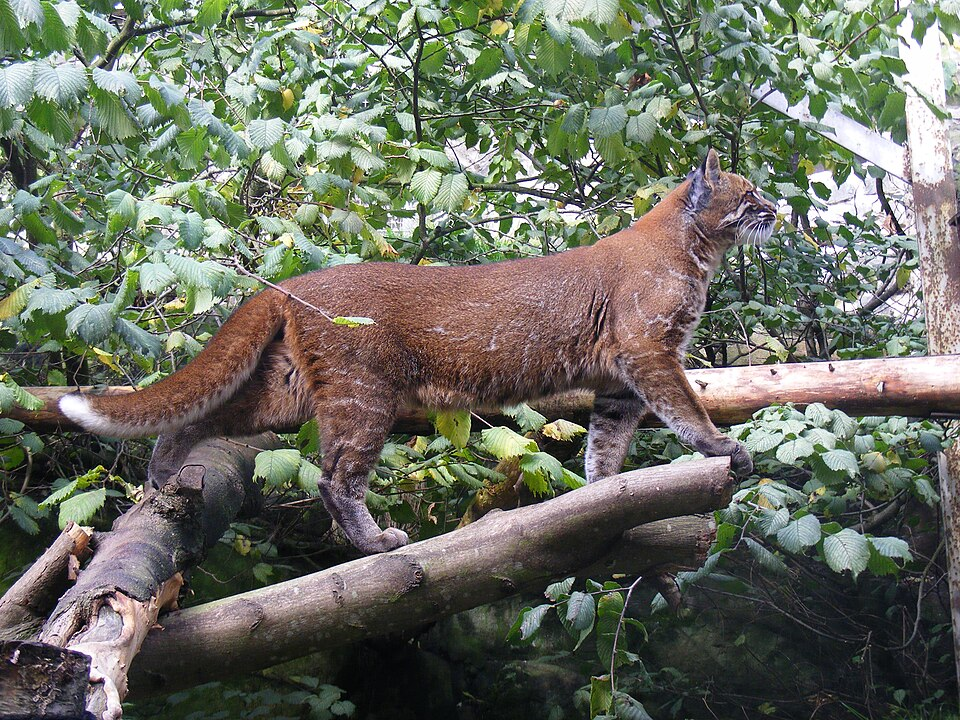
With their shiny golden or reddish-brown fur, round ears, and white and black facial markings, Asian golden cats are cute. But don’t let their looks fool you: these cats, native to China and South and Southeast Asia, are fiercely territorial, elusive, and highly solitary animals.
Because of this, Asian golden cats (Catopuma temminckii) don’t reproduce well in captivity, and only a handful of zoos have bred them successfully, always for conservation purposes. Now, a private Indonesian company, PT Alam Nusantara Jayatama, wants to become the first in the world to commercially breed them in captivity, selling their offspring to exotic pet owners across the globe. The company is owned and run by Danny Gunalen, who owns several zoos and animal-breeding facilities in Indonesia.
The Indonesian government plans to certify the facility as a legal breeder of Asian golden cats. In August, it sent a public notification to the Secretariat of CITES, the global wildlife trade treaty, which includes 184 nations and the European Union. The signatories to CITES have until Nov. 10, 2026, to object to the registration, otherwise the company will be authorized to export the cats.

The Asian golden cat is listed as a vulnerable species on the IUCN Red List and is a protected species in most of the countries where it lives. Only about 7,000 are thought to remain in the wild, their numbers decreasing as forests are felled for settlements, roads, mining, plantations, and agriculture. The cats are also poached for their skins and killed in snares set by hunters for other species.
The species has the highest protections under CITES, listed in Appendix I, which bans the international commercial trade in wild-caught individuals. However, captive-bred individuals from registered captive-breeding facilities can be sold legally with permits. This is the status PT Alam Nusantara Jayatama is seeking.
Critics have questioned the need for captive breeding, largely for the pet trade, and specifically how it might create demand for an increasingly threatened animal.
The notification, issued by the Indonesian government as part of the CITES registration process that permits facilities to breed and trade Appendix I species , also includes breeding permits for Asian small clawed otters (Aonyx cinereus), another vulnerable species that is popular as an exotic pet.
PT Alam Nusantara Jayatama is currently registered as an approved CITES captive-breeding facility for Malayan gharials (Tomistoma schlegelii), an endangered freshwater crocodile species native to Indonesia and Malaysia.
A difficult-to-breed cat and a 13-year commercial program
While PT Alam Nusantara Jayatama has just applied for CITES registration, it has been breeding Asian golden cats since 2013, according to documents submitted by the Indonesian Ministry of Forestry to the CITES Secretariat and obtained by Mongabay.
Since Asian golden cats don’t live in social groups, like lions, these solitary animals easily become aggressive. This makes it difficult to pair them and expect them to mate in captivity, said Sandra Reichler, curator for mammals at Heidelberg Zoo in Germany, who also heads the species breeding program for the European Association of Zoos and Aquariums (EAZA), in an email to Mongabay.
Heidelberg Zoo has been breeding Asian golden cats since 1976, and in the 50 years since then has only successfully reared 29 of them. “Since 2000, we only had 34 young golden cats born within the whole European breeding program,” Reichler said.
“They are super challenging to breed,” said carnivore specialist Mike Brocklehurst, who ran a conservation breeding program for these cats at Melbourne Zoo in Australia in the 1990s. “A lot of times in captivity, the males kill the female when they’re introduced.” He said he witnessed this on at least three occasions.
“I am surprised that there are no reports of females being killed by males during introductions [at PT Alam Nusantara Jayatama],” Brocklehurst added.
They also don’t make great zoo animals. “They look very nice, but they are also very shy and are therefore not the best animals to show to visitors, as they hide a lot and you need patience to observe them,” Reichler said. Yet buyers around the world may want them according to Reichler and Brocklehurst.
In the application, the facility claims to export live cats for “pet purposes” after obtaining relevant export permits. It’s not clear from the document if the facility exported these animals in the past, who the importer was, nor how many were exported.
The CITES trade database, which records all legal international trade at the country level, shows Indonesia exported 14 live Asian golden cats between 2022 and 2024, with no listings prior to that time. Of these, three were sent to Germany, three others to the UAE and eight to India. All of them were declared captive bred. The data doesn’t show the names of the exporters or the importers.
Taman Safari, a government-run zoo in Indonesia, is also developing a breeding program for the felines, but not for commercial purposes.
One of these live exports from Indonesia to the UAE was flagged as a commercial transaction in the CITES database, although commercial transactions of Appendix I species are not allowed under CITES rules. The other transactions were indicated to be zoo transfers, which is permitted under CITES rules.
“Appendix I species cannot be exported for commercial purposes under CITES regulations, unless they come from a CITES-registered breeding facility,” said Susan Lieberman, vice president of international policy at U.S.-based NGO Wildlife Conservation Society. “Doing so would make the exporting country non-compliant with CITES.”
PT Alam Nusantara Jayatama didn’t respond to Mongabay questions about its exports, the origins of the animals exported, its breeding process, animal welfare, or the commercial demand for Asian golden cats from the pet market.
Experts question animal welfare and ‘speed-breeding’ techniques
Indonesian Ministry of Forestry’s documents show that PT Alam Nusantara Jayatama began its breeding program with four legally acquired Asian golden cats, which were taken from the wild under an Indonesian government decree in 2013: two males and two females. The document doesn’t state where these animals were captured.
By 2025, the population had swelled to 36 as the founders and their offspring reproduced, breeding up to the third generation. The founders have since died, along with at least three kittens, according to information provided by the facility. Such high breeding rates puzzle experts.
“The idea that Asian golden cats can be bred in commercial numbers, where profit is actually made after the investment needed to establish such a business, should be investigated. It seems very suspicious,” said Shepherd, who headed TRAFFIC’s Southeast Asia bureau for years, and is now a senior conservation advocate at the U.S.-based Center for Biological Diversity.
Other experts say this reproduction rate can be achieved, but only by using questionable techniques. “When I first heard about these numbers, I thought that it sounded not very realistic,” said Reichler from Heidelberg Zoo. But she added it’s plausible, as the facility claims to separate kittens from their mothers “typically several weeks after birth.”
Brocklehurst, who bred the cats at Melbourne Zoo, said the facility would be “incredibly lucky” to breed so many of these cats in such a short span. However, pulling young kittens from their mothers is a method used by facilities to “speed-breed” cats, including tigers, and is used by breeders at “puppy mills.”
“The kittens could then be hand-reared, allowing the females to return to estrus sooner and potentially breed more frequently,” he said.
At Heidelberg Zoo, kittens remain with their mother for up to two years after birth; in the wild, mothers care for them for 9-12 months.
According to Reichler, when the mother is separated from her cubs early on, she could breed a second time in a year, bearing one to two more kittens. Doing the math, in the wild, an Asian golden cat would produce one or two kittens a year; pulling babies from their mothers early could produce four to eight kittens a year.
“So, if you are lucky and have a harmonising breeding pair and always hand rear the offspring, it is theoretically possible to produce so many offspring in such a short time,” Reichler said. But this is, of course, not very natural.”

According to Reichler, golden cats that are habituated to humans tend not be sexually interested in other golden cats and often don’t rear their own offspring. This means that PT Alam Nusantara Jayatama may have difficulty maintaining its extraordinary reproduction rates unless it brings new animals into its stock.
Brocklehurst added that hand-rearing cubs “might also explain why the animals appear relatively calm and well-adjusted to the captive environment.”
Experts also observed that the company’s housing doesn’t meet recommended standards. Documents from the Indonesian government show photographs of kittens housed in small cages with feeding bowls, alone. Adult Asian golden cats are said to be housed in 30 enclosures, each as big as a small utility room, about 9 square meters (97 square feet) in size, according to the facility.
But the European zoo association’s recommendation for housing, authored by Reichler, suggests the need for enclosures 16 times larger — a minimum of 150 m2 (1,615 ft2). It also recommends placing several wooden boxes within the enclosure so the shy and elusive cats can hide, rest, and breed. In its application, the facility claims each enclosure is equipped with a nesting box for the cats to hide and rest in and has tree trunks and wooden structures to allow scratching, climbing, and other behaviors.
Reichler said the enclosures at PT Alam Nusantara Jayatama, as seen in the photographs, are too small and don’t provide needed physical and mental enrichment. “The small cages for the hand reared offspring are really bad and probably lead to behavioural deficits in the cats.”
There are other concerns regarding captive breeding any species. In 2017, a report from TRAFFIC, an NGO that monitors illegal wildlife trade, concluded that inflated quotas for breeding animals in the country created loopholes for traffickers to fraudulently report animals they catch in the wild as captive bred.
Wildlife trade expert Chris Shepherd noted that several cases of wildlife laundering, where wild-caught animals are falsely declared as captive-bred, occurred in Indonesia in the past, including for species such as tokay geckos (Gekko gecko) and green pythons (Morelia viridis).
A terrible pet for an uncertain market
Experts question the need to commercially breed Asian golden cats. In its application, PT Alam Nusantara Jayatama says it’s breeding them as pets. However, Brocklehurst, who now works as an illegal wildlife trade and law enforcement consultant, said he has never heard of a pet market for them.
What he does know, he added, is that these felines are traded illegally in East Asia, especially Vietnam, for their golden fur and bones, which he estimated can sell for about $200 per kilogram (about $91 per pound).
“There is also a lot of trade that has been in Laos over the years of golden cats for the bones,” said Brocklehurst, who is now based there. They’re used in traditional Chinese medicine, just like tiger bones, and increasingly, bones from other wildcats. “There’s a lot of Facebook groups trading them all the time.”

Most of the trade observed by watchdog groups has involved parts, not live kittens or adult cats, according to Shepherd. “I have seen Asian golden cats in trade over the years, but most frequently it is their skins for sale, and occasionally, heads. Very rarely are live ones seen in trade.”
The exception is PT Alam Nusantara Jayatama’s home turf, he said. “I have seen live Asian golden cats advertised for sale on online wildlife trade platforms in Indonesia, but nowhere else.”
According to Brocklehurst, these cats aren’t great pets for many reasons, not least of all because they love to hide. “They’re not going to become a pet cat and sit on your lap.”
Another reason is safety. Reichler said a fully grown adult male golden cat isn’t small: It can weigh as much as 20 kg (44 lb) — about four times as much as an average house cat. “They are carnivores that hunt prey as large as a small antelope, therefore it could become dangerous to keep an adult male as a pet.”
Shepherd also questioned the need to breed Asian golden cats as pets. “In my opinion, there is very little demand,” he said. “This seems like a very strange species to want to captive breed. Unless the person is trying to create a new market, I really do not see the demand. Perhaps breeding them for zoos and private collections is the goal.”
Other medium-sized wild cats, such as servals, ocelots, and leopard cats, are increasingly kept as pets, but numbers of Asian golden cats sold as pets are difficult to gauge. In 2019, researchers looking into exotic pet trade on Facebook in Thailand found only one of them offered for sale online. However, experts say the wildlife trade has changed drastically since then, with many more species offered for sale, and much more of the trade moving online, making it difficult to track.
Reichler raised another concern for such a breeding facility: inbreeding. With a limited gene pool, animals eventually develop health problems. Zoos that breed a species for conservation avoid this by bringing in new animals from partner zoos when necessary, and commercial breeding facilities may try to bring in wild animals to enhance genetics.
In the case of PT Alam Nusantara Jayatama, which began its Asian golden cat breeding program with just four animals, it has likely reached the inbreeding threshold. Reichler said it’s impossible to avoid inbreeding from the third generation of cats onward when starting from a parental group of that size; the company claims to have already reached the third generation.
Meanwhile, the pet trade doesn’t help conservation, as creating demand for an animal, alive or in parts, makes it a target for poachers. “A commercial breeding centre that only produces golden cats for the private pet market doesn’t help the species in the wild,” Reichler said in an email. “If the demand for golden cats as pets is growing, this will also bring more problems for the wild populations.”
Shepherd states that CITES parties should be cautious and take into consideration that this company is applying for similar permits for other CITES Appendix I-listed species such as the Malayan gharial and the small-clawed otters. “While it is often stated that commercial captive breeding reduces demand for wild caught animals, I see very little evidence of this. In fact, commercial captive breeding is often an additional impediment to conservation efforts.”
Banner image:
Banner image: Asian golden cats are cute but don’t make good pets, according to experts. Image courtesy of Allwetter Zoo.
Spoorthy Raman is a staff writer at Mongabay, covering all things wild with a special focus on lesser-known wildlife, the wildlife trade, and environmental crime.
Fernanda Wenzel is an investigative reporter for Mongabay, covering issues from land grabbing and environmental crime in the Amazon to international wildlife trade.
Asian golden cat range expands, but declines continue amid rising threats
Amid fuzzy data, scientists urge monitoring of Hong Kong’s tokay gecko trade
Study refutes claim that Indonesia’s legal turtle trade supports livelihoods
FEEDBACK: Use this form to send a message to the author or editor of this post. If you’d like to post a public comment, you can do so at the bottom of the page.
Republished from Mongabay under CC BY-ND 4.0. Text retained without substantive changes.
Originally published by Mongabay