International Workshop Highlights Artificial Intelligence Advances in Breast Cancer Risk Prediction
By Google News AI ·
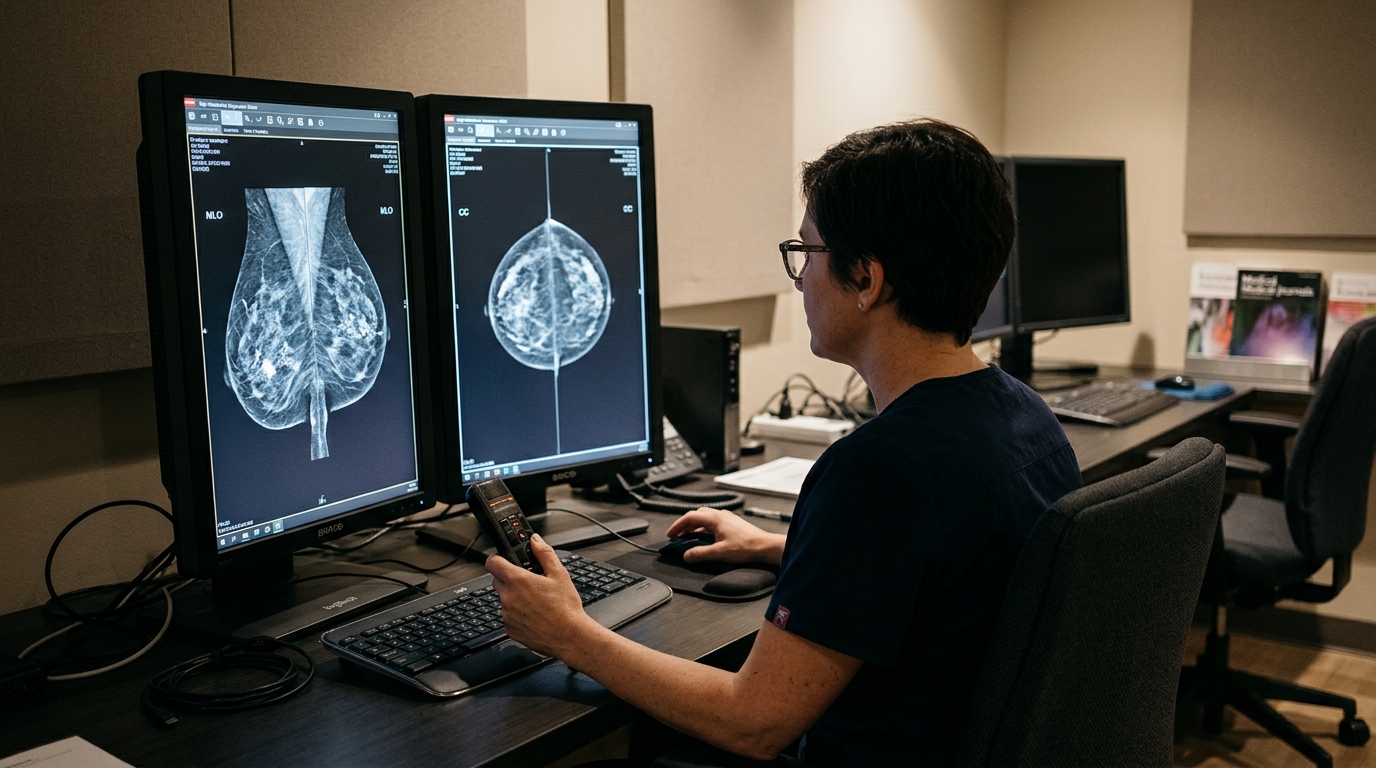
Researchers presenting at the 11th International Breast Density and Cancer Risk Assessment Workshop in Līhuʿe, Hawaii, reported that incorporating longitudinal screening records significantly improves five-year breast cancer risk prediction compared to evaluating single mammograms. Investigators led by Dr. Shu Jiang from Washington University School of Medicine, alongside collaborators from Harvard T.H.
Chan School of Public Health and Weill Cornell Medicine, addressed the limitation that existing image-based risk models do not fully exploit historical imaging data. To develop a dynamic risk prediction model, the research team analyzed a prospective clinic-based cohort comprising 10,099 cancer-free women who enrolled during routine screening between November 3, 2008, and February 2012 at Washington University.
Longitudinal follow-up through 2020 identified 478 pathology-confirmed breast cancer cases within this primary development cohort, which included 27 percent non-Hispanic Black women. The dynamic model was independently evaluated across two external cohorts.
In the Emory cohort of 18,360 women screened between 2013 and 2020, with 42 percent non-Hispanic Black participants and 332 pathology-confirmed breast cancers, incorporating three years of prior mammograms yielded a five-year area under the curve of 0.80 controlling for age and BI-RADS density, excluding cases diagnosed within six months of screening.
This significantly outperformed the current screening visit alone, which achieved an area under the curve of 0.74. In the British Columbia Cancer cohort of 208,313 women aged 40 to 74 screened between 2013 and 2019, with 3,021 pathology-confirmed incident cases identified through June 2023, using up to four years of prior images generated an area under the curve of 0.78, exceeding the single-visit baseline of 0.71.
Calibrated to SEER incidence rates, risk ratios comparing high-risk women exceeding four percent five-year risk against very low-risk women under 0.3 percent reached 21.1 in Emory and 24.4 in British Columbia.Complementing longitudinal modeling, a multi-institutional analysis led by Dr. Graham A.
Colditz evaluated whether an artificial intelligence-derived Mammogram Risk Score summarizing mammographic texture maintains generalizability across diverse racial and ethnic groups. Analyzing data from over 226,000 women across the Emory and British Columbia cohorts, the study examined score distributions among non-Hispanic White, non-Hispanic Black, East Asian, South Asian, and Indigenous women.
The investigators observed minimal variation in median score distributions between the two cohorts overall, across distinct racial and ethnic groups within each cohort, and between cohorts within corresponding demographic categories.
Proportional hazards regression demonstrated that each standard deviation increase in the risk score was significantly associated with elevated breast cancer risk, yielding age-adjusted hazard ratios ranging from 2.03 to 2.15.
Stratified analyses confirmed consistent associations across populations, with hazard ratios of 2.12 for non-Hispanic Black women, 2.10 for East Asian women, 2.09 for South Asian women, and 2.19 for Indigenous women.
Five-year discriminatory accuracy showed no statistically significant differences by race or ethnicity within each cohort.Addressing screening policy, researchers from the University of Western Australia and BreastScreen Western Australia reported interval cancer…
Originally published by Google News AI