How Generative Artificial Intelligence Is Transforming Spatial-Temporal Data Mining
By Google News AI ·

In a comprehensive review published in Data Science and Engineering, researchers led by Qianru Zhang and Hongzhi Yin have synthesized the rapid transformation of spatial-temporal data mining driven by modern generative artificial intelligence.
The survey paper, encompassing work from academic institutions across multiple regions, establishes a structured taxonomy and end-to-end operational pipeline to evaluate how architectures such as large language models, diffusion models, masked autoencoders, variational autoencoders, and generative adversarial networks are displacing classical modeling paradigms.
Rather than reporting findings from new physical experiments or collecting empirical field datasets, the authors systematically analyze the evolution of machine learning methods applied to complex geographical and temporal systems.
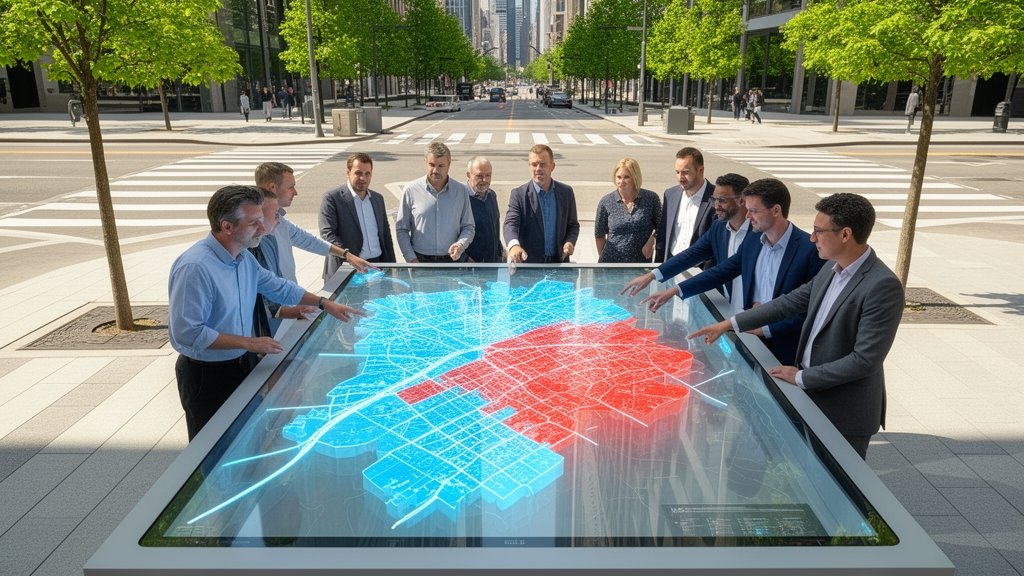
Their analysis details how the ongoing digitization of industrial and social processes has accumulated vast volumes of spatial-temporal measurements, ranging from urban transportation tracks to planetary climate observations, demanding computational tools capable of extracting structured dependencies across both space and time.The investigative team identifies critical performance ceilings inherent in conventional
non-generative deep learning architectures, such as standard recurrent neural networks and convolutional neural networks, which historically served as the foundation for traffic prediction and anomaly detection.
These traditional discriminative approaches exhibit three major structural limitations when deployed in complex real-world spatial-temporal environments. First, they rely on data-hungry training protocols that necessitate massive volumes of densely labeled training instances, which remain economically costly and logistically difficult to procure across sensor networks.
Second, non-generative baselines demonstrate severely constrained generalization capacity, regularly struggling with zero-shot adaptation when confronted with previously unseen scenarios, altered city roadway configurations, or localized extreme meteorological anomalies.
Third, because traditional regressors produce purely deterministic single-point estimates, they fail to quantify structural predictive uncertainty or synthesize plausible alternative scenarios, rendering them inadequate for high-consequence risk-sensitive operations such as emergency disaster management and adaptive evacuation dispatch.To overcome these systemic bottlenecks, the review articulates four decisive
methodological advantages realized through the adoption of generative frameworks within spatial-temporal domains.
Foremost among these is synthetic data augmentation, wherein generative models produce high-fidelity simulated trajectories or grid states to mitigate pervasive data scarcity across sparsely monitored environments.
The second advantage is enhanced generalization, enabling zero-shot and few-shot transfer across novel geographic territories and unobserved operational regimes without requiring exhaustive task-specific retraining from scratch.
Third, generative paradigms inherently facilitate rigorous uncertainty quantification by modeling full conditional probability distributions, outputting probabilistic ensembles that indicate predictive confidence during turbulent events. Finally, the survey underscores the emergence of unified representation learning, whereby expansive pretrained foundation backbones, including spatial-temporal large…
Originally published by Google News AI