Algorithmic Stewardship Framework Reframes Urban Artificial Intelligence for Climatic Justice
By Google News AI ·
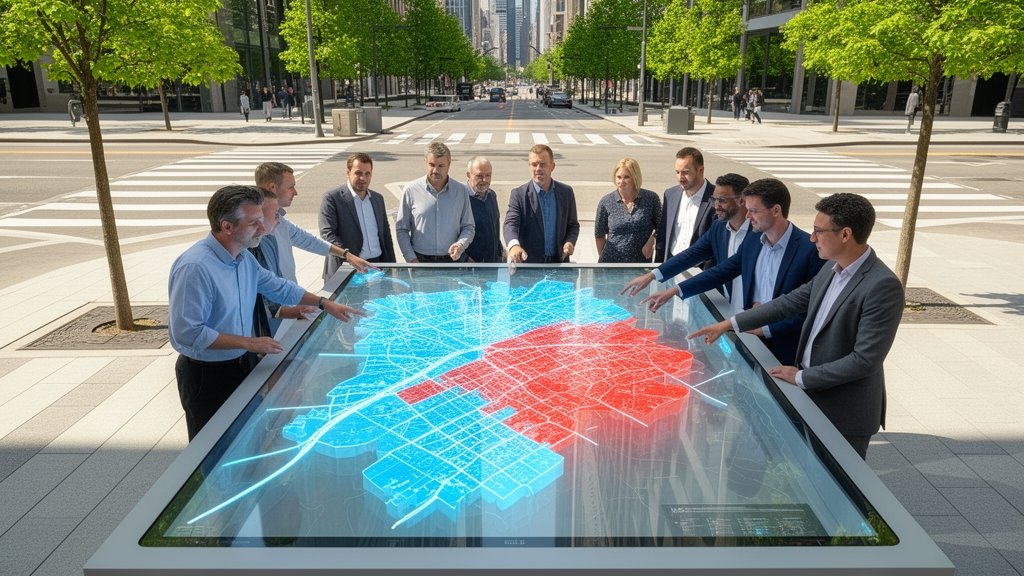
A qualitative investigation into computational urbanism argues that urban governance must transition from conventional techno-managerial control toward algorithmic stewardship to prevent municipal artificial intelligence from compounding socio-spatial disparities.
Published in City and Built Environment by researcher Ehsan Dorostkar, the study demonstrates that municipal optimization platforms frequently worsen vulnerability by reducing complex social and environmental realities to narrow mathematical efficiencies.
Rather than treating artificial intelligence systems as politically neutral tools that streamline resource distribution, the research characterizes emergent climate algorithms as active determinants of spatial value that routinely institutionalize historical inequalities.
The analysis asserts that existing smart-city frameworks prioritize short-term performance metrics over enduring equity, effectively trading climatic justice for administrative order. To counteract this trajectory, the paper introduces algorithmic stewardship as a transformative governance paradigm designed to retool automated systems around multidimensional justice.
The framework establishes that urban survival during accelerating ecological instability requires computation to prioritize restorative ethics, transparency, and collective preservation over uncritical operational efficiency.Methodologically, the investigation is structured as a qualitative case study that synthesizes academic literature, municipal policy documentation from the Tehran Municipality and the Tehran
Urban Innovation Center, and critical discourse analysis of public pronouncements regarding smart-city initiatives.
The empirical inquiry centers on Tehran, a water-scarce megacity confronting severe environmental hazards, seismic risks, and accelerated urbanization.
In the late 2010s, regional administrative authorities and national technical institutes introduced the Smart Tehran agenda, framing computational interventions as necessary instruments to enhance resource management, civic service delivery, and municipal effectiveness amid mounting demographic stress.
By critically examining the documented deployment and social impacts of these algorithmic programs, the study bridges critical discourses surrounding techno-managerial urbanism with urban political ecology.
The research establishes that computational deployments are fundamentally anchored to the prevailing political ontologies of the institutions deploying them, showing that benevolent technological systems can actively entrench distributive disparities when operating under inadequate ethical regimes.To establish a coherent analytical foundation, the study defines urban climatic justice not merely as the equitable
distribution of environmental risks and resources, but as an integrated, multidimensional construct.
This architecture incorporates recognitive justice, which validates non-formalized adaptation techniques and lived environmental knowledges developed by marginalized populations. It further integrates procedural justice, which secures inclusive participation and formal veto rights for communities disproportionately exposed to climate risks within automated decision-making pipelines.
In addition, the paradigm embeds intergenerational justice, which obligates municipal systems to protect long-term ecological viability and resources for future urban inhabitants. The author explains that conventional artificial…
Originally published by Google News AI