Modular Autonomous POD Transport Systems Face Critical Multimodal and Artificial Intelligence Gaps
By Google News AI ·
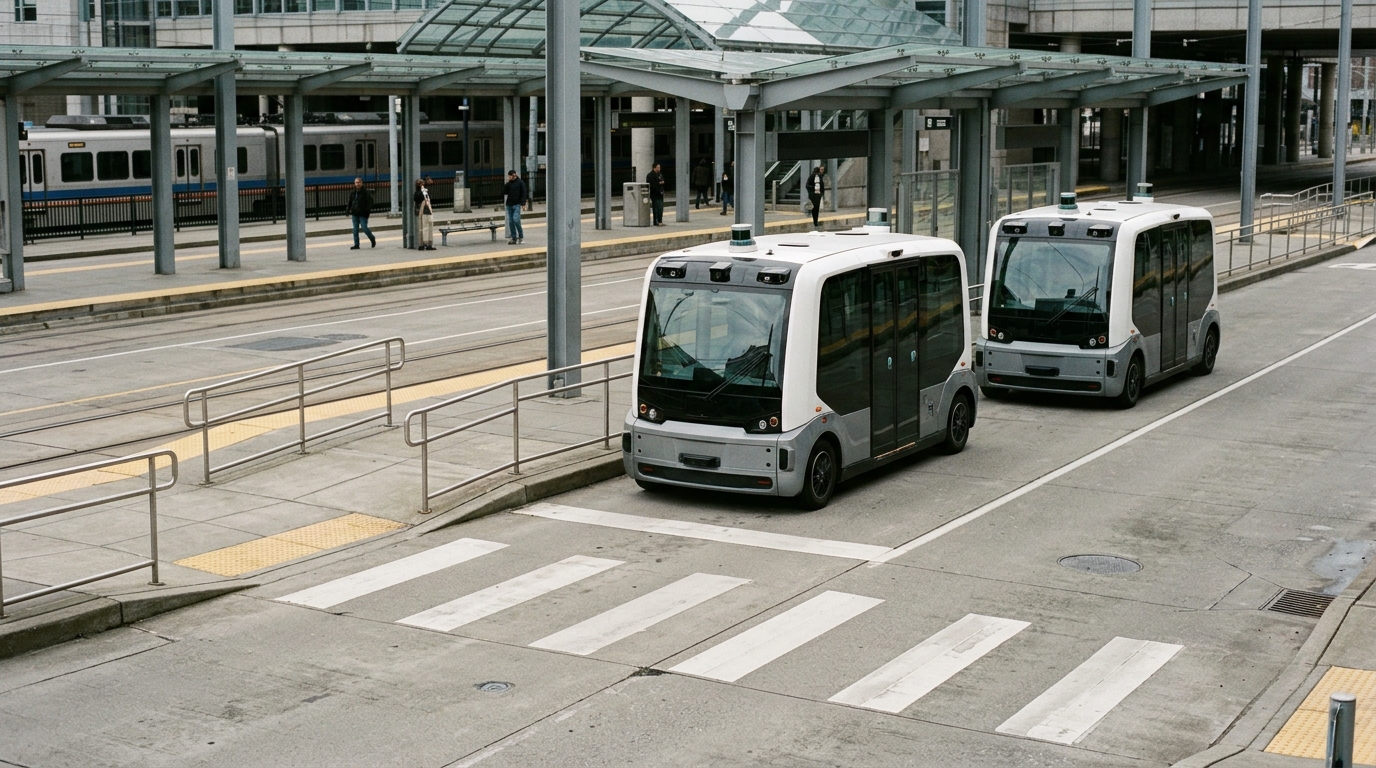
A comprehensive systematic review of forty-five peer-reviewed studies examining modular, autonomous POD-based transportation systems has revealed that current scientific literature remains overwhelmingly concentrated on single-mode road corridors, leaving multimodal network integration and artificial intelligence methodologies largely unexamined.
Modular transit systems operate through standardized transport units capable of coupling into platoons, merging into unified vehicles, or detaching to accommodate fluctuating travel demand.
While demand-responsive transit has generated an extensive body of literature over recent decades, this analysis represents the first structured, comprehensive synthesis addressing the confluence of vehicular modularity, multimodality across differing infrastructure networks, and co-modality combining human passengers with small parcel deliveries.The conceptual framework underpinning POD-based transport relies on
standardized structural load units that transfer between varied motorized carrier chassis using physical or virtual coupling mechanisms, closely mirroring the containerized logic of intermodal freight networks.
Standardizing these modular units enables true multimodality, allowing a single passenger compartment or freight capsule to navigate road networks, attach to rail platforms, or potentially transition to specialized ropeway and waterborne routes without requiring travelers or cargo to disembark.
Furthermore, the integration of public passenger services with urban freight distribution introduces co-modality, a strategy designed to resolve persistent municipal transit inefficiencies.
Conventional municipal buses and passenger trains routinely maintain fixed timetables and rigid passenger capacities, which frequently causes vehicle capacity and track or roadway infrastructure to sit severely underutilized during non-peak operational hours.
Concurrently, rapid e-commerce expansion has complicated inner-city distribution through severe street congestion and municipal access restrictions, creating an operational incentive to utilize spare passenger vehicle space for parcel logistics.To evaluate the scientific literature governing these advanced vehicle systems, the authors executed a structured multi-phase search protocol across the Scopus academic
database.
The search strategy utilized three sequential query filters: establishing a core baseline of modular vehicle literature, mandating the incorporation of passenger transit parameters, and applying rigorous subject exclusions alongside precise operational keywords to prevent omission of diverse domain synonyms.
Recognizing that database algorithms frequently miss relevant studies due to disparate technical terminology and partial database indexing, the investigators supplemented the initial query outputs through targeted consultations with field experts and systematic snowball sampling across cited references.
The resulting synthesis incorporated forty-five peer-reviewed research papers, which were subsequently mapped across a three-dimensional taxonomic framework: transport system infrastructure and network architecture, modular vehicle configuration and demand allocation, and mathematical optimization formulations including system representations and computational solution algorithms.Regarding transportation
infrastructure, the review uncovered an extreme operational imbalance: thirty-seven of the forty-five reviewed publications focused…
Originally published by Google News AI