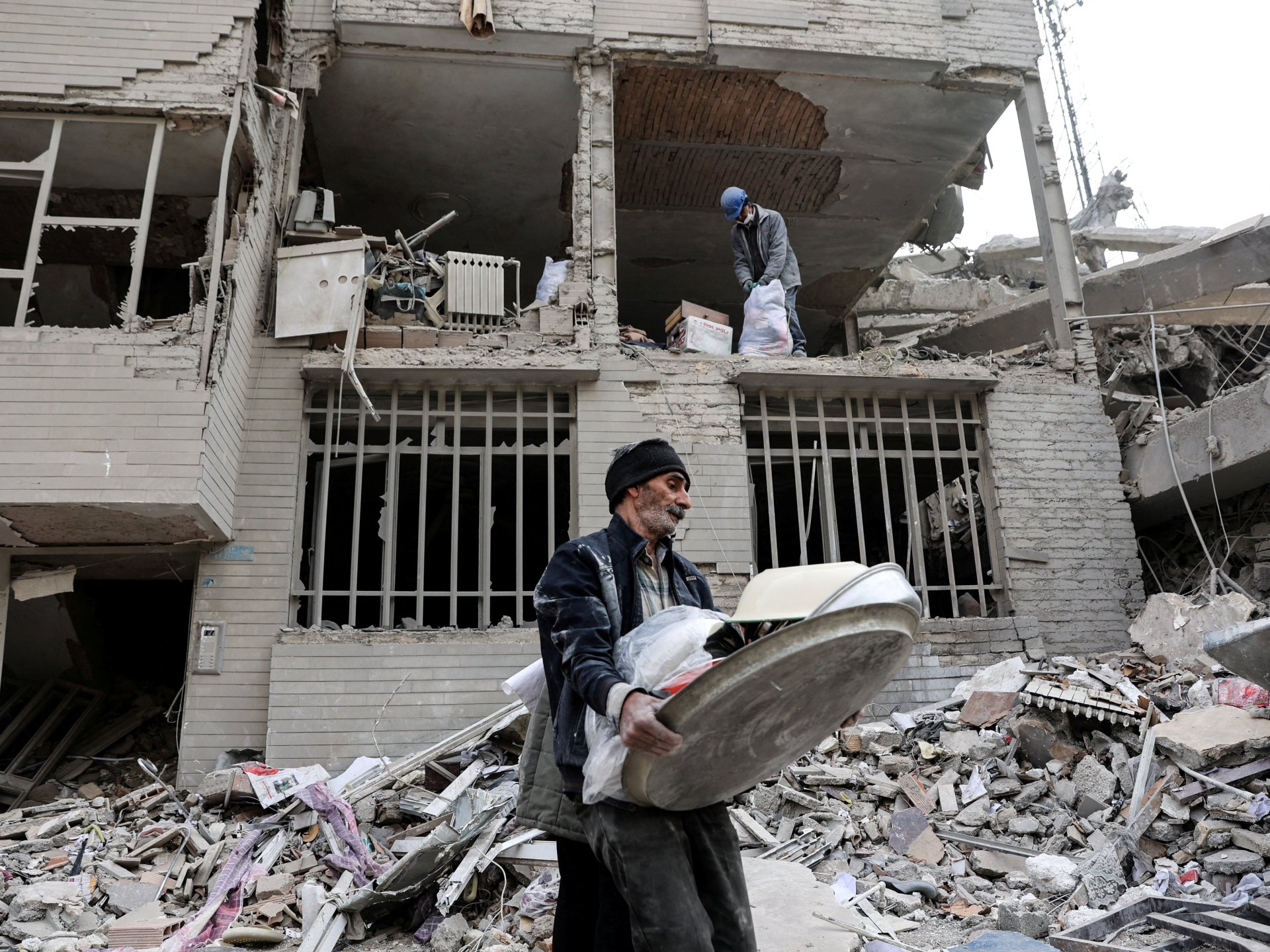
Iranians say they are worried by US media reports suggesting civilian infrastructure could be targeted if the United States launches a new war on Iran. The concern follows extensive damage to civilian infrastructure during the US-Israel war that began on February 28.
The New York Times published an investigative report on Monday alleging overlap between dam construction in Iran and suspected underground missile sites, as well as military demand for water and electricity. The report acknowledged that the proposed connection remains speculative, but drew backlash for linking civilian infrastructure to military activity.
Navid, a 34-year-old Tehran resident who wished to remain anonymous for security reasons, told Al Jazeera that after his experiences in the war, “it’s worrying how easily conversations have shifted to talking about attacking fundamental things like water, electricity and gas.”
Iranian parliament speaker and chief negotiator with the US Mohammad Bagher Ghalibaf said the report was “preparing the next round” of attacks on civilian infrastructure. “Cool. New rule: Any dam, port, or power plant near a US or Israeli base is dual-use. We’ll apply your logic consistently and even-handedly,” read a post on his X account.
Esfandyar Batmanghelidj, CEO of the London-based Bourse & Bazaar Foundation think tank, said fewer than 50 of Iran’s more than 500 large dams have turbines to generate electricity. “The reason there are so many dams in Iran is because there are vested interests, including IRGC construction companies, that use infrastructure budgets to generate rents,” he wrote on X.
Iranian Foreign Ministry spokesperson Esmaeil Baghaei referred to “recent acts of aggression by the USrael [sic] against Iran, water storage reservoirs”. He wrote on X that “the baseless allegations seeking to link Iran’s dams to missile bases constitute yet another example of a malicious campaign to manufacture propaganda and security pretexts aimed at justifying attacks on a country’s vital infrastructure.”
US President Donald Trump has repeatedly threatened to destroy Iranian power plants and bridges in the event of a new war, and said he was “not at all” concerned that such attacks could constitute war crimes. Last week, Trump said all key infrastructure in Iran could be “wiped out” in three days, beginning with bridges. He has also warned that US forces are “fully locked and loaded” and have 38 bridges in their crosshairs.
Tehran has strongly criticised the US for bombing a girls’ school in Minab on the first day of the war, killing 120 children. Airwars, a United Kingdom-based nonprofit that tracks civilian harm in conflict-affected nations, documented almost 1,000 “incidents of harm”, in which at least one person was killed in acts of violence across the Middle East during the first 40 days of the war. US-based rights groups reported in April, during the height of the war, that 1,701 civilians had been killed in the US-Israel assault on Iran, including at least 254 children.
Political analyst Mostafa Najafi, who is close to Iran’s security establishment, said he believes the “targeted and inhumane” report seeks to normalise attacks on civilian targets and could undermine social stability in Iran. “By turning an unverified coincidence in timing and geographical overlap into a security hypothesis, this report has laid the groundwork for suggesting that some of Iran’s civilian infrastructure, including water-transfer projects, forms part of a military support network,” he wrote in a social media post.
“Undoubtedly, this narrative framework could influence future debates about the nature of military and civilian targets and the legitimacy of attacking Iran’s critical infrastructure,” Najafi added. The Tasnim and Mehr news websites, affiliated with Iran’s Islamic Revolutionary Guard Corps (IRGC), also described the investigation as an engineered report intended to justify attacks.
A number of experts quoted in the investigation later said they did not support attacks on civilian infrastructure or the hypothesis that dams directly support military projects. Kaveh Madani, director of the UN University’s water institute and a former deputy head of Iran’s Department of Environment, said: “Speculation is not evidence. Spatial proximity is not causality.”
“Even those who attacked Iran have not made such claims linking dams to missiles!” Madani wrote on X. “This reductionist, sensational narrative is irresponsible journalism with potentially dangerous consequences for civilian water infrastructure”.
During both the 12-day war of June 2025 and the current war, which began on February 28, civilian infrastructure often described as “dual use” has been widely hit in air attacks. Targets listed in the article include oil, gas and petrochemical facilities in southern Iran; oil depots across Tehran; a power plant in Khorramshahr; a desalination plant in Qeshm; and water reservoirs in Fars and Khuzestan.
The B1 bridge in Karaj near Tehran was extensively damaged days before it was due to open to traffic. Multiple bridges were destroyed in Bandar Khamir in southern Hormozgan, while the Bandar Abbas railway junction in the south and Aq Tekeh Khan railway bridge in the north were struck. Steel and aluminium factories, airports, commercial ports, fishing infrastructure, hospitals, emergency services, medicines manufacturing and public-health research centres, apartment buildings, schools and universities were also among the targets.
Iran’s armed forces have launched missile and drone attacks on civilian and military sites across the Arab world, including the Ras Laffan LNG production facilities in Qatar, as well as refineries, airports and other facilities. Iran’s leadership has promised to pursue “maximum deterrence” through an unfettered response without geographical limits if the country is attacked again.
Despite ongoing mediated negotiations, Iran and the US continue to fight over control in the Strait of Hormuz. The IRGC struck multiple vessels attempting “unauthorised” routes over the past day. It also said it attacked a US radar system at Sheikh Isa Airbase in Bahrain on Tuesday in response to what it called lingering US violations of Iranian airspace.