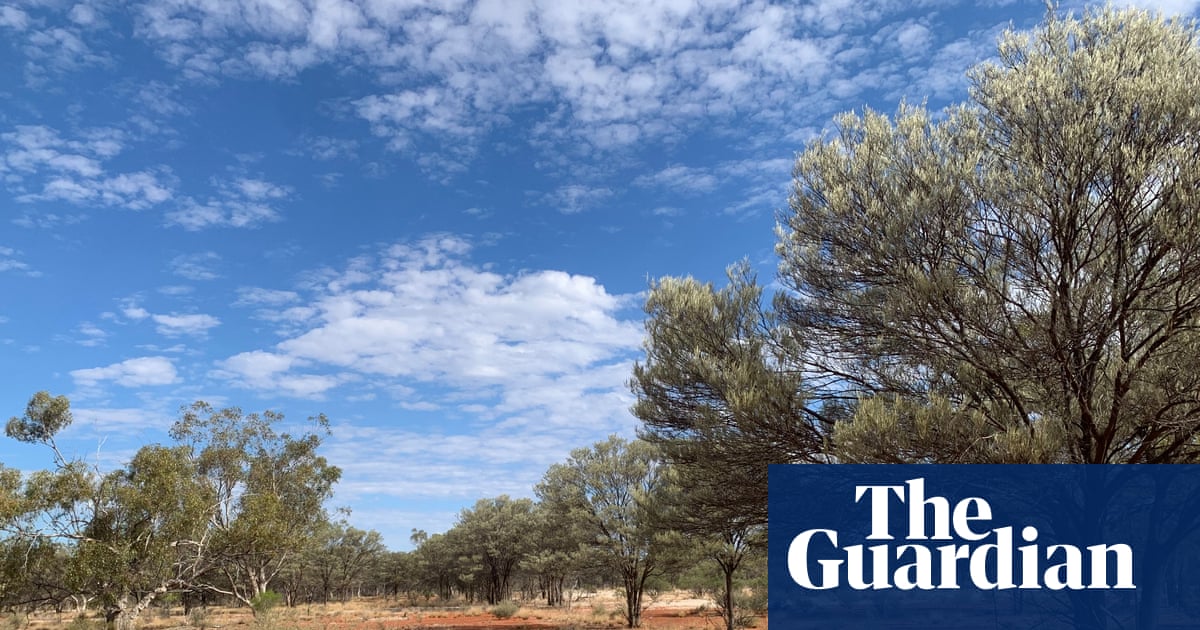
Researchers say 50 forest regeneration projects in semi-arid north-western New South Wales have produced only a small increase in forest and tree canopy cover over the past five years, despite wet conditions. Their findings, in a report released Wednesday by the Australian Conservation Foundation, have renewed debate over the integrity of Australia’s carbon credit scheme.
The academics, including professors from the Australian National University and the University of New South Wales, were led by Prof Andrew Macintosh, a former federal government carbon credit scheme integrity chair and director of ANU’s Centre for Environmental Markets. They said the results were consistent with their previous peer-reviewed studies, which found Australia’s forest regeneration method was doing little to address the climate crisis.
Prof David Eldridge, a report author and former principal research scientist with the NSW environment department, said he was “gobsmacked” that “phantom forests” north-west of Bourke could earn credits for forest regrowth. “Some of these areas have never grown forests; they will never grow forests,” he said.
The companies managing human-induced regeneration projects in the region rejected the findings. A Green Collar spokesperson said: “These are some of the most closely examined carbon projects in the country, and the evidence on the ground shows they are working.”
Each carbon credit is said to represent one tonne of emissions removed from, or prevented from being released to, the atmosphere. Under the federal safeguard mechanism, industrial polluters required to cut emissions can buy an unlimited number of credits and count them as their own cuts while continuing to pollute.
The Australian Conservation Foundation said the findings showed coal and gas companies should be banned from claiming offsets as their own emissions cuts. Its chief executive, Adam Bandt, a former Australian Greens leader, said the safeguard mechanism was meant to “cut climate pollution and protect us from big coal and gas threatening our lives and livelihoods, but it’s not working”.
“Putting more climate pollution into the atmosphere now could push us past dangerous tipping points. It can’t be offset, and the science tells us to keep coal and gas in the ground,” Bandt said.
Macintosh said the projects were generally not regenerating forest but had created more than 60m carbon credits worth up to $2bn. The report said poor-quality credits were “materially undermining” the safeguard mechanism and that a “flood of cheap, low integrity” credits was making offsets cheaper than direct emissions cuts for many big polluters.
Australia has had more than 430 human-induced regeneration projects since 2013, covering 38m hectares, an area larger than Japan. The federal government is reviewing the safeguard policy, as required under legislation.
The Clean Energy Regulator, which manages the scheme, said it took allegations about the integrity or efficacy of carbon credit projects seriously and had confidence in the forest regeneration method. It said projects must show every five years that canopy cover is increasing, and that it had rejected non-complying areas that could have received 6.7m carbon credits.
Green Collar said it stood “firmly behind the integrity of its human-induced regeneration projects” and was frustrated that the report had not been publicly released or published in a peer-reviewed journal. The company said the researchers had “judged these carbon projects with satellite pictures and a single field visit”.
“Carbon is stored in stems, branches, leaves, roots and dead timber. Satellite canopy products see leaves from above. They do not measure the wood and roots where most of that carbon sits,” its spokesperson said.
Skye Glenday, chief executive of project developer Climate Friendly, said the criticisms were “at odds with the facts and the extensive independent scientific and regulatory scrutiny that is applied to all projects”. “Debate about the use of offsets is legitimate, but let’s have that debate on its merits rather than undermining the carbon drawdown Australia also needs,” she said.