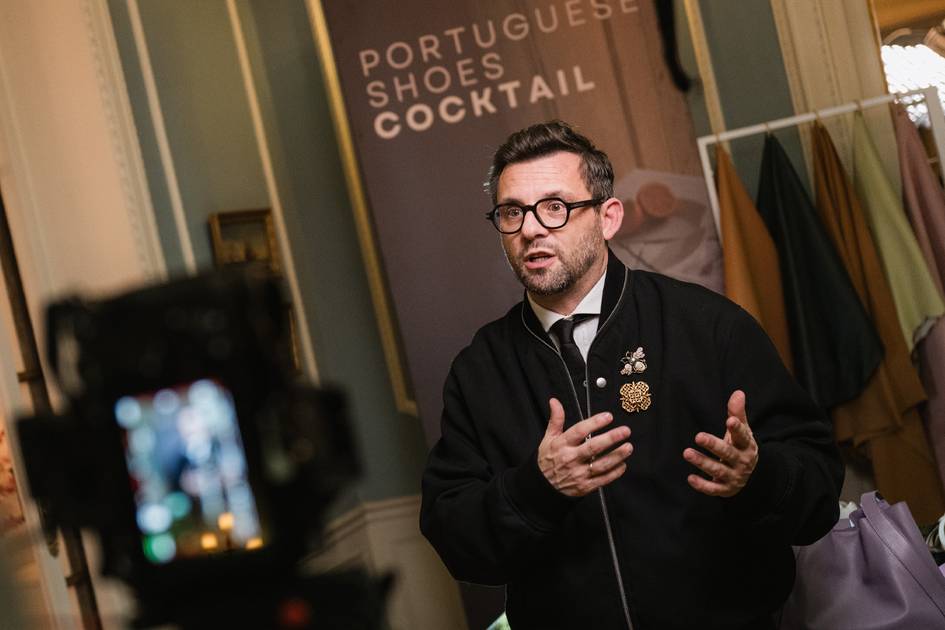
Portugal’s footwear industry is urging Spain to join forces with Portuguese manufacturers to strengthen European production and compete with footwear made in Asia. The call was made by the Portuguese Footwear, Components and Leather Goods Manufacturers' Association (Apiccaps), which also presented results from investments to modernise the sector.
At a reception at the Portuguese Ambassador to Spain’s residence in Madrid on Monday, November 16, Apiccaps said Portugal plans to mobilise up to 600 million euros for footwear-industry modernisation by 2030. The association said collaboration with Spain could help preserve skilled jobs, keep companies operating and create business opportunities.
According to data in Apiccaps’ 2026 “World Footwear Yearbook” report, Asia accounted for 88.7 percent of global footwear production in 2025. Portugal was Europe’s second-largest producer after Italy, manufacturing 74 million pairs that year. Portuguese companies exported nearly 68 million pairs to 172 countries, worth approximately 1.72 billion euros.
The Portuguese footwear and leather goods sector generated 2.15 billion euros in exports in 2025. It comprises approximately 1,240 companies and employs around 34,118 people, Apiccaps said.
More than 100 million euros in European Union “Next Generation” funds were committed to two projects launched in 2022: BioShoes4All, focused on modernising the footwear sector, and FAIST, focused on automation and digitalisation. The national strategic plan aims to mobilise up to 600 million euros in investment by 2030.
Apiccaps reported that BioShoes4All received 60 million euros and brought together 69 partners, including companies, universities and technology centres. The project produced more than 200 scientific, technological and industrial outcomes. These include over 50 lower-environmental-impact products, 25 pilot industrial lines, 46 research lines, eight digital platforms and databases, and seven “industrial symbiosis experiences”.
The project’s work includes artificial intelligence, robotics, computer vision, digital twins, the internet of things, quality control and biomaterials. Materials developed include leathers treated with vegetable extracts and chrome-free alternatives, biopolymers, composites made with cork and agricultural and marine waste, and textiles derived from olive stones and chestnut waste.
“For years we have spoken about the need to transform our industry, and from that commitment, BioShoes4All has allowed us to move from intentions to results,” said Paulo Gonçalves, chief executive officer of Apiccaps. “We have invested in research, new materials and technology, yet most importantly, we have created capabilities that can be transferred to companies.” He added: “Our next challenge is to turn all this innovation into commercial opportunities, skilled employment and greater international competitiveness.”
Apiccaps is also calling for stronger European market surveillance and controls to ensure businesses follow the same rules. The appeal follows a European Confederation of the Footwear Industry (CEC) investigation conducted between February and May 2026. Researchers bought and analysed 76 pairs of shoes in seven European countries through Shein, Temu and AliExpress. Of those, 27 pairs, or 35.5 percent, did not comply with European chemical regulations. Eight of the ten footwear models examined that were classified as personal protective equipment failed to meet at least one safety requirement.
“Spain and Portugal share something that cannot be improvised: decades of industrial know-how, generations of artisans and an extraordinary capacity to manufacture quality footwear,” Gonçalves said. “In a world where nearly 90 percent of shoes are produced in Asia, we have an opportunity to demonstrate that Europe can regain prominence. This is not about competing solely on price, rather doing so through talent, innovation, proximity and the guarantees offered by our production model.” Apiccaps said greater collaboration between the two countries could help maintain skilled employment and open new business opportunities in Europe.