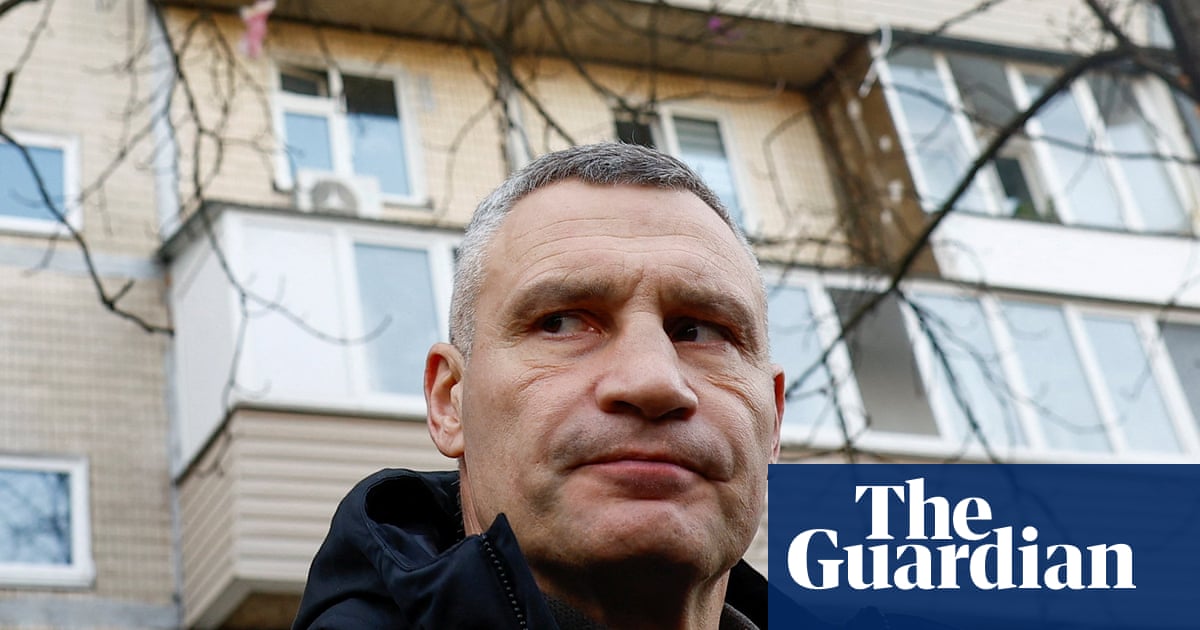
Russian attacks have caused severe power outages in Kyiv, with many homes receiving electricity for only four hours a day. The crisis has also intensified scrutiny of Mayor Vitali Klitschko, whom critics accuse of failing to prepare the capital for winter.
Maksym Bakhmatov, head of Kyiv’s Desnianskyi district, blamed both Russia and the city’s leadership for outages affecting the area’s 600,000 residents. “First, because of Putin,” he said. “Second, because of lack of normal management from the mayor, [Vitali Klitschko]. That’s it.”
Bakhmatov said some homes had gone without power for as long as 37 hours. He said his district lacked the budget to carry out larger projects, including decentralising power generation, which he believes should have been implemented over the past five years. “We have no alternative generators in order to generate electricity inside of Kyiv,” he said. “They didn’t build anything for this, and for now we have almost a collapse of city.”
Russia has also struck two key bridges over the Dnipro river in Kyiv with ballistic missiles, threatening links between the city’s eastern and western sections. The attacks are part of a broader strategy aimed at severing Ukraine’s western and eastern regions.
Critics say Kyiv’s authorities failed to prepare for power shortages despite signs that Russia would target the capital’s energy infrastructure. The Guardian has previously reported on intercepted Russian plans for strikes on power plants and substations intended to disrupt electricity, heating, water and sewage systems.
A rally of about 500 people on central Kyiv’s Khreshchatyk street last month accused Klitschko of shortcomings, including over the energy crisis. One sign read: “Kyiv is in blackout – Klitschko will get knocked out,” a reference to the mayor’s boxing career.
President Volodymyr Zelenskyy has also criticised Klitschko’s preparations for winter. “The situation is worst in Kyiv – people and businesses are facing prolonged power and water outages, and the challenges are extremely serious,” Zelenskyy wrote last week. He said the situation reflected both failures to implement city-level preparations for the heating season and Russia’s operation against Ukraine’s energy infrastructure.
Klitschko defended himself, asking: “How is [Kyiv]… supposed to stop the Russian special operation against the Ukrainian energy system?” He later accused the central government of manipulating the situation and wrote: “Because in its attempts to get rid of Klitschko by any means necessary … the central government is in fact destroying Kyiv.”
Ukraine’s central government is responsible for defending most large power plants and other energy infrastructure. The country’s centralised grid also means it has a role in maintaining electricity and water supplies across cities.
Political analyst Volodymyr Fesenko described the dispute between Zelenskyy and Klitschko as “very old and very personal”. He said Kyiv was less prepared than some other cities, including Kharkiv, citing unfinished promises such as building more bomb shelters. But he added that the central government was responsible for defending major infrastructure, including bridges.
Fesenko said it would be difficult to remove Klitschko as mayor, although Zelenskyy’s office had previously considered taking away some of his authority over city infrastructure. It was unclear whether those plans were advancing. “There is a risk to Klitschko right now. We will see if Zelenskyy ultimately moves forward with efforts to remove him, but it is probably not Ukraine’s biggest political issue right now,” he said.
At the rally, demonstrators said they did not want their protest to help Russia undermine Ukraine’s political stability. One protester, Maryana, said: “We’ve learned in Ukraine that changes usually only come when the fire starts.” Asked what she meant, she answered: “Molotov [cocktails].”
Kharkiv mayor Ihor Terekhov said his city faced an even greater threat from Russian missiles and a “catastrophic” shortage of funding for heating. Kharkiv is about five hours east of Kyiv by car and 19 miles (30km) from the Russian border.
Terekhov said Kharkiv was working to decentralise utility and energy services by creating “energy islands” — small fuel-powered generators for essential services — and installing modular boilers. “It is very costly and time-consuming,” he said.
Bakhmatov said there was no workable evacuation plan for Desnianskyi’s 600,000 residents, who would need to endure a cold, dark winter in the district. “We need help with the generators, with food, with power stations, and so on,” he said. “Just help us.”