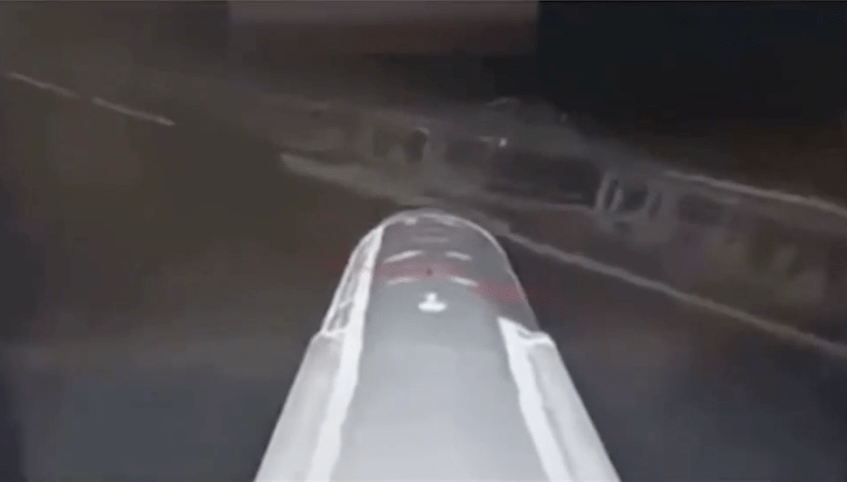
Ukraine’s operation to strike the Crimean Bridge began about a month before drones and missiles hit the structure in a two-night campaign this week, causing part of it to collapse.
The bridge connects occupied Crimea with Russia and carries a railroad and a four-lane road. It is a symbol of Russia’s 2014 annexation of the peninsula and a key Russian supply link. The strikes have also made it a symbol of Ukraine’s improving long-range strike capabilities.
Over several weeks, Ukraine’s military used drones and missiles to destroy Russian air defenses in the area, according to Ukrainian President Volodymyr Zelensky and other officials in Kyiv.
“This was probably one of the most complex strike operations in modern history,” said Fabian Hoffmann, a missile expert at the Norwegian Institute for Defense Studies in Oslo.
The first wave of drones struck Monday morning but left the bridge standing. Road traffic resumed by the afternoon, although one of the two white arches over the shipping channel appeared to be listing.
The main attack began Monday night, when drones and missiles targeted Russian air-defense and electronic-warfare systems. Drones were launched at the bridge from across eastern and southern Ukraine, said a serviceman with Ukraine’s Unmanned Systems Forces who uses the call sign Leon.
“We calculated at what hour and minute the drones launched 300 miles away would arrive,” Leon said. “So that they arrived over the bridge simultaneously, at exactly the same minute, and air defenses cannot shoot down all the drones.”
After Russian air defenses were overwhelmed, Ukraine used weapons with heavier payloads to target the bridge, including Ukrainian-made Neptune and Flamingo missiles and Dutch Ruta missiles. The Netherlands-based company Destinus, which produces the Rutas, said they struck the bridge’s upper load-bearing structure late Monday night. Seven more Rutas hit the bridge Tuesday.
Zelensky said Ruta and Neptune missiles struck the railroad section, while Ukrainian-made, jet-powered Palianytsia drones hit the road section. Part of the roadway and its arch collapsed into the sea.
Road traffic across the bridge has been halted since the strike, though a limited number of trains have continued to cross.
The attack also tested Ukraine’s ability to carry out major operations without relying on SpaceX’s Starlink and Starshield services. Those services have become unreliable in recent weeks, with drones losing connectivity in combat zones if they fly faster than 100 miles an hour.
Ukraine used other methods to steer its drones and cruise missiles, including drones relaying communications to attack munitions. This enabled the weapons to travel farther without satellite links.
Some missiles also relied on older navigation methods, including preprogrammed coordinates. Ruta missiles use terrain recognition, with cameras or infrared imaging to follow a preloaded map. Neptune missiles use internal instruments such as sensors and gyroscopes to track position, direction and speed, a method dating back to the first ballistic missiles in World War II, with satellite navigation as a backup.