A series of major disruptions to flights, banks and technology services has renewed questions about how difficult it can be to distinguish technical failures from cyberattacks. Experts said none of the incidents described in the past 100 hours had been attributed to foreign adversaries or cyber criminals, but determining that with certainty takes time.
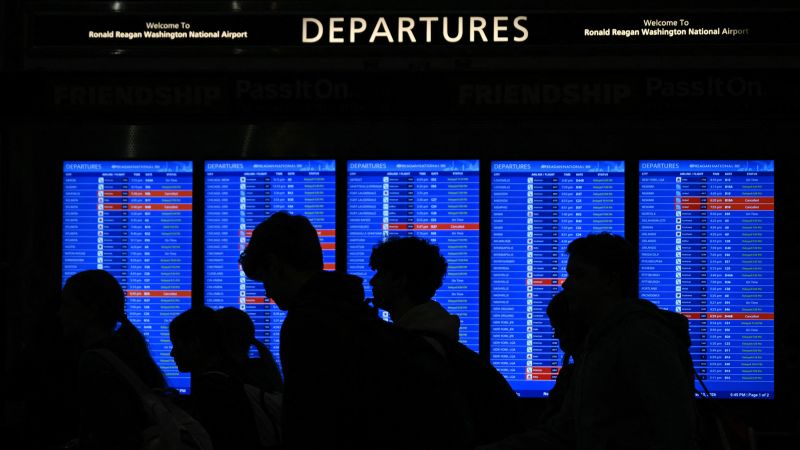
The Federal Aviation Administration ordered a nationwide ground stop shortly before 4 p.m. on a Friday, citing an “unstable” radio communications network during an overhaul of an antiquated system. Microsoft was restoring service to its “365” customers after a technical outage, and payroll provider Workday also reported a technical issue.
By Monday afternoon, United Airlines had a technical shutdown that grounded flights, while Chase and Wells Fargo customers experienced problems accessing their accounts online. Cybersecurity experts said they were struck by the sudden cluster of failures, including several on a large scale, but did not conclude they were malicious.
Earlier that Friday, the FBI sent a warning to private-sector cybersecurity chiefs about ARTEX, a tool originally designed to help companies find vulnerabilities in their own systems. The agency said malicious actors had obtained and weaponized it.
“Since at least August 2026, a variety of malicious cyber actors have used ARTEX to conduct campaigns targeting organizations globally across multiple sectors, including financial services, government, technology, defense, semiconductor, energy, healthcare, manufacturing, telecommunications, and legal industries,” the FBI warning reads.
The FBI said ARTEX can speed up attacks by allowing users to combine techniques and run operations against multiple targets. “ARTEX significantly reduces the time required to chain attack techniques, with some intrusions progressing from initial targeting to privileged access in under three hours,” the warning states. It added that the framework enables people with limited technical expertise to conduct complex operations.
Elizabeth Buckley, head of Cyber and Technical Solutions at Teneo consulting, described the effect as the “democratization of cyberattacks and cybersecurity.” She said AI tools can also help defenders find and patch weaknesses, but added that ARTEX had been used by malicious actors “significantly in the last few weeks.”
The FBI warning said ARTEX was recently used in an attack against South Korean financial institutions and a supply chain compromise affecting ConnectWise Cloud Backup customers. Prashanth Mekala, former assistant special agent in charge of the FBI’s Counterintelligence & Cyber Division in New York and chief security officer for ROKT, said AI-powered tools hijacked by malicious actors are moving faster than many companies’ security teams can respond.
The FAA ground stop is also under investigation. On Monday, FBI agents took possession of the router believed to be behind Friday’s disruption. The following day, an FAA spokesperson told CNN that the agency was pausing installation of new Juniper telecommunications routers as it investigated.
There is no evidence that the router involved in the FAA incident was compromised. In July 2024, however, cybersecurity company Mandiant reported that Chinese threat actors had gained backdoor access to Juniper routers. Juniper later said an investigation found “the set of six implants are indeed malicious software designed to remotely take over Junos OS devices.”
Cybersecurity experts also cited “living off the land,” or LOTL, techniques, in which attackers disguise their tools as normal system activity. In February 2024, the FBI, National Security Agency and Department of Homeland Security warned that Russian and Chinese state-sponsored actors were using such methods to maintain access to critical infrastructure.
Experts differed in their certainty about whether recent disruptions had malicious causes, but agreed that companies need to invest more in cybersecurity. Gus Rodriguez, former commanding officer of the NYPD Cyber Intelligence team assigned to the FBI’s New York Task Force, said local governments and critical infrastructure operators should share threat information more quickly.
“As AI gets faster, as cyberattacks get faster, what are we doing to make sure that critical infrastructure operators in America are sharing that information as fast?” Rodriguez said. “Because as we already know, 85% of critical infrastructure in America is owned and operated by the private sector.”
Buckley said organizations should assess whether they have appropriate security staff and compliance measures, and identify what could pose an existential risk to their operations. CNN’s Nicki Brown and Eric Levenson contributed to this report.