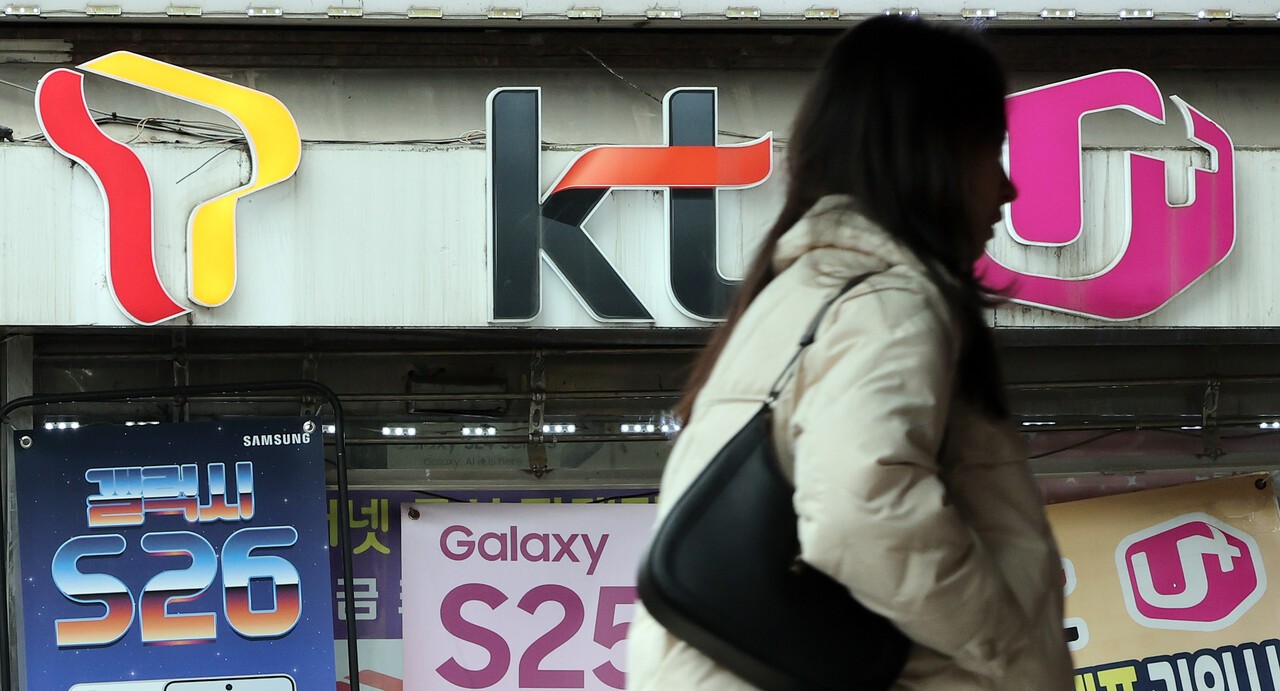
South Korea’s three major mobile carriers have strengthened their customer protection policies this year, but applications for telecom dispute mediation have more than doubled compared with last year.
The sharp increase in applications, despite the carriers’ efforts to expand consumer protection organizations and tighten oversight of retail stores, has raised questions about the effectiveness of their customer protection measures.
According to the Korea Media and Communications Commission (KMCC) on Nov. 9, the Telecommunications Dispute Mediation Committee under the commission received 4,278 mediation applications as of Oct. 31 this year. The figure represents a 151.1% increase from 1,704 applications during the same period last year.
However, the KMCC has not disclosed the reasons behind the sharp rise or which types of disputes account for the largest share.
The telecom dispute mediation system, introduced in June 2019, helps resolve disputes between consumers and telecom operators over issues such as mobile phone subscriptions and cancellations, billing, and service quality. The KMCC publishes comprehensive annual statistics covering January through December in the spring of the following year.
Accordingly, the commission plans to analyze this year’s data by the end of the year and release the results next spring.
A KMCC official said, “As was the case last year, disputes involving service contracts and the explanation or disclosure of important contract terms continue to account for a large share of cases this year.”
Last year, disputes involving service contracts and the explanation or disclosure of important contract terms accounted for 1,600 cases, or 75.4% of the total 2,123 mediation applications.
Service contract disputes include cases in which mobile phone retailers fail to provide promised handset subsidies or charge excessive penalties when customers terminate their contracts. Disputes involving the explanation or disclosure of important terms include cases in which customers are not adequately informed about mobile plans, contract conditions, or discounts.
The concern is that the number of mediation applications has surged despite the carriers’ introduction of various customer protection measures this year.
The companies have strengthened consumer safeguards by tightening oversight of mobile phone retailers, revising terms and conditions for long-unused mobile lines, stepping up financial fraud prevention efforts, and establishing dedicated dispute resolution organizations.
In particular, SK Telecom established four divisions within its Customer Trust Committee in January, including consumer protection and customer communications divisions, to support the swift resolution of consumer disputes. KT also launched its Customer Protection 365 task force in April to strengthen its customer protection framework.
Nevertheless, neither carrier was able to avoid the sharp increase in telecom dispute mediation applications.
An expert criticized telecom operators for emphasizing customer protection in words without delivering sufficient results.
Ahn Jung-sang, an adjunct professor at Chung-Ang University’s Graduate School of Communication, said, “Telecom companies repeatedly claim during parliamentary audits and other occasions that they are doing their utmost to improve telecommunications welfare for the public, but the reality is different.”
“The sharp increase in telecom dispute mediation applications ultimately reflects…