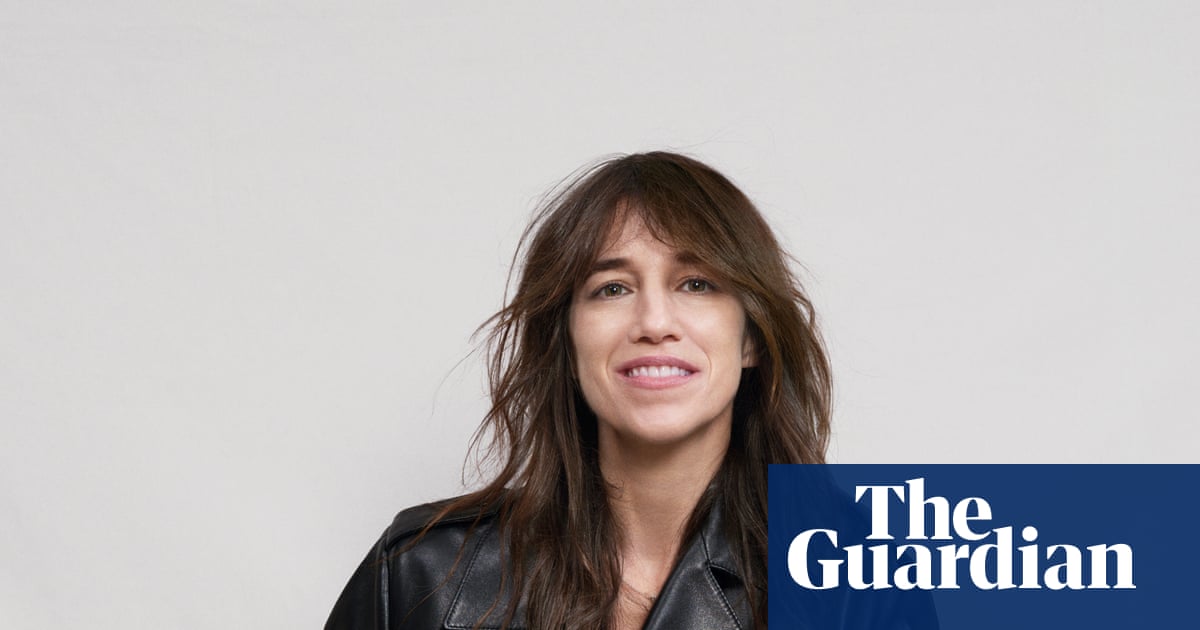
Charlotte Gainsbourg says the 1972 Bobigny abortion trial was new to her before she played lawyer Gisèle Halimi in Women on Trial, a film about the real-life prosecution of a child for having an abortion. She also discussed reproductive rights, criticism of her support for Israel, and her work with director Lars von Trier.
While making the film, Gainsbourg was sent a photograph of her mother, actor Jane Birkin, at a pro-choice demonstration in 1972. She called it “very moving” to see Birkin “looking beautiful and in the middle of a demonstration”. At the time, Halimi defended 16-year-old Marie-Claire Chevalier, her mother and two other women who helped her have an abortion, then illegal in France.
“I had no idea. For me, abortion rights started with Simone Veil” – the French minister of health who oversaw decriminalisation three years later – “so I had to catch up,” Gainsbourg said. Chevalier had become pregnant as a result of rape and had an underground abortion with her mother’s help. “The fact that it’s the rapist that [reports her to the police] is just so insane,” Gainsbourg said.
Halimi sought to mobilise protest and challenge the law criminalising abortion. Her campaign drew support from prominent feminists, including Simone de Beauvoir, and from demonstrators such as Birkin.
Gainsbourg, who lives in London with her partner, actor and director Yvan Attal, and their two youngest children, said she had found it difficult growing up in a family she saw as exceptionally beautiful. “The whole aesthetics in my family were so high that I felt so ugly,” she said. “But as an adolescent, oh my God, it was terrible.”
Although Women on Trial is set in 1972, Gainsbourg said its themes remain relevant. In court, Halimi says “shame must change sides” – words echoed during the 2024 trial of Gisèle Pelicot’s ex-husband and 50 other men, who would be convicted of rape and sexual assault. “More than 50 years on, shame still stalks women,” the article notes.
Gainsbourg said women’s reproductive rights feel “very fragile”. She added that she was concerned about political extremism: “Sure. I mean, everywhere, it’s very scary.” She said she was equally concerned about the far left, adding: “I find every extreme quite terrifying.”
Gainsbourg’s casting as Halimi drew criticism. In 2025, she was among 200 signatories to an open letter in Le Monde that highlighted rising antisemitic attacks and called for the government to recognise “anti-Zionism as a new form of antisemitism”. Later that year, she and Attal joined 18 others in signing a letter urging president Emmanuel Macron not to recognise a Palestinian state without the release of Israeli hostages and the dismantling of Hamas.
One of Halimi’s sons, noting his late mother’s longstanding support for Palestinian rights, criticised Gainsbourg’s casting. A petition was signed by 13,000 people, and the feminist organisation Choisir, founded by Halimi, distanced itself from the film. Gainsbourg said she did not want to discuss the public criticism. She felt “protected in a way” by the support she received, she said, “But it’s still violent.”
Gainsbourg said provocation can be useful to artists, though it is not a requirement. “I don’t know what the world will be like once every provocation is censored. I’d find it quite dull,” she said. She added that each case should be considered individually and that generalisations can leave artists “quite scared”.
She has made three films with von Trier and describes her career as “before and after Lars”. Working with him on Antichrist was “such a revelation”, she said. During the making of Melancholia, she felt insecure and full of self-doubt when von Trier kept his distance; she later learned he had done so deliberately to inspire her performance. “We’re all free to leave if it’s a torture that you’re not willing to go through,” she said. “Maybe I have a bit of masochism in me that meant that I enjoyed every bit of it.”
Von Trier announced in 2022 that he had been diagnosed with Parkinson’s disease. Gainsbourg said they remain in contact by text. Asked whether she might appear in his possibly final film, reportedly funded and named After, she replied: “We’ll see.”
Gainsbourg hopes to release a new album next year. She also has another film with Jamie Adams, following Only What We Carry, shown at the Tribeca film festival this year. The next Adams film will be improvised again. Gainsbourg said working with familiar collaborators helps with the shyness she has described experiencing throughout her life.
Asked what she took from playing Halimi, Gainsbourg said she was “intimidated by her force, by someone that accomplished so much”. She added: “But at the same time, I knew why they asked me to play her. It was to also have a vulnerability that she might not have shown that much.”