Click to tell Google to prioritize Quanta and see more of the best coverage of science and math in your search and AI results.
Scientists are homing in on the 200 million years after the conditions for life emerged on Earth but before our most ancient single-celled ancestor appeared.
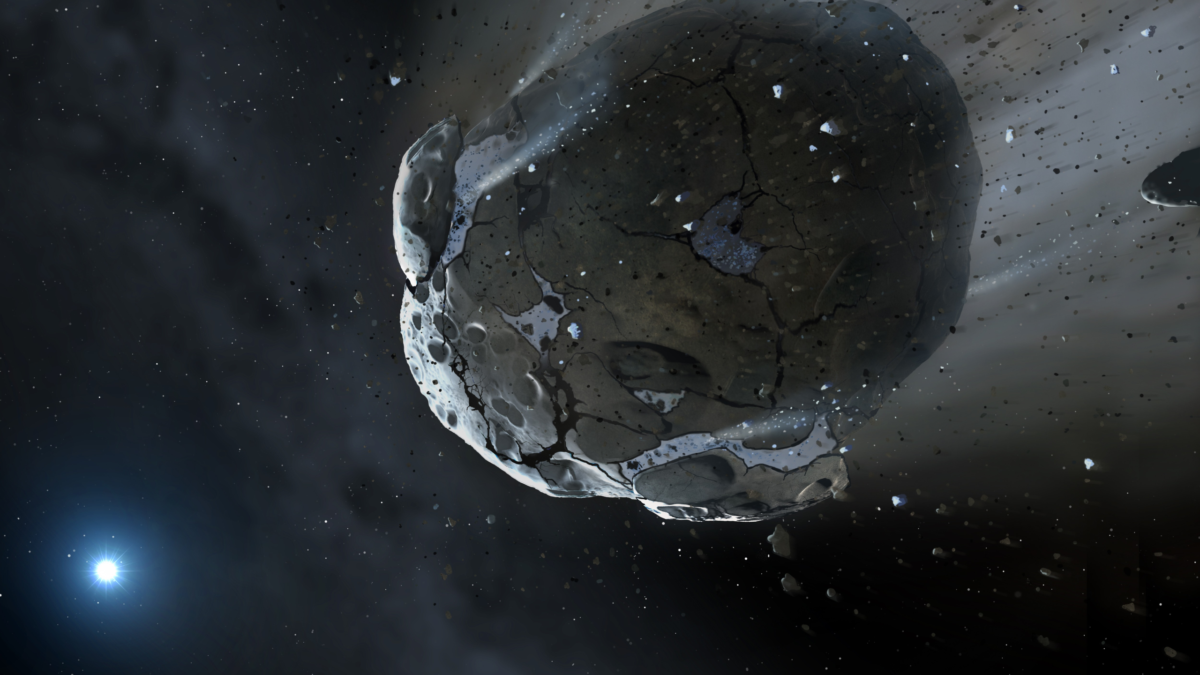
Around 4.6 billion years ago, some 9 billion years after the birth of the universe, a cloud of gas and dust collapsed into the familiar blinding ball in our sky. Scraps of leftover material collided and accreted into the planets of the solar system, including our own. For the next few hundred million years, Earth was a hellish, molten landscape bombarded by meteorites.
As it started to cool, water pooled into vast, acidic oceans. The days, half as long as today’s, passed under pink carbon dioxide skies. But life wasn’t around to sense any of it. Until it was.
Around 300 million years into the existence of our solar system, conditions on Earth were right for a great chemical experiment to begin. Molecules entangled themselves in self-sustaining, self-reproducing loops. Over time, these systems became more complex. At some point, they had come to life.
Life invented new ways to move, and to capture, store, and use energy. It began to sense, respond to, and change its environment. It communicated, ate some of its neighbors and lived inside others, and formed complex, dynamic communities. Through cycles of birth, reproduction, and death; catastrophe; and bursts of evolution, it persisted and then thrived, taking over every corner of the planet.
Then, at some point, life gained a sense of itself, a reflective intelligence with the existential curiosity to ask: Where did we come from? For tens of thousands of years, we have pondered and probed the origins of life: Monks have meditated, philosophers have argued, lovers have mused, and parents have patiently answered their kids’ questions.
“Go back in human history, go back to the Neanderthals, go back 30,000 years,” said William Schopf, a paleobiologist at the University of California, Los Angeles, “and one of the things you will see is that human beings have been wrestling with this question.”
By the mid-20th century, it became possible to probe life’s origins through chemistry, molecular biology, and genetics. Hypotheses exploded. Scientists clashed over which type of molecule — RNA, lipids, proteins, and metabolites are prime suspects — could have started it all. The arguments have gone on for so long, without resolution or unifying insight, that some experts have considered the field to be in crisis.
“There’s nothing more exciting for a scientific field than a moment of crisis,” said Betül Kaçar, an astrobiologist and evolutionary biologist at the University of Wisconsin, Madison. “That’s when I think breakthroughs happen.”
Life’s origins are not purely a chemistry problem. “It’s not a linear reaction. … There’s no single E = mc2 and that’s origin of life’s formula,” said Betül Kaçar, an astrobiologist and evolutionary biologist. “This is biology; it doesn’t follow any rules. That’s what makes it so sophisticated and exciting.”
A new wave of origins-of-life researchers, fed up with the tradition of bickering, have unshackled themselves from the idea that a single type of molecule started it all. Their open-minded approach has coincided with a change in scientific understanding. Experiments have shown that the precursors to many of life’s ingredients may have formed easily under the conditions on early Earth.
What is harder to explain is how these molecular processes became a stable evolutionary system continuous with the vast diversity of life we see on the planet today. During life’s earliest days, these processes came together to store and pass on information, both consistently and imperfectly enough to allow the same living lineage to persist for billions of years on an ever-changing planet.
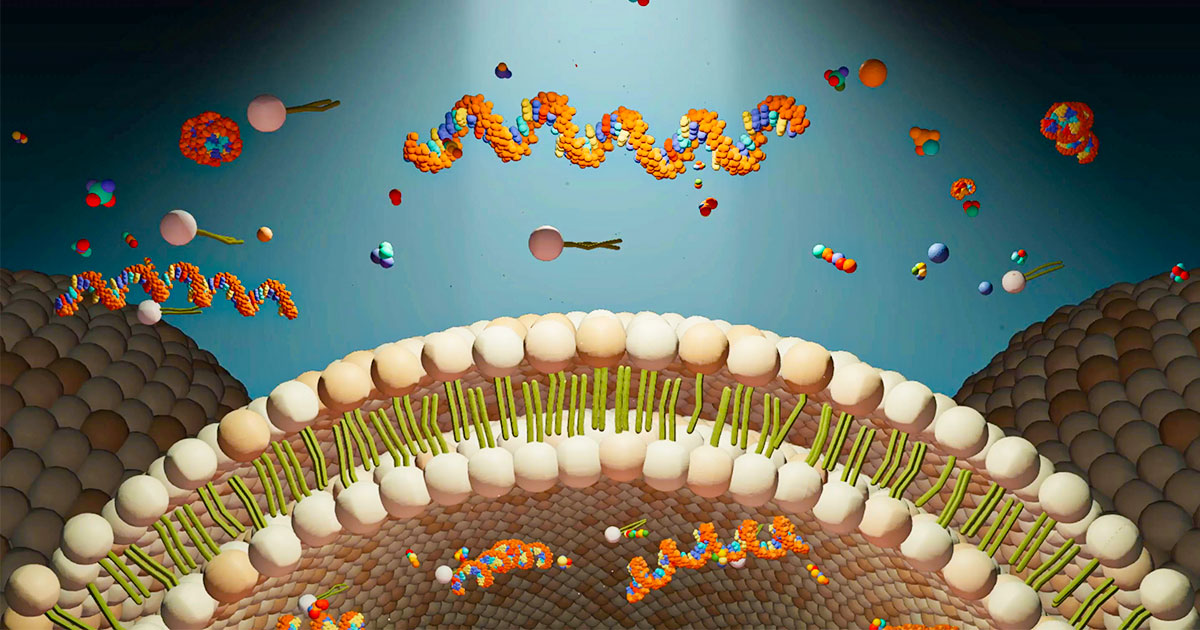
To study the emergence of lifelike biochemical systems, biologists are now pushing backward into the past from the living world with new genetic tricks, while chemists are pushing forward from the nonliving world with new and strange mixtures of molecules.
And by combining tools from chemistry and biology, synthetic biologists are embracing informed speculation and probing novel biological systems that may not have ever existed. Scientists now engaged with the origins of life are asking not just what life is, but what it does — on an archaic world, in a lab dish, or somewhere beyond our atmosphere.
In 1952, Stanley Miller, then a graduate student at the University of Chicago, performed a bold experiment. He was inspired by a lecture given by Harold Urey, the Nobel Prize–winning chemist, on the origins of the solar system. In the 1920s, Alexander Oparin in Russia and J.B.S. Haldane in England had independently hypothesized that life gradually evolved from a “primordial soup” of molecules.
Urey proposed an extension of that idea: that Earth’s primitive atmosphere was composed of gases that could, with a little help from an energy source like lightning, produce organic molecules that would rain into the ocean. From there, these molecules would accumulate, concentrate, and eventually start to link together on the way to self-replication.
A year after hearing the lecture, Miller, just 23 at the time, approached Urey with a proposal. A week later, he had scraped together what would become known as the Miller-Urey apparatus: A glass bulb filled with water simulated a…