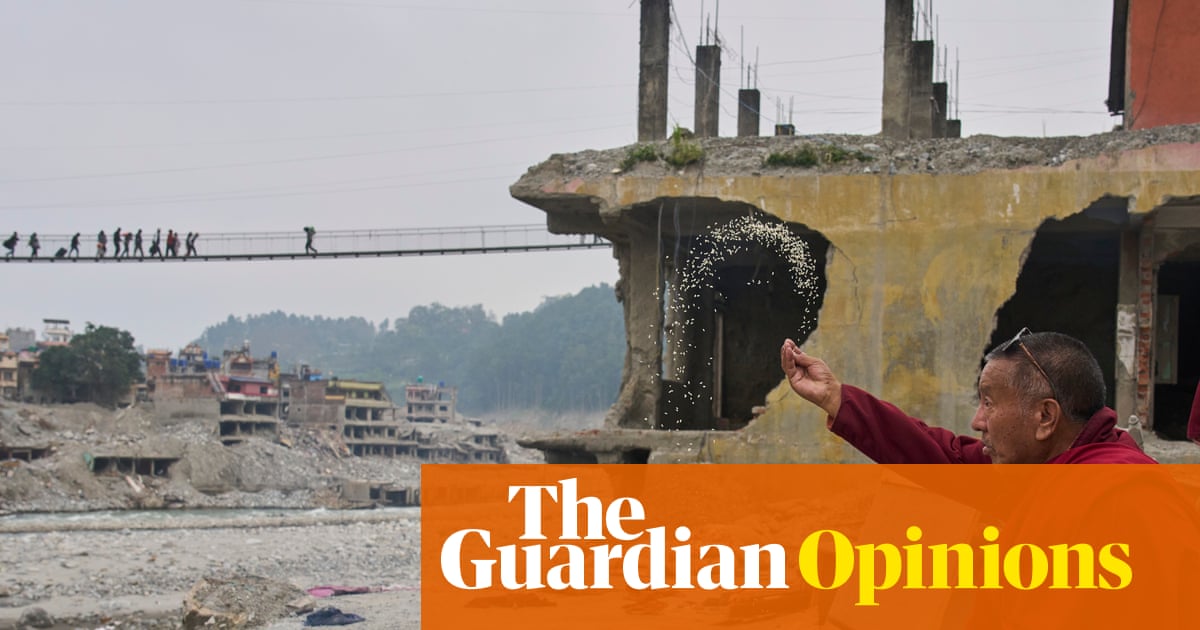
Nepal’s August glacier disaster exposed a gap between the cost of climate damage and the funding available to address it. Reconstruction is expected to cost about $5bn, while the Loss and Damage Fund has earmarked $20m for Nepal—less than 5% of the $482m Kathmandu must pay its external public creditors this year.
An avalanche of ice and rock triggered deadly floods that swept away villages, bridges and roads, leaving thousands dead or missing. Nepal also lost a tenth of its electricity generation. The disaster illustrated the risks to the Himalayas from increasingly unstable glaciers as global heating intensifies.
“The scale of resources needs to increase,” Nepal’s delegation to this year’s UN climate conference observed. ActionAid’s September report, Debt Fuels the Climate Crisis, said the global south’s external borrowing is 100 times more than the climate finance it received.
The report says poor nations become trapped in debt dependency as they export cheap raw materials and import more expensive food, fuel and manufactured goods, often priced in dollars. Climate-vulnerable countries are expected to fund decarbonisation while servicing dollar loans that can pressure them to export fossil fuels rather than invest in green industrialisation.
As US interest rates rise, developing nations are paying more to creditors. Between 2021 and 2024, their debt increased by just 2%, while repayments rose by 28%. UN figures show external interest costs in the global south, excluding China, reached $125bn in 2024.
UN climate chief Simon Stiell described a “downward loop”: climate risks raise borrowing costs, disasters increase debt, and mounting repayments leave governments with little to invest in resilience, making them more vulnerable to future shocks. Climate finance, he said, “must help countries break free”.
Economist Fadhel Kaboub of Denison University, Ohio, and an adviser to the UN, argues that international finance, trade, investment and taxation rules entrench inequalities inherited from colonialism. As a result, countries least responsible for global warming have the fewest resources to confront its consequences.
At Cop31, Kaboub was among experts who argued that least developed countries should adopt Mark Carney’s middle-power strategy and use collective bargaining amid great-power rivalry. They proposed pooling resources, building regional common markets and green industries, and negotiating as a bloc with western powers – and China – for technology transfer and investment without taking on further debt.