The Strange Future of AI-Written Software: Do Companies Really Own Their Code? - HackerNoon
By Google News Technology ·
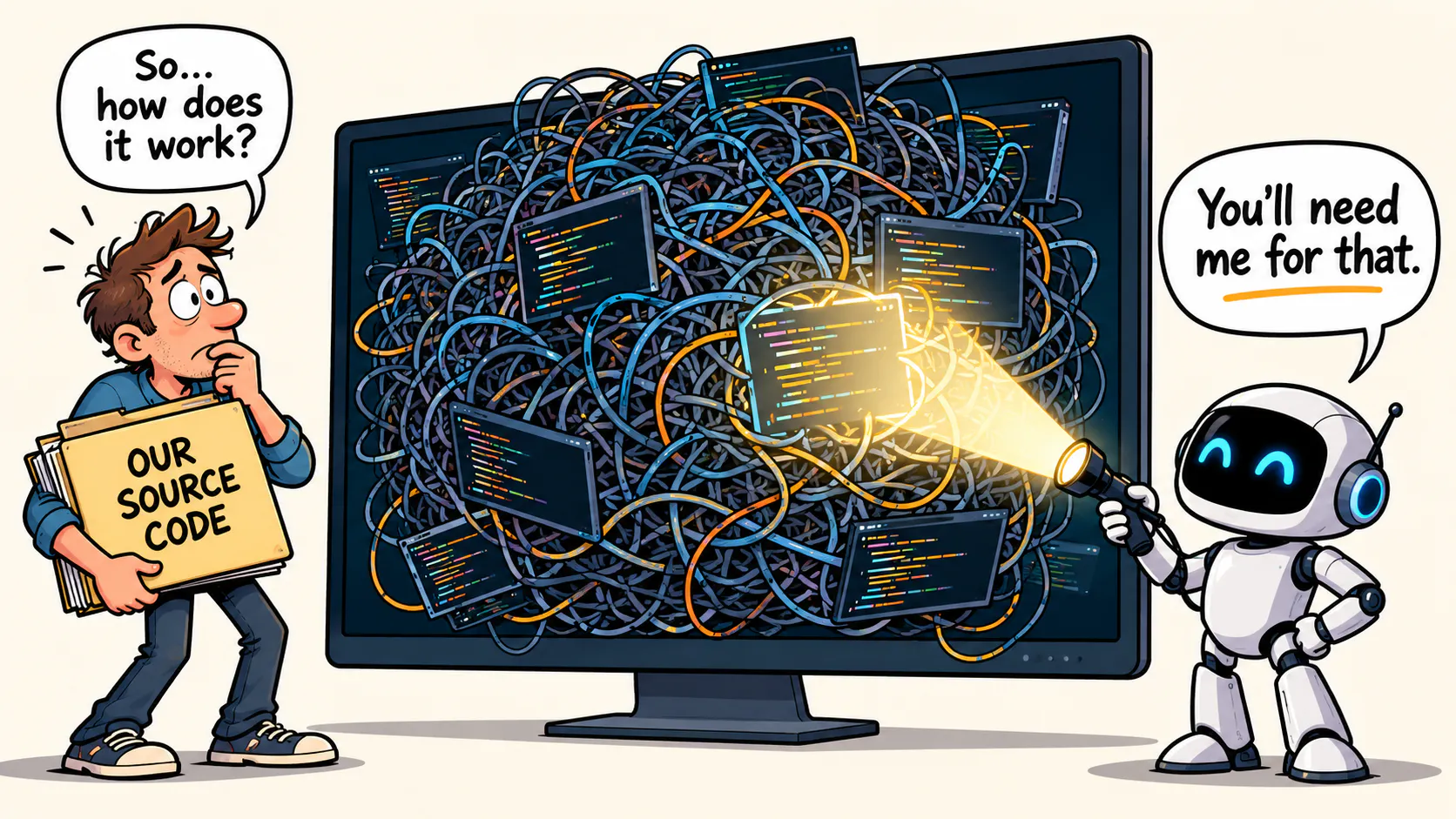
Companies may soon discover that owning the code is no longer equivalent to owning the system. For most of programming history, code had two audiences. One was the machine that executed it. The other was the human who would later have to understand it. That second audience shaped the entire profession. Developers wrote code not just to run, but also to be read, debugged, extended, audited, and eventually inherited by others. Even bad code carried one reassuring assumption: with enough effort, another engineer could take over. to be read, debugged, extended, audited, and eventually inherited by others AI changes that assumption. The usual story is that AI makes developers faster. That is true, but it is not the most important thing happening. The deeper shift is that software may no longer be primarily a human-readable artifact. Large parts of future systems may be written by AI, modified by AI, explained by AI, and safely maintained only with AI assistance. it is not the most important thing happening no longer be primarily a human-readable artifact The code will still be there. The repository will still exist. But the practical path to understanding it may increasingly run through a model. That changes more than productivity. It changes what companies actually own when they say they own software. The old assumption: if the code is there, humans can recover it For decades, software behaved like a durable asset because of one quiet belief: even if the original developers left, the system could still be understood by someone else. It might take weeks. It might take months. It might be painful. But in principle, the knowledge was recoverable from the code itself. That recoverability was part of what made software valuable. A company did not just own an executable system…
Originally published by Google News Technology