The documentary NAZA has prompted fierce backlash in Israel while bringing renewed attention to Israeli military conduct in Gaza, says Nadav Weiman, executive director of the veteran-led NGO Breaking the Silence.
Produced by the Guardian, NAZA features 24 army intelligence officers interviewed anonymously on rooftops across Tel Aviv. They discuss the killing of Palestinian civilians in Gaza and a military system for approving attacks. More than 1.5 million people have seen the film in cinemas. Israeli filmmakers Yuval Abraham and Rachel Szor have received a roster of prestigious awards. The film has been offered to Israeli distributors and cinemas but has not been screened there amid a severe backlash. It will stream for free on the Guardian website in early December.
Weiman said the film was widely discussed during Yom Kippur, even though only a handful of Israelis had seen it by September. The response among his friends and neighbours was largely hostile, he said: “Yes, almost all had very hardline views about the movie” he tells me. “But, everyone was talking about it.”
Weiman leads Breaking the Silence, which has spent more than 20 years collecting accounts from soldiers who served in Gaza, the West Bank and East Jerusalem. The NGO has gathered more than 1,000 testimonies, including Weiman’s. Hundreds of people have come forward in the past three years, after atrocities committed by Hamas on 7 October in Gaza, he said. He said Israeli publications and television channels had mostly declined to report on or platform their accounts.
NAZA presents first-hand testimony from officers involved in carrying out military commands. It builds on reporting published by the Israeli-Palestinian magazine +972, Hebrew-language outlet Local Call and the Guardian between 2023 and 2025. The film focuses on “nezek agavi”, the acronym in its title for the number of civilians expected to be killed in an attack, treated as collateral damage.
Weiman said the film’s Hebrew language, Israeli directors and testimony from soldiers helped it resonate with Israeli audiences. The intelligence units represented are prestigious and largely desk-based, he said. “These are people who live in Tel Aviv, vote for more progressive parties, work in hi-tech jobs … They killed hundreds of Palestinians from the air, many it seems without blinking twice. That’s hitting a particular nerve here.”
He also pointed to the political climate, with national election campaigns taking place in recent months. “For the right wing it is very helpful to attack [the Israeli directors] Yuval and Rachel,” he said. “It plays into their everyone-is-out-to-get-us narrative.”
Weiman said Israeli media had largely failed to cover events inside Gaza. “There continues to be an iron wall between the Gaza Strip and the rest of Israel,” he said. He added: “Here, we see IDF spokespeople on TV, then military correspondents who act as mini IDF spokespeople. We don’t hear complex ideas or views, or have mainstream access to information. Certainly not related to collateral damage. ‘Everyone in Gaza is assisting terrorists’ – that’s the line we’re told.”
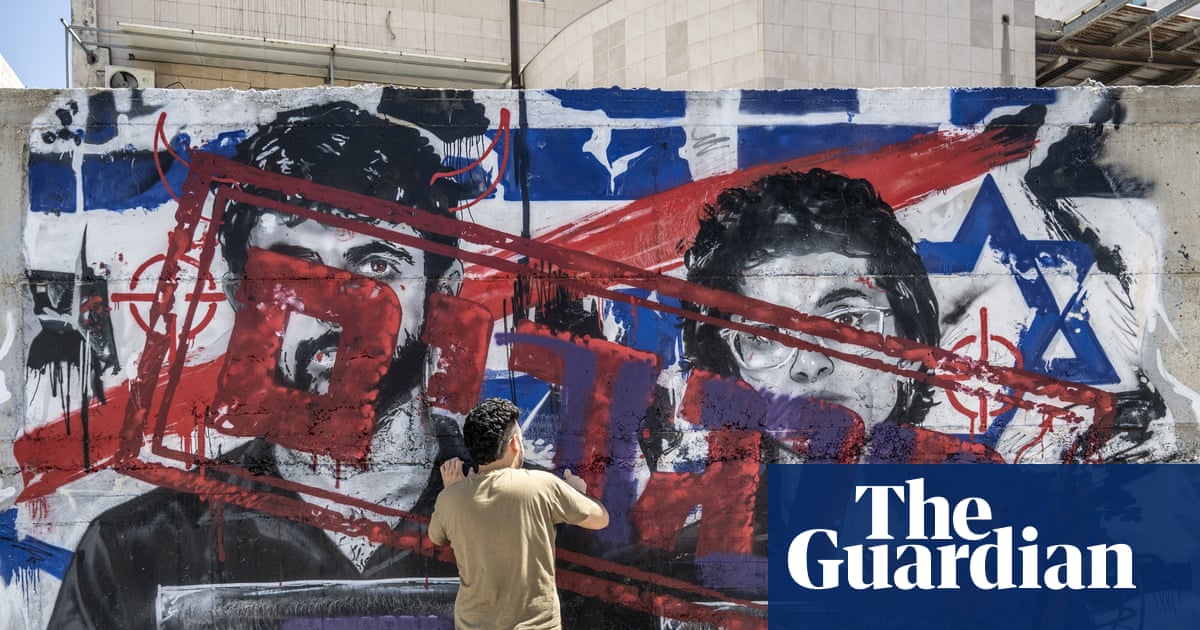
The backlash to NAZA has included a statement by Israeli military chief of staff Eyal Zamir that officials would use “every tool at our disposal” against the film. Protesters gathered outside Szor’s parents home, demanding she face the death penalty. A mural showing the filmmakers through a gun sight was painted in Ashdod, and Benjamin Netanyahu vowed to try to strip their citizenship.
Weiman said similar measures had been directed at Breaking the Silence. In 2018, the Israeli government passed a law barring the NGO from schools and had previously targeted its funding. Legal investigations have also been opened into veterans who spoke out. “They want silence,” he said.
Weiman said national service is compulsory for most Israelis: men are conscripted for 32 months and women are expected to serve for two years. Soldiers who speak publicly are labelled traitors and told to follow orders and keep quiet, he said. “The narrative here are these are conversations to be held behind closed doors; within the system … People who say no, it’s actually the system itself that is broken or corrupt? It’s a much harder pill to swallow.”
The film argues that the problem is systemic, Weiman said. “The film shows that the system is the problem,” he said. “Not the irregularities, but the commands and how we fight. The terms on which the military operates.” The 24 soldiers’ accounts, he added, are “too many to write-off or ignore.”
All the identities of people interviewed for NAZA are concealed to protect them. Weiman said more than 200 soldiers have given Breaking the Silence testimony about their involvement in the Gaza war since 7 October. Some said they had gone to fight Hamas and secure the release of hostages but found themselves carrying out different actions, he said: “They went to fight Hamas and to secure the release of hostages,” says Weiman, “but realised this is not what they were actually doing. They were annihilating Gaza, getting commands that were more similar to revenge than security operations: burning houses, using Palestinians as human shields and torture, not fighting against armed militants.”
More testimonies came in after a ceasefire was announced in January 2025. After the final hostages were returned, Weiman said, “this steady stream turned into a waterfall.”
The reaction to NAZA has also affected the NGO’s work, Weiman said. Although the team already took security precautions and kept witnesses anonymous unless they chose to speak publicly, testifiers are now asking for greater assurances and protection. “This fear is exactly what the government wanted. The stakes now feel far higher.”
Weiman said international pressure and journalism could influence public debate in Israel. He cited sanctions on violent West Bank settlers introduced during the Biden administration: “The minute Biden enforced sanctions, a light was shed on a problem and dismissing it here was harder.” The UK announced its own sanctions this week, the article says.
Weiman hopes NAZA will help shift public opinion. “There is already a lot more debate in the public sphere about Gaza,” he said. “The thirst for conversation here is growing.” He added: “The most important thing for me is to speak to Israelis; it’s a movie about us, we need to change.”