What A Trilateral Trump Xi And Putin Summit In China Actually Means
By Google News Category Diplomacy ·
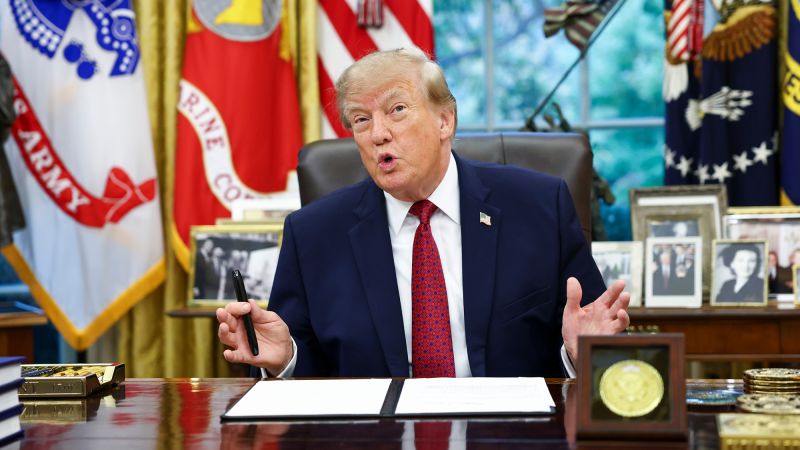
International diplomacy rarely delivers genuine surprises, but the prospect of a high-stakes sit-down between Donald Trump, Xi Jinping, and Vladimir Putin is rewriting the geopolitical rulebook. Speaking to reporters in West Palm Beach, Florida, U.S.
President Donald Trump confirmed that he expects to meet both the Chinese and Russian leaders on the sidelines of the upcoming Asia-Pacific Economic Cooperation (APEC) summit.
The gathering, set for November 18 and 19 in Shenzhen, China, is shaping up to be one of the most consequential diplomatic encounters of the decade. While media coverage has fixated on the theater of a potential trilateral meeting, the underlying drivers are far more urgent than a simple photo-op.
Global leaders are scrambling to address compounding economic pressures, arms control, and active conflicts that threaten international stability.
Hosting APEC in Shenzhen—China's premier technological and manufacturing powerhouse—sends a calculated message. Beijing is positioning itself not just as a regional economic player, but as the central node for global commerce and strategic negotiation.
When Trump told reporters that a meeting with Putin and Xi "will be interesting," he was understating a monumental shift. For years, Western foreign policy relied on isolating Moscow and managing a tense, zero-sum economic rivalry with Beijing. Now, the contours of a multi-polar reality are pressing in.
Trump pointed directly to ongoing international flashpoints, noting that discussions would touch on nuclear denuclearization and active efforts to wind down the war in Iran.
You cannot separate these high-level diplomatic maneuvers from what is happening on the ground. Trump's foreign policy approach leans heavily on maximum economic pressure. Recently, the White House confirmed that "Task Force Iron Gate" is fully operational, backed by what the administration describes as a sweeping naval blockade designed to choke off overland and maritime supply lines into Iran.
These enforcement mechanisms have global ripple effects. Energy security remains fragile, evidenced by recent infrastructure disruptions in the Middle East that shaved gigawatts off regional power grids.
Because China relies heavily on stable energy imports and Russia maintains deep strategic ties across the Middle East, bringing Washington, Beijing, and Moscow to the same table offers a rare channel to negotiate real-world de-escalation.
Diplomacy at this level is transactional. While the public hears broad talking points about peace and stability, the closed-door sessions in Shenzhen will focus on hard leverage.
Critics often dismiss these summits as mere talk, but ignoring them is a mistake. When the leaders of the United States, China, and Russia occupy the same room, the gravitational pull affects every global market, currency, and supply chain.
The upcoming summit in Shenzhen isn't just another diplomatic stop on a busy calendar. It's a stress test for a shifting global order. How these three leaders navigate their competing interests over forty-eight hours will set the tone for international relations for years to come. Watch the outcomes, not the rhetoric.
With expertise spanning multiple beats, Noah Sanders brings a multidisciplinary perspective to every story, enriching coverage with context and nuance.
Originally published by Google News Category Diplomacy