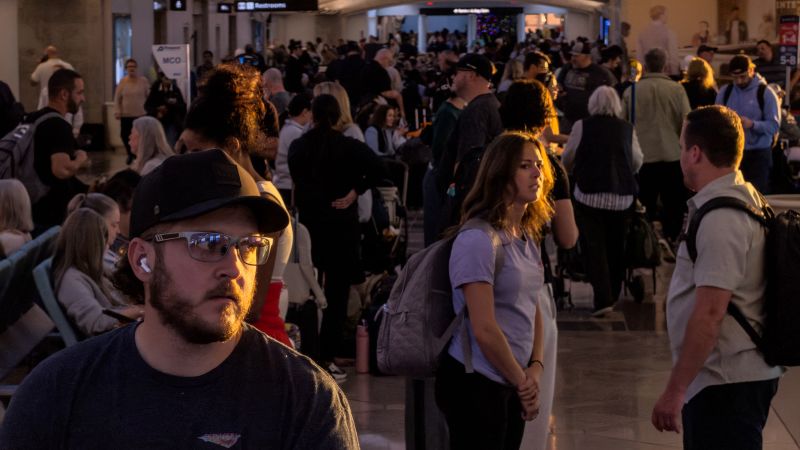
A string of technology failures affecting email, air travel, banking and even classified National Security Agency computers has raised public concern, though there is no public evidence that the incidents were caused by cyberattacks from a hostile power or criminal organization.
The recent outages began Thursday, when a Microsoft Outlook update crashed and left millions around the world without email access. On Friday, the Federal Aviation Administration grounded all planes nationwide after an attempt to update copper communications cables disrupted its network, leaving more than a million travelers stuck at airports. A software bug hit Chase Bank on Monday, followed by a crash involving NSA computers on Tuesday.
The incidents have fueled speculation about whether they are connected. Emily Harding, director of the Intelligence, National Security and Technology Program at the Center for Strategic and International Studies, told CNN’s Jake Tapper on Tuesday that there “is absolutely a tendency to see a pattern where one may not exist.” She added: “But at the same time, I don’t really believe in coincidences. And this is a lot of things piled up at the same time.”
Lawmakers have voiced similar concerns. Democratic House Minority leader Hakeem Jeffries said Tuesday: “It’s unclear if it’s all infrastructure-related, or whether there’s some malignant activity.” New York Republican Rep. Mike Lawler wrote on X that “while some of this may be coincidental, it is clear we must take cybersecurity and the nefarious use of AI seriously — and act without delay.” Missouri Sen. Josh Hawley said that if it’s “all a coincidence, it’s like the greatest coincidence in the history of the world.”
The article notes that people naturally seek patterns to make sense of chaos and identify threats. It argues that speculation about an unknown adversary may distract from questions about vulnerabilities in technology and infrastructure during a volatile technological transition.
The Trump administration has faced criticism over its response. Secretary of State Marco Rubio acknowledged: “People are fearful, people are uncertain.” President Donald Trump dismissed the outages Tuesday, saying: “It’s life, it’s life. When you’re big and powerful and you have all the money, things like that happen. It’s fine.”
Trump said Monday, “I don’t take any responsibility.” Transportation Secretary Sean Duffy said the air traffic control network “dates back decades,” adding: “It’s what I inherited.” The article says the network’s age may be relevant, but argues that shifting blame will not resolve the problems.
Vice President JD Vance told Fox viewers Monday they did not need to build bunkers or stock up on food and water. “We do not see some crisis coming down,” he said, before adding: “But you have to be prepared for everything.” Former White House press secretary Karoline Leavitt said Monday on Fox: “This has really been spiraling for quite some time. The White House should just address it directly with the American people.”
The article says the outages come amid broader public unease, including economic insecurity, an ongoing foreign war and disruption from AI. It argues that citizens need transparency, honesty and consistency from the government, and concludes that those have so far been lacking.