Blythe, the distinctive fashion doll first released in the United States in 1972, is drawing renewed attention from young fashion fans more than 50 years after her debut. In August of this year, US Google search interest in “Blythe Doll” was nearly 10 times higher than it was in August 2022.
The doll has appeared in fashion campaigns and editorials, including Bottega Veneta storefronts in 2014, a McQ Alexander McQueen Target campaign in 2009, and a Vogue Nippon series that began in 2002. Images of Blythe are also circulating on social media, including a photograph of Anthony Bourdain holding one that resurfaced in June and has received more than 91,000 likes.
Kenner introduced Blythe in 1972 with an enormous head and wide eyes that changed color and direction when a string was pulled. Her unusual appearance was deemed “too scary for children,” according to This Is Blythe’s history of the doll. After poor sales, Kenner stopped production, and Blythe remained largely forgotten for more than two decades.
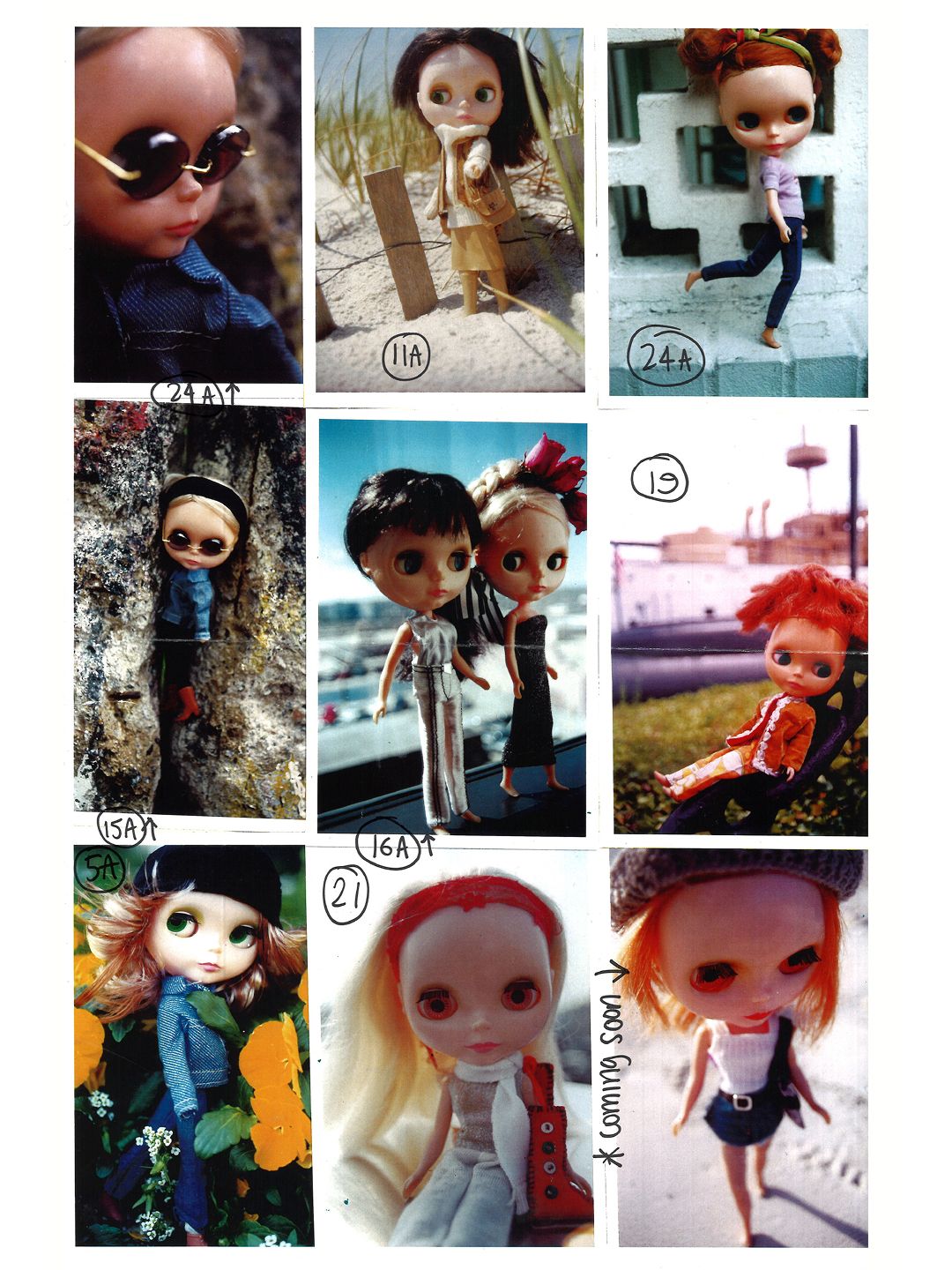
Photographer Gina Garan helped revive interest after finding a vintage Blythe in the late 1990s and taking her on trips around the world. Garan published the photographs in the 2000 book This Is Blythe, which introduced the doll to a new audience of collectors, artists, and fashion fans.
“I would always go out of my way to make everything look to scale, so even the coffee cups looked like they were her size,” Garan tells Teen Vogue. “I was always trying to photograph her living in the real world.” She also recalls using “a chopstick and a piece of gum” to hold the doll upright for photographs: “Now you can photoshop everything, but back then it was all practical.”
Blythe’s fashion career gathered pace in 2000, when Japanese department-store chain Parco made her the face of its Christmas campaign. The following year, charity fashion shows in Japan featured designers dressing one-of-a-kind Blythe dolls. In 2002, Vogue Nippon, now Vogue Japan, began “Blythe Style Child,” a yearlong series photographed by Garan and featuring miniature designs by labels including Vivienne Westwood and Christian Dior.
The doll’s appeal also lies in the opportunity to customize and style her. Owners change her clothes and hair, switch her eye color, photograph her, or commission artists to alter her face. Some collectors take dolls apart and remake them, replacing hair or carving, sanding, and repainting their faces.
Designer Anna Sui collaborated with Blythe in 2017 for Tokyo department store Isetan. The “Blythe Adores Anna” doll wore a miniature recreation of a look from Sui’s fall 2015 collection. “There was that obsessive shopper that specifically wanted look number 12 from the runway, with the matching shoes and all the accessories,” Sui tells Teen Vogue. “It was that moment when people really searched things out that way and obsessively wanted every detail. And I think that’s kind of what Blythe is all about.”
Custom Blythe-inspired dolls have also become a way to create miniature versions of celebrities and other people. In April, Olivia Rodrigo changed her Instagram profile picture to a custom doll styled after her new album artwork. In a 2024 post for Perfectly Imperfect, Rodrigo wrote that Petra Collins had given her a bespoke doll inspired by their “bad idea right?” music video, adding that she had “always been obsessed with dolls and miniature things.”
In 2018, Emma Roberts posted a photograph of herself holding two customized dolls. They later appeared among the dolls displayed in her Los Angeles home. “I’m madly obsessed with them—in love with them,” she said during a video tour.
Blythe can be difficult to find. Toy Tokyo, an East Village store since 2000, has not stocked the doll in years. “We used to be a hub for them, back in the day,” says an employee, Iram, who asked us not to use his full name. He says customers still sometimes ask for Blythe, but collectors rarely bring their dolls in to sell. “I have the feeling that people are holding onto them for a little bit,” he adds.
Collectors often search resale sites, specialty stores, or shops in Japan. BlytheCon UK, an annual convention running since 2010, returned to London on October 3 for a sold-out event featuring vendors, workshops, contests, and dolls. BlytheCon USA is scheduled to bring collectors to Philadelphia on November 8 for an exhibition, shopping event, and workshops.
Sui says rarity was central to the doll’s appeal. “You genuinely had to make such an effort to own it, or even come across it,” she says. “You knew if you owned it, not 50 million people would have it. Maybe 50 would have it, or five.” She describes the attraction as “the uniqueness of having it and knowing that you were one of the few.”
In 2025, designer Jen-Fang Shueh’s Jenny Fax and I’m Sorry by Petra Collins collaborated on an exclusive Ssense project featuring Blythe. It included miniature versions of the collection, doll imagery, and a collectible zine. “Even though the clothes are so small, you can still see so many details,” Shueh tells Teen Vogue. “It almost feels like a tiny version of haute couture. I think there are some details that are even difficult to make on clothes for real people.”
Shueh says fashion can be more than clothing to wear. “Fashion today is not only about wearing something. It can also be a way to make your everyday life feel better,” she says. “When you wear something every day, it can feel less special because you use it all the time. But when you buy clothes to display in your room, collect accessories, or collect dolls as decorations, they can give you a different feeling.”
From September 16, 2026 through January 3, 2027, New York’s Museum at FIT will present Doll Dressing. The exhibition will display the doll from Sui’s 2017 Blythe collaboration beside the full-size fall 2015 runway look that inspired its outfit.
More than two decades after Blythe’s early-2000s fashion moment, designers and image-makers continue to dress and photograph her. Her miniature outfits and custom styling have helped keep the doll in circulation with a new generation of collectors and fashion fans.