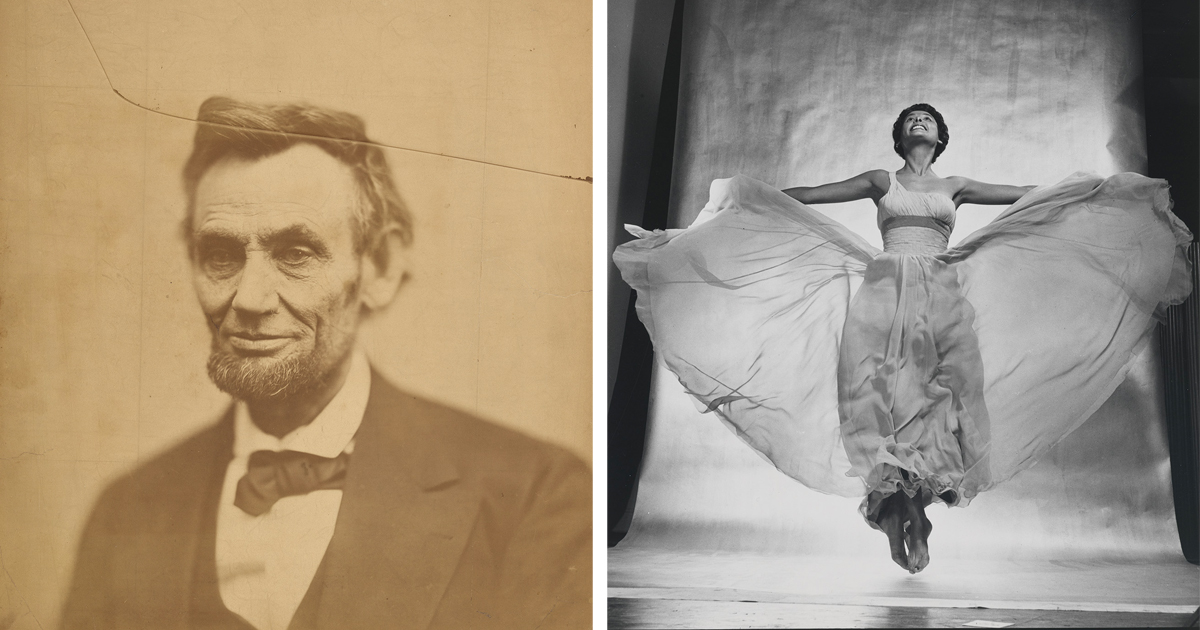
“Abraham Lincoln”Artist: Alexander GardnerAlbumen silver print1865National Portrait Gallery, Smithsonian Institution; Frederick Hill Meserve Collection
Since its advent, photography has changed the way we experience and remember culture. Portrait photography, in particular, helps to catalog those who have an outsized impact on society. A forthcoming exhibition at the Smithsonian’s National Portrait Gallery looks back at portrait photography, what it can tell us about American history and culture, and how it helped shape the two.
The show, titled Photographic Memory: Fifty Years of Collecting, features more than 120 works from the institution’s collection—including never-before-exhibited pieces.
Photographic Memory celebrates the 50th anniversary of the Portrait Gallery’s photographic repertoire. Photos now account for nearly half of the museum’s total holdings, but that wasn’t always the case. Photography didn’t enter the museum’s collection until 1976—the year of the U.S. bicentennial—when it expanded its collecting mandate to include photography.
This shift mattered; without it, the Portrait Gallery couldn’t feature people important in U.S. history who never sat for a painted portrait or posed for a sculpture.
Although the show covers 50 years of collecting, some photographs in the exhibition are much older. One notable work includes a 1846 daguerreotype (the first publicly available photo process) of Dolley Madison by John Plumbe Jr. In the show, it’s paired with a 1843 half-plate daguerreotype of President John Quincy Adams.
This marks the first time that the earliest known photograph of a U.S. president and a first lady have been shown together.
Other pieces in Photographic Memory include iconic images and people beyond politicians. These works include Alexander Gardner’s original “cracked plate” portrait of Abraham Lincoln, images of athletes like Muhammad Ali, singers including Billie Holiday, and artists such as Georgia O’Keeffe and Isamu Noguchi.
The exhibition also debuts a portrait of poet and author Amanda Gorman, photographed by Shawn Theodore, and a portrait of actor and activist Christopher Reeve by Herb Ritts. The exhibition also features influential photographers, including Alfred Stieglitz, Dorothea Lange, Ansel Adams, and Gordon Parks.
For history lovers who believe in the power of photography, Photographic Memory: Fifty Years of Collecting isn’t a show to miss. The exhibition is organized chronologically, allowing visitors to trace U.S. cultural history and advances in photography.
Photographic Memory: Fifty Years of Collecting opens November 14, 2026, and runs through November 7, 2027. The National Portrait Gallery is free to all.
“John Quincy Adams”Artist: Philip HaasHalf-plate daguerreotype1843National Portrait Gallery, Smithsonian Institution; Acquired through the generosity of the Secretary of the Smithsonian and the Smithsonian National Board; The Burnett Family Fund; Carl and Marilynn Thoma; Connie and Dennis Keller; Tim Lindholm and Lucy Gaylord Lindholm; Mr. and Mrs. John W. McCarter, Jr.; Mr. and Mrs. Ronald J. Gidwitz; Ellen G.
Miles and Neil R. Greene; Ronnyjane Goldsmith; David D. Hiller; Richard and Janet Horwood; and Mary Martell.
“Dolley Madison”Artist: John Plumbe, Jr. Quarter-plate daguerreotype1846National Portrait Gallery, Smithsonian Institution; acquired through the generosity of the Secretary of the Smithsonian and the Smithsonian National Board; Ann S. and Samuel M. Mencoff; Joseph L…