AGOA withdrawal puts South Africa’s car industry and thousands of jobs at risk
By Google News Motors ·
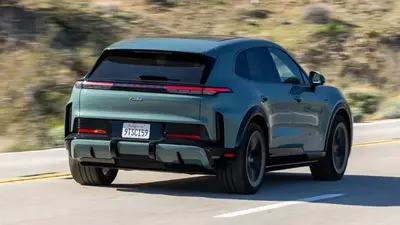
South Africa’s automotive industry is warning that the planned withdrawal of the country’s preferential access to the United States market under the African Growth and Opportunity Act (AGOA) will add pressure to an already struggling sector, with manufacturers and workers calling for urgent trade negotiations and greater market diversification.
The United States (US) government indicated its intention to end South Africa’s AGOA eligibility from January 1, 2027.
The decision means South African automotive products entering the US will no longer benefit from duty free access and will instead be subject to standard import duties.
The National Association of Automotive Component and Allied Manufacturers (NAACAM) said the direct cost of losing AGOA was relatively modest compared with the 25% Section 232 tariffs already imposed on vehicles and components. However, it warned that the additional costs would further affect the competitiveness of local manufacturers.
“South Africa’s automotive industry has been AGOA’s largest user, but for the sector the preference has already been largely overridden by the 25% Section 232 tariffs applied on vehicles and components,” said Renai Moothilal, chief executive of NAACAM.
“Losing AGOA adds a further cost to an industry that has already absorbed a significant shock.”
According to NAACAM, South Africa’s automotive exports to the US fell by 29% from R28.67 billion in 2024 to R20.43bn in 2025, following the introduction of the Section 232 tariffs.
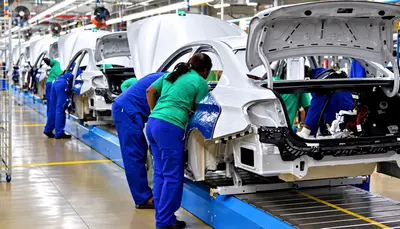
Direct component exports declined by 12.8% to R3.86bn, while light vehicle exports dropped by 31.7% to R16.57bn. The association said the impact extended beyond vehicle manufacturers to their domestic supply chains.
The withdrawal of AGOA preferences will mean these products also face standard US import duties, typically around 2.5% for automotive products, widening the gap with competitors in the UK, EU, Japan and South Korea, which have negotiated lower automotive tariffs.
The warning comes as the component manufacturing sector faces mounting pressure. NAACAM said it had recorded 15 company closures and more than 7,500 gross job losses among component manufacturers over the past three years.
It attributed the difficulties partly to declining local content, production cuts at some vehicle manufacturers, weaker exports and rising operating costs.
Moothilal said South Africa needed to strengthen its own automotive manufacturing base to reduce its exposure to external trade decisions.
“South Africa cannot control the trade policies of export markets, but it can take decisive action to strengthen its own automotive manufacturing base. Growing domestically produced vehicle sales to South African consumers and significantly increasing local content are essential to supporting component manufacturers, protecting employment and reducing our vulnerability to external trade shocks,” he said.
NAACAM said the South African Automotive Masterplan 2035 had set a target of 48.2% local content by 2025, worth about R101bn. However, local content stood at 39% in 2025, only slightly above the 38.7% recorded in 2015.
The association said the current policy review presented an opportunity to introduce clearer localisation measures and support manufacturers in diversifying their export markets.
The Motor Industry Staff Association (MISA), meanwhile, described the loss of AGOA as regrettable but said the industry could not depend on one export market.
MISA said the…
Originally published by Google News Motors