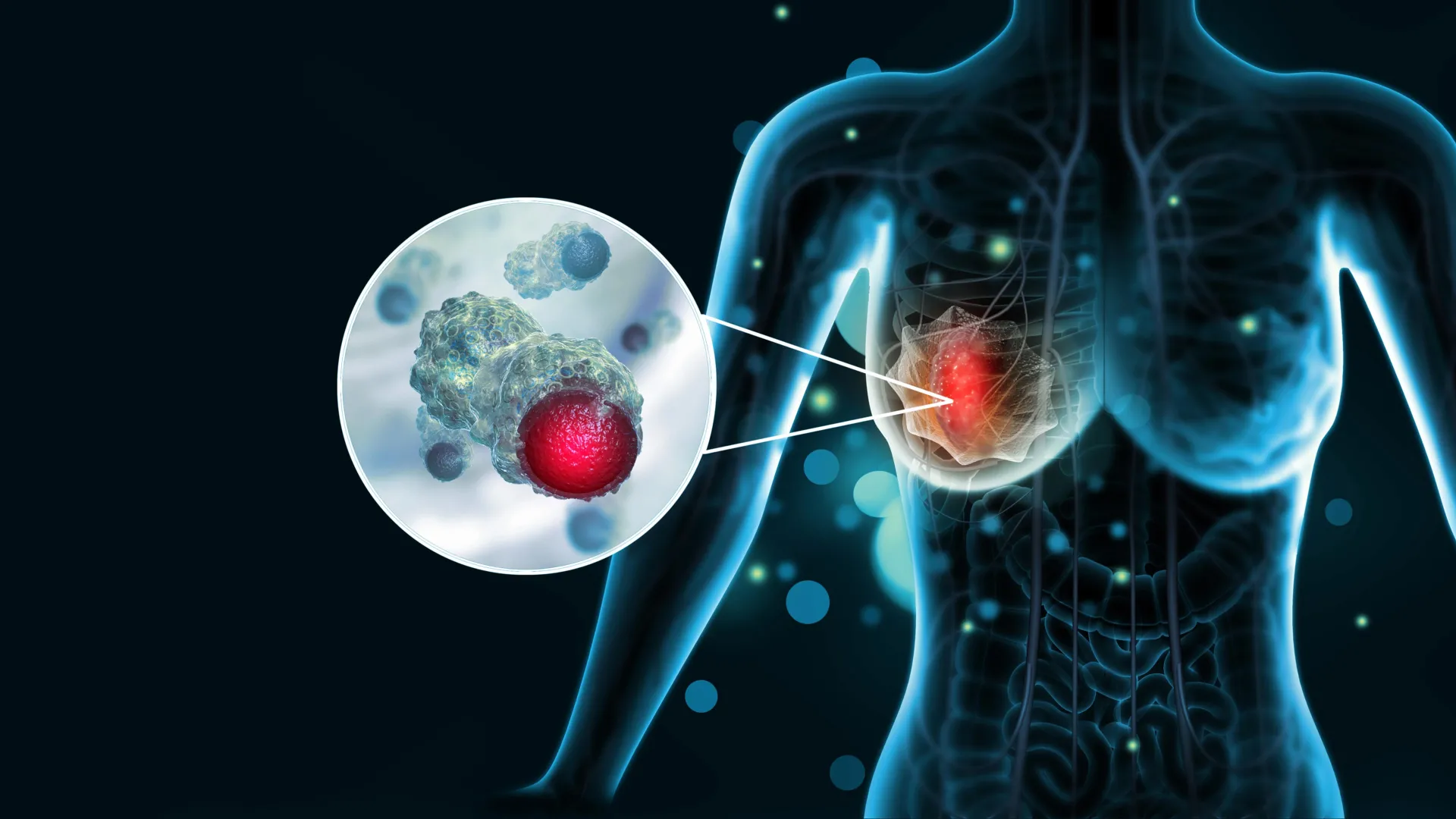
Women with high levels of two common âforever chemicalsâ in their blood may face a higher risk of developing an aggressive form of breast cancer, according to new research from the National Institutes of Health.
The study, published last week in the Journal of Clinical Oncology, found that women with the highest levels of two chemicals known as PFOA and PFOS faced higher rates of estrogen receptor-negative breast cancer, a form of the disease that tends to be more aggressive and harder to treat.
Women with the highest levels of PFOA had a 67 percent higher rate of this type of breast cancer, compared with woman who had the lowest levels. For PFOS, the rate was 93 percent higher, according to NIH.
Researchers found âno clear associationâ between the two chemicals and breast cancer overall, according to NIH.
Dr. Timothy Rebbeck, a professor of cancer prevention at Dana-Farber Cancer Institute and Harvard, said the findings add to growing research linking forever chemicals to certain cancers but do not establish causation.
âThe data so far have really been correlation, not causation, in humans,â Rebbeck said in an interview Wednesday. âAnd while thatâs interesting and important, we still need to have other data that really give us information about causation.â
PFOA and PFOS belong to a larger group of synthetic chemicals called per- and polyfluoroalkyl substances, also known as PFAS. Used in a wide range of consumer products, these chemicals are commonly referred to as âforever chemicalsâ because they break down slowly and can remain in the human body for years.
The researchers at NIH focused on estrogen receptor-negative breast cancer, or ER-negative breast cancer, where the tumors âlack receptors that allow hormone estrogen to help cancer cells grow,â according to the NIH statement about the new study.
Rebbeck said the findings are relevant because relatively few risk factors have been identified for ER-negative breast cancer.
âThese are the types of cancers we need to learn a lot more about,â he said. âAnd if forever chemicals play some role in that, thatâs important knowledge.â
The NIH researchers said ER-negative breast cancers âtend to be more aggressive and have worse outcomes,â and scientists âknow less about what raises the risk of this type of breast cancer.â
âOur findings, which we confirmed using a meta-analysis of prior research, indicate that certain legacy PFAS, including PFOA and PFOS, are associated with a higher risk of ER-negative breast cancer, a more aggressive tumor type with few known risk factors,â Dr. Alexandra White, an NIH investigator who led the study, said in the statement.
PFOA and PFOS, which were used for decades in products such as non-stick cookware, food packaging, and stain-resistant clothes, have mostly been phased out in the US since the early 2000s but remain widespread.
Nearly all people in the US have PFAS in their blood, according to the CDC, but certain PFAS blood levels, including PFOA and PFOS, have declined. Between 1999 and 2019, blood PFOS levels declined by more than 85 percent, and PFOA levels fell by more than 70 percent, the CDC reported.
The research was based on data from the âSister Study,â a longterm NIH study that enrolled more than 50,000 women between ages 35 and 74 in the US and Puerto Rico from 2003 to 2009. Each participant had a sister who had been diagnosed with breast cancer, but none had the disease themselves when they enrolled in the study.
Researchers looked at blood samples from the 1,609 women who later developed breast cancer and compared them with samples from a group of 2,269 other women. The samples were collected years before the women received their diagnoses, which allowed scientists to examine whether earlier exposure to PFAS was associated with their cancer risk.
The study didnât determine how the chemicals might contribute to breast cancer, but researchers suggest they could affect biological processes beyond the bodyâs hormonal system, including changes in the immune system and gene activity.
âMore research is needed, particularly evaluating the risk of breast cancer associated with newer replacement PFAS chemicals,â White said.
Reebeck said it is too early to know whether reducing PFAS exposure would lower breast cancer risk, but the studyâs authors said findings could help lead to new ways of preventing certain types of breast cancer.
âAlthough PFAS are persistent in the environment and in our bodies, exposure to them is still potentially modifiable, meaning people can take steps to reduce their exposure, and these findings could open new avenues for prevention,â White said.
Nick Stoico can be reached at [email protected].