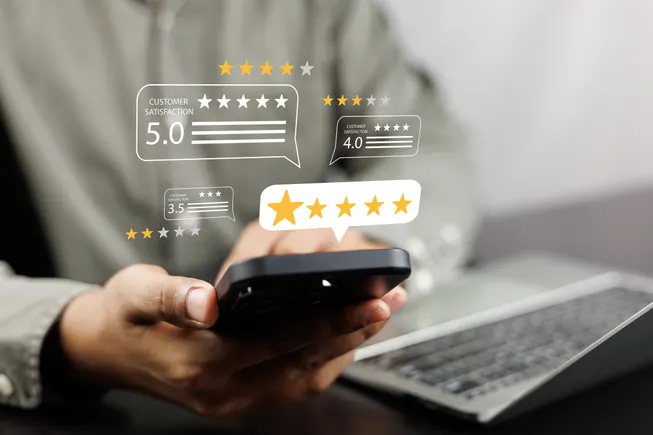
While consumers are alert to some unseemly tactics, bad actors have adopted new strategies, Amazon, Tripadvisor and others in the Coalition for Trusted Reviews found.
In 2023, Amazon, Booking.com and Tripadvisor, among others, banded together to form the Coalition for Trusted Reviews to “stop fake reviews at their source.” Three years later, the coalition’s job has only become harder, as bad actors have adopted new strategies to circumvent platforms’ safeguards.
“When reviews are fake or manipulated, the consequences go far beyond one misleading rating,” Becky Foley, executive committee member of Coalition for Trusted Reviews and VP and head of trust and safety at TripAdvisor, said in a prepared statement. “Consumers risk making decisions based on information that isn’t genuine, while businesses that play by the rules face an uneven playing field.
Over time, this undermines trust across the online marketplace.”
Review manipulation can take many forms, from business owners or employees setting up fake profiles to post reviews to the suppression of genuine reviews and AI-enabled manipulation spanning multiple platforms.
Third-party review brokers that commonly reuse identities, text, tactics and network structures across platforms are a major source of review manipulations. While it’s hard for a single brand to always identify fraudulent activity, the brands in the coalition are collaborating to connect those signals and make it more difficult for bad actors.
Some members of the coalition are also taking legal action. Amazon and the Better Business Bureau last year filed a joint lawsuit against the operators of Skitsolutionbd.com, alleging it sells fake reviews and fraudulent content targeting both platforms.
Consumers are alert to some of these tactics and use the equivalent of a sniff-test when reading reviews. Half of U.S. consumers and 70% of UK consumers say they would trust a review less if they knew AI had been used to write or assist with it.
But just because AI was used doesn’t necessarily mean the review was fake.
Tripadvisor removed more than 214,000 reviews that indicated AI-generated text in 2024. However, the company’s examination of the underlying data found it didn’t exhibit the usual patterns of coordinated fraud. Instead, genuine consumers may have used AI to write or translate their reviews.
This highlights a new challenge: platforms must distinguish legitimate AI-assisted content and AI-enabled fraud.
Other forms of fraud include incentivizing employees to leave positive reviews, staff pressuring consumers to leave positive reviews at the point of sale, and “review gating” in which a company directs happy customers to public review channels and unhappy customers to private feedback channels.