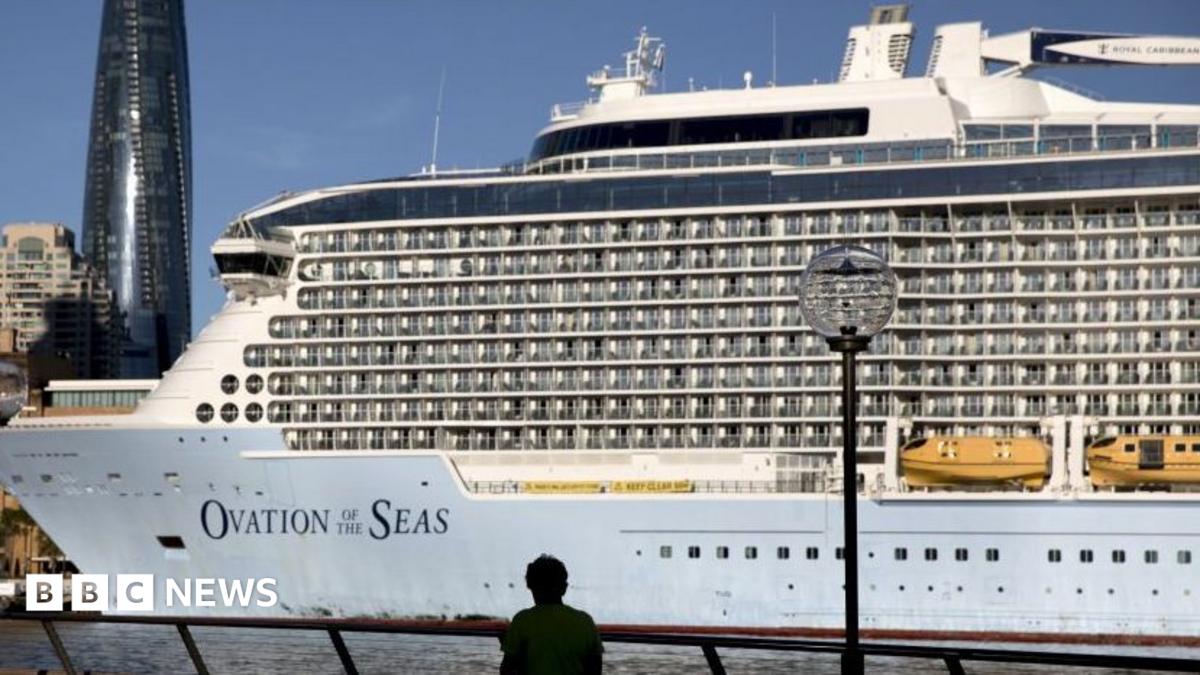
If you’re booking a cruise for the holidays, here’s something worth knowing before you board: Original Medicare usually doesn’t pay for health care while you’re traveling outside the U.S., so in most cases you’d pay the whole bill yourself.
A cruise ship gets one narrow exception, and only near a U.S. port. That’s a nasty surprise if you get sick halfway across the Atlantic, but it’s also a gap you can plan around before you sail.
Here’s a hypothetical: say you’re 70, on Original Medicare, and a week into a Mediterranean cruise when you come down with something the ship’s doctor can’t treat on board. The ship puts you ashore in Italy, and the hospital stay that follows comes to $30,000.
Medicare would usually pay none of it, so you’d be out the whole $30,000 for the stay. And since the ship was nowhere near a U.S. port, Part B usually wouldn’t have paid for your visits to the ship’s doctor before you left the ship, either. Ouch.
6 safe dividend stocks paying retirees 6%+ yields
There are over 100 stocks paying 6%+ annual dividends today.
But after an extensive investment review leveraging TIKR’s proprietary data, we now believe only six of them are truly safe for retirees.
They’re all yours for free as part of our new investment report, which you can access right here.
On the ship itself, Part B may pay for your care only while the ship is in a U.S. port, or no more than 6 hours away from one, when you get it. That holds whether or not it’s an emergency, and what counts is where the ship is when you’re treated. Puerto Rico, the U.S. Virgin Islands, Guam, the Northern Mariana Islands and American Samoa count as part of the U.S., so a ship docked in San Juan or St.
Thomas is in a U.S. port. A Mediterranean cruise never comes close.
Ashore in another country, Part B pays only for ambulance and doctor services right before and during a hospital stay there that Medicare covers. And Medicare drug plans don’t pay for drugs bought outside the U.S., so if you lose a bottle of pills in Rome, you’re paying to replace it.
In rare cases, Medicare may pay for inpatient hospital, doctor and ambulance services in a foreign country. Under Medicare’s rules, those cases come down to geography: either an emergency that happens in the U.S., or in Canada on the direct route between Alaska and another state, when a foreign hospital is closer than the nearest U.S. one, or a home that’s closer to a foreign hospital than to a U.S. one.
A retiree in a hospital in Italy fits none of them. So if you’re sailing the Mediterranean, I’d plan as if Medicare will pay nothing at all.
For a cruise this holiday season, the simplest fix is a travel insurance policy that pays medical bills abroad, and Medicare itself suggests one, since its coverage outside the U.S. is limited. If you have a Medigap policy, read its terms before you sail, since some Medigap policies may cover emergency care abroad. I’d also read the medical part of any travel policy before the cancellation part.
Frankly, if your ship is leaving U.S. waters, I’d count that coverage as part of the fare: whatever it costs, it’s a lot easier to swallow than a $30,000 hospital bill in Italy.
Medicare Advantage plans may cover care abroad differently than Original Medicare does. Open enrollment, which runs through Dec. 7, is when you can switch from Original Medicare to an Advantage plan or back, or move to a different Advantage plan, so it’s the time to check what a plan pays outside the U.S. before…