Kam’s Krystal Ball: The Modern Black Quarterback
By Kam Holloway ·

Kam’s Krystal Ball: The Modern Black Quarterback
by Kam Holloway, Cronkite News
November 4, 2026
(Audio by Kam Holloway/Cronkite News)When you think of an elite quarterback, what comes to mind? A pocket passer who can dissect a defense? A dual-threat athlete who can beat defenders with his legs? Or a leader who commands the offense? For decades, the answers to those questions have been influenced by stereotypes surrounding race and what a quarterback is supposed to look like.
In the first episode of Kam’s Krystal Ball, “The Modern Black Quarterback,” we explore the historical perceptions surrounding Black quarterbacks and how those stereotypes continue to influence the way players are evaluated today. Joining the conversation is former Army West Point quarterback Kelvin Hopkins Jr., who led the Black Knights to an 11-2 record in 2018 and became the first player in Army history to throw and rush for more than 1,000 yards in a single season.
Despite his success as a dual-threat quarterback, Hopkins explains how that label created challenges throughout his football career. From feeling pressured to prove he could operate as a traditional pocket passer to challenging assumptions about Black quarterbacks’ intelligence and leadership, Hopkins shares firsthand experiences of navigating expectations that extended beyond his performance on the field.
The controversial 2025 NFL Draft slide of Shedeur Sanders, who fell to the fifth round despite entering the draft process as a highly regarded prospect, is also part of the discussion. Holloway and Hopkins explore the narratives surrounding Sanders’ character, confidence and football pedigree, comparing how similar traits are perceived in quarterbacks such as Arch Manning. The episode raises a larger question: Are quarterbacks being evaluated by consistent standards, or do long-standing stereotypes still influence how we perceive the position?
As the modern quarterback continues to evolve, the distinction between pocket passers and dual-threat athletes is becoming increasingly blurred. But has the language used to describe these players evolved at the same pace?
TRANSCRIPT
Kam Holloway: Close your eyes and really think about this for a second. When you think of a quarterback, who pops up in your head? What does he look like? When you think of an elite quarterback, what characteristics come to mind? Is he a pocket passer, a dual threat, a great decision-maker, a leader? Is there a color associated with that person you just pictured?
Maybe your mind instantly goes to a Josh Allen, Lamar Jackson or Patrick Mahomes. Maybe it’s Tom Brady or Peyton Manning. Maybe it’s Rayne Dakota Prescott, Dak.
The bottom line is everything you just thought about is correct. There is no right or wrong answer in today’s modern outlook of football. But that wasn’t always the case.
For decades, ideas about what a quarterback should look like, how he should play and what qualities he needed to lead an offense were tied up with race. And even as the position has changed, some of the language used to describe quarterbacks has been slower to change.
Welcome to Kam’s Krystal Ball. I’m Kam Holloway, and this is the three-part audio series about the Black quarterback: how Black athletes changed the position, how they were evaluated along the way and whether some of those old racial stereotypes still exist today.
Volonino Intro Music: “Goddamn, we clean now. We clean. Don’t make a sound when I come around. Why they want a link…”
Kam Holloway: For this episode, I wanted to talk to somebody who’s actually lived it.
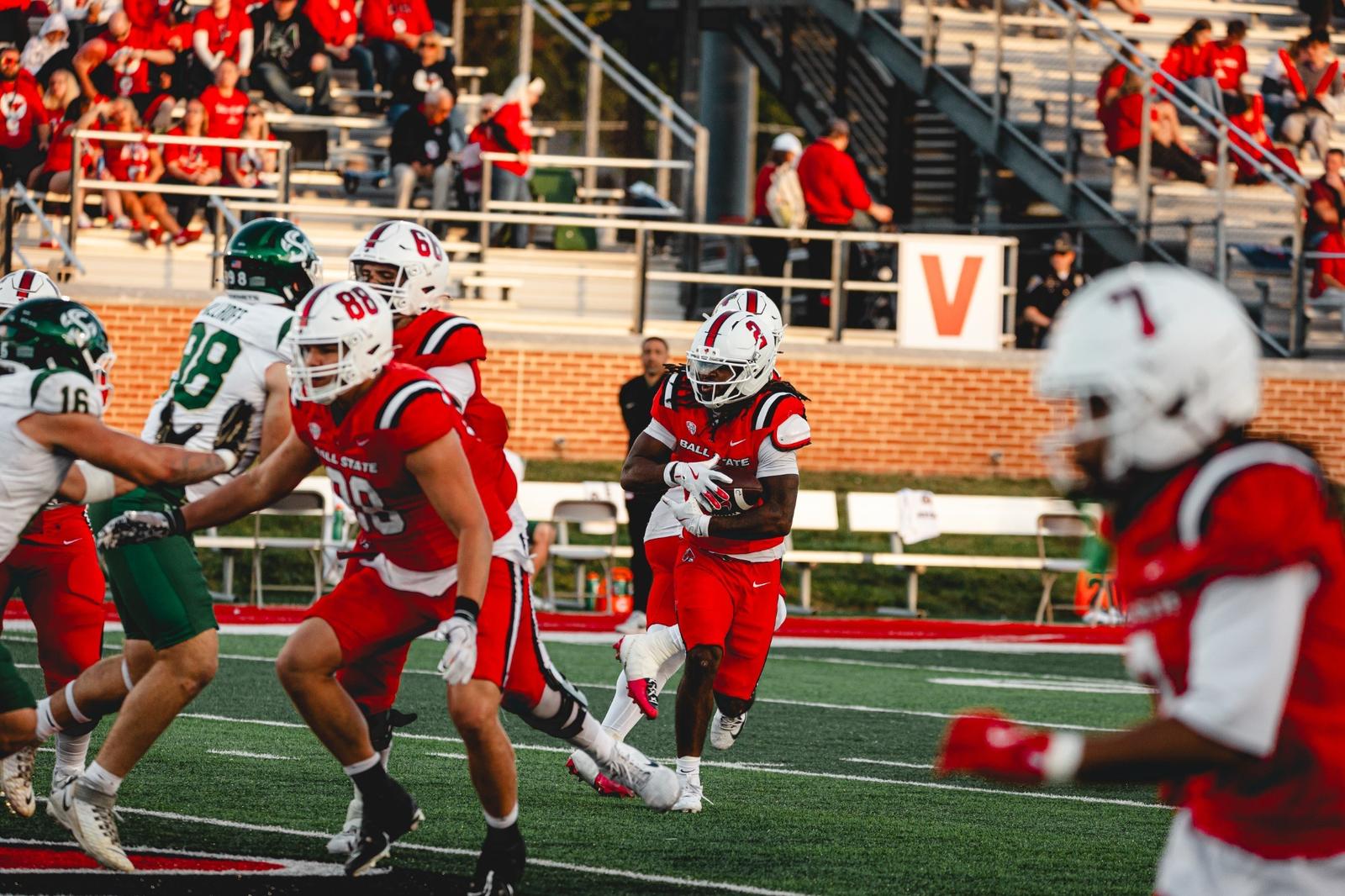
Kelvin Hopkins Jr., better known as K-Hop, had one of the best seasons by a quarterback in Army football history. During his 2018 season, he took the Black Knights to an 11-2 record, capping the season with a dominating 70-14 win over the Houston Cougars in the Armed Forces Bowl and securing the game’s MVP.
He broke multiple records in that game, including the Armed Forces Bowl record for most rushing and total touchdowns by a player, with five each.
One another quarterback sneak by Hopkins…
Sports Broadcaster: “And it’s a touchdown for the Black Knights! Kelvin Hopkins Jr. tying the Army record with five rushing touchdowns in a game. Army pouring it on. It’s 48-7 Black Knights with 12:09 left in this third quarter.”
Kam Holloway: Which also helped Army account for the most points ever scored in the Armed Forces Bowl and tied the bowl game record for the largest margin of victory ever, with 56 points.
In the same season, he accumulated 23 total touchdowns and 2,143 total yards of offense, both among the best single-season marks in school history.
But there’s one accomplishment that particularly stands out. Hopkins became the first player in Army football history to throw for more than 1,000 yards and rush for more than 1,000 yards in the same season.
Now, I know what you’re thinking. Well, he only threw for 1,000 yards, Kam. How is that impressive?
We’re talking about Army football here. The triple option, where they run the ball 99% of the time. So to throw for 1,000 yards in a season, as well as rush for 1,000 yards, was historic.
He was the definition of a dual-threat quarterback.
But that phrase, “dual threat,” is actually where our conversation gets interesting. Because when Hopkins was playing quarterback, what did that label really mean for him?
The difference between being called a dual-threat quarterback and a pocket passer was a problem. Why couldn’t he just be a quarterback?
It was connected to a much older perception of what a Black quarterback could and couldn’t do.
Kelvin Hopkins: “I mean, I think you’re talking about years and years and generations of stigmas and thoughts and all these comments that people made for years, where it’s, ‘The Black quarterback can’t be a leader. The Black quarterback isn’t going to be as smart. He can’t dissect the defense,’ all the things. And they deduce it down to relying on your athletic ability or being able to go out there and just make plays versus actually making the play happen.”
Kam Holloway: Hopkins is describing a stereotype that researchers have actually been able to measure.
A 2010 study by journalism researchers at Ball State University and the University of Wisconsin-Oshkosh looked at more than 4,700 descriptions of NFL quarterback prospects over a decade. Black quarterbacks were more often described through their physical abilities and doubts about their mental game.
On the other hand, white quarterbacks were more often described as mentally prepared and less likely to make mental mistakes.
Making plays versus making the play happen.
One description emphasizes athletic ability. The other suggests command, reading a defense, processing information and controlling an offense. The things you think a quarterback should do.
And that distinction also showed up in the labels used to classify quarterbacks.
A different study, published in Communication & Sport by researchers at the University of South Florida and Florida Atlantic University, analyzed more than 3,400 high school quarterback recruits from 2001 through 2020.
More than 85% of those labeled pro-style quarterbacks were white, while Black quarterbacks made up the majority of those labeled dual threat.
For years, quarterbacks were often described in two very different ways. They say he’s cerebral, a student of the game. He plays the position the right way. Or he’s athletic, dynamic, a dual threat who can beat you with his feet.
Two different stigmas. Two different ideas of what a quarterback should be. And for years, race was often a part of that divide.
The consequences went beyond language. Black high school quarterbacks were significantly more likely than white quarterbacks to be moved to another position when they reached college, according to a 2013 study by Kennesaw State University and the College of Mount Saint Joseph.
For Hopkins, those perceptions weren’t something he only noticed after his career. He says they affected how he approached the position while he was still trying to get recruited.
Kelvin Hopkins: “I remember leaving high school where you were either in this dual-threat kind of pocket or you were in this pocket-passer pocket. And I remember, for myself as a 5-foot-9 quarterback in ACC country, always feeling like I had to prove to these colleges that I could be a pocket passer.
“And in a lot of ways, I probably should have run more. I probably should have relied on my athletic ability more. But I was so dead set on trying to prove to everybody that I could play this game that they wanted, in the way that they wanted it done.”
Kam Holloway: How crazy is that to hear from a then-16- or 17-year-old kid?
A quarterback who would eventually become the first player in Army football history to pass and rush for more than 1,000 yards in the same season, something only two guys have done in the 136 years of West Point playing football, says that he sometimes held back part of what made him dangerous because he wanted to prove he could play the quarterback position the right way.
You see those same narratives still pushed in today’s game.
NFL media and Jaguars analyst Bucky Brooks said in a Twitter post, quote, “It always appears that certain quarterbacks are labeled as lazy or lacking a great work ethic, while others are lauded for their IQ and mental capacities. It would be nice if we wouldn’t routinely affix stereotypes to only Black quarterbacks. Non-Black quarterbacks never get these labels on TV. That’s weird, right?”
That was in response to the backlash surrounding comments Dan Orlovsky made prior to the NFL Draft about Justin Fields.
Dan Orlovsky: “How do I phrase this the right way? Like, how? Where is his desire to go be a great quarterback? I think that there’s a desire to be a big-time athlete from what is expressed to you. Where is his desire to go be a great quarterback?
“And to be great, you gotta be willing to find the things that you’re not good at and just freaking grind on them.”
Kam Holloway: The comments drew immediate pushback. Ohio State head coach Ryan Day called questions about Fields’ work ethic reckless. Orlovsky later spoke with Fields and apologized, saying he had not handled the moment well.
However, shouldn’t how you play on the field matter the most?
The most recent scrutiny came in the 2025 NFL Draft with the handling of Shedeur Sanders.
Sanders, the son of Pro Football Hall of Famer Deion Sanders, was talked about as a top-two quarterback in that draft, a lottery pick, a surefire first-round draft pick.
Yet when the NFL Draft started, Shedeur wouldn’t hear his name called until two days later, when he was drafted in the fifth round as the 144th pick by the Cleveland Browns.
Ironically, Cleveland was one of the teams linked to Sanders throughout the draft process.
As his draft stock fell, much of that conversation wasn’t just about his play. It was about his character, his personality and the so-called circus that could come with being a Sanders.
One NFL executive told USA Today’s Jarrett Bell, “We liked Shedeur, but you can’t separate the other stuff from the physical abilities.”
But what exactly was the “other stuff?”
For Hopkins, it comes down to one word.
Kelvin Hopkins: “I think it’s perception. And I think, simply, they have never seen a Black quarterback come into the league and not need the league the same way. Um, Shedeur doesn’t. That boy don’t need the league. You know what I’m saying? He could go out and do anything he wanted, for real. So I think the attitude he carries in that rubs some people the wrong way.”
Kam Holloway: It’s also interesting that, for the Browns organization, character has to be talked about.
But then you look at quarterbacks like Baker Mayfield and Johnny Manziel. Both were first-round draft picks by the Cleveland Browns despite facing their own questions about maturity and character.
And then there’s Deshaun Watson, whom the Browns acquired amid far more serious off-field allegations.
So why did character become such a defining part of the conversation surrounding Shedeur Sanders?
Then there’s the argument about his physical attributes.
Sanders was criticized for lacking ideal NFL size and elite physical traits. Yet he’s taller than Mayfield, Manziel and even Dillon Gabriel, the quarterback Cleveland selected two rounds before him.
And when you look at his college production, Sanders is on par with, if not better than, the quarterbacks selected by the Browns.
In his final season at Colorado, Sanders completed 74% of his passes for 4,131 yards and 37 touchdowns. He was the Big 12 Offensive Player of the Year.
Now, none of this automatically makes Sanders a better NFL prospect. But it does raise an important question: If the standards for evaluating quarterbacks are supposed to be consistent, why do certain concerns seem to carry more weight for some players than others?
And Hopkins points to another part of the story: the people who actually shared a locker room with him.
Kelvin Hopkins: “The crazy part is, people have all these negative things to say about Shedeur. Find me one teammate that has ever come out and said anything negative about him.
“All these people in the media have all these things to say. ‘Oh, he’s flashy. He’s this, that and the third. He’s pulling up to Colorado with a Cybertruck.’ And, you know, none of his teammates have ever come out and been like, ‘Oh yeah, we don’t mess with this dude. Like, he’s a locker-room cancer. He’s a negative, blah, blah, blah.’”
Kam Holloway: If the negative perception isn’t coming from the locker room, then where is it coming from?
Kelvin Hopkins: “So there’s some disconnect there. Either they’re creating this narrative because, again, they don’t like the way he carries himself. What narrative are you pushing, and why is it always attached to Shedeur versus somebody like Jaxson Dart?”
Kam Holloway: Funny enough, there’s another quarterback who makes this conversation even more interesting.
Archibald Charles Manning, like Sanders, grew up with an NFL bloodline, money, expectations and one of the most recognizable names in football.
But Hopkins wonders whether that same background will be viewed differently.
Kelvin Hopkins: “He’s got an NFL pedigree from his grandfather to his uncles. He’s got all of the same, very similar circumstances as Shedeur. But the narrative is going to be, you know, he can come in and he’s not going to be enamored by the NFL. And he’s been around it. He knows the game.”
Kam Holloway: And that’s the contrast Hopkins wants people to understand.
With Manning, growing up around the NFL could be viewed as preparation. So why couldn’t the same be said about Sanders?
Kelvin Hopkins: “How can you not look at his bravado and his confidence in the same way that they’re probably going to look at Arch’s and be like, ‘He’s ready for it. He understands what’s coming with it. He knows. He’s seen it. He’s been a part of it. He’s got people to help guide him through it.’
“How could you not feel the same way about Sanders?”
Kam Holloway: Hopkins isn’t saying every criticism of Shedeur Sanders was about race. In fact, he makes that clear.
Kelvin Hopkins: “I’m not one of those people that take everything to race. I don’t view it that way. But when you start to look at similar circumstances and you start to nitpick differences in people after, when all the playing field’s the same, how can you not start to look at the differences?”
Kam Holloway: But those differences, and how we perceive them, have followed the quarterback position for generations.
And while some of those perceptions may still exist, the position itself has changed.
The line that once separated the pocket passer from the dual-threat quarterback isn’t nearly as clear as it used to be.
And according to Hopkins, today’s game may be leaving those old labels behind altogether.
Kelvin Hopkins: “I just feel like the game has changed so much that the idea of dual threat and pocket passer is so mixed.
“You’ve got guys, like, if you don’t have the ability to escape the pocket, there’s not many offenses for you anymore. There’s not a space for you to play like that.
“The traditional Peyton Mannings who stand back there and deliver the ball 40 times a game without ever leaving the pocket, like, that’s a dead kind of thing in football today.
“So I just think the game has changed so much that that broad spectrum of what the quarterback is and what you’re asking your quarterback to do, the lines aren’t as solid as they used to be.”
Volonino Intro Music: “I don’t see no keys. Gotta keep it on fleek. I’ma keep rapping like I be in the streets, smokin’ that good. I think I found…”
Kam Holloway: The modern quarterback has evolved. But has the language we use to describe him evolved with it?
Athletic. Dynamic. Cerebral. Intelligent. Dual threat.
These may sound like simple football terms, but who they are used to describe, and why, can tell a much bigger story.
And that’s where we’re going next.
In episode two of Kam’s Krystal Ball, we’ll look at the beginning of the evolution of the Black quarterback.
I’m Kam Holloway. This is Kam’s Krystal Ball.
Volonino Intro Music: “I drop a band on the… get a raise, going for the ring play…”
This transcript was generated with the assistance of AI and may contain errors, omissions or misspellings. The audio is the authoritative version. If you notice an error please contact [email protected].
This article first appeared on Cronkite News and is republished here under a Creative Commons Attribution-NoDerivatives 4.0 International License.
Originally published by Cronkite News Sports